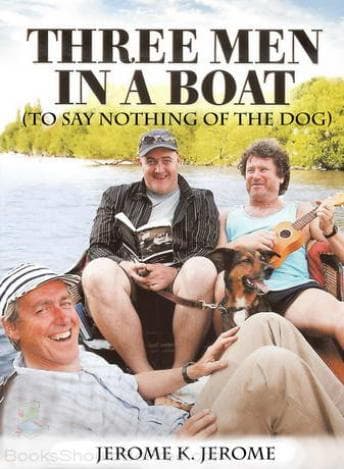

I was grading sophomore essays on The Great Gatsby - the ones where they all insist Gatsby was "just a simp" - when I decided I needed something to restore my faith in English literature. So I put on Three Men in a Boat, and within twenty minutes I was laughing so hard that my wife Denise came in to check if I was having some kind of breakdown.
Look, I've taught Victorian literature for two decades. I've read Jerome K. Jerome's comic gem at least four times. But listening to it? That's a different animal entirely. This is a book that was written to be read aloud - the timing, the digressions, the way Jerome builds to a punchline over three paragraphs only to undercut it completely. It's comedy architecture, and a good narrator understands that.
The Narrator Question (And It's a Big One)
Here's the thing about this particular audiobook - it's listed as "Various Readers," which means you're rolling the dice. The versions narrated by Martin Jarvis, Ian Carmichael, or Hugh Laurie are genuinely excellent. Jarvis in particular gets the rhythm of Victorian humor. He understands that the pause before "to say nothing of the dog" is where the comedy lives. Carmichael brings this wonderful dry precision that makes even the most absurd passages feel like reasonable observations from a reasonable man.
Hugh Laurie's version - and I say this as someone who watched every episode of House - channels pure Blackadder energy. It's more theatrical, more performative. Some listeners will love it. Others might find it a bit much.
But I've also heard versions that are... less inspired. One narrator (I won't name names, but you can probably find the reviews) delivers the whole thing in this flat monotone that makes Jerome's brilliant comic timing completely disappear. It's like watching someone read a joke off a teleprompter without understanding why it's funny.
So my advice? Sample before you commit. Make sure you're getting a narrator who actually gets the material.
Why This Still Works 135 Years Later
My students would hate this book. (That's not an insult - they'd hate most things I love.) It's slow. It digresses constantly. There's a three-page section about how to pack a suitcase that has absolutely nothing to do with the plot. The narrator - the character, not the audiobook performer - goes off on tangents about cheese and historical monuments and the proper way to open a tin of pineapple.
And that's exactly why it works.
Jerome understood something that modern comedy often forgets: the digression IS the joke. The story isn't really about three men going on a boat trip. It's about the particular way the English middle class convinced themselves they were outdoorsmen while being absolutely terrible at everything outdoors-related. It's about the gap between aspiration and reality. It's about Montmorency the dog, who is basically the only honest character in the entire book. That tension between what characters think they are versus what they actually are shows up brilliantly in Watership Down too, though with rabbits instead of Victorian gentlemen.
Listening at 1.0x - because the author chose those words and that pacing - I found myself catching jokes I'd missed in print. The way Jerome stacks clauses, building and building until the whole thing collapses into absurdity. That works better out loud. It just does.
The Humor Expectation Problem
I should warn you: some people pick this up expecting laugh-out-loud comedy and come away disappointed. The humor here is sly. It's subtle. It sneaks up on you. You'll be listening to what seems like a straightforward description of Hampton Court, and then suddenly realize you've been had - that Jerome has been setting you up for five minutes for a punchline about getting lost.
If you're coming from modern comedy podcasts or stand-up, this might feel slow. That's okay. Not everything needs to be fast. Some jokes are better when they marinate.
At just over six hours, it's the perfect length for a long weekend of walks along the lakefront. I finished it over three days of grading and dog-walking, and honestly? It made both activities significantly more bearable.
Who's This For (And Who Should Steer Clear)
If you appreciate dry British wit, love a good digression, or just need a break from anything written after 1950 - this is your book. Skip it if you need plot momentum or find Victorian prose insufferable. My students would revolt; you might not.
The Final Grade
Just make sure you get a good narrator. The difference between a great version and a mediocre one is the difference between understanding why this book has stayed in print since 1889 and wondering what all the fuss is about.