
"All that we are is the result of what we have thought."
I paused the track right there. I was standing in my kitchen, staring at a stack of sophomores' essays on Lord of the Flies that I've been avoiding for three days, and this line just... stopped me.
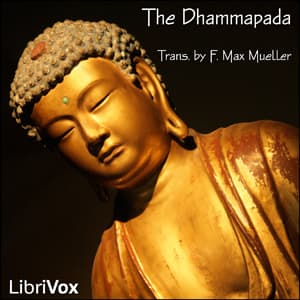
Look, I'm a Western Canon guy. Give me the sprawling misery of a Russian novel or the sharp wit of Austen any day. But lately? My brain is fried. (Don't tell Principal Martinez, but I've been zoning out during department meetings more than usual). I picked up this audiobook of the Dhammapada because it was short—under two hours—and I needed something that wasn't a teenager complaining about symbolism. I didn't expect it to actually work.
A Chorus, Not a Lecture
Here's the thing about audiobooks with "various narrators." Usually, it's a mess. Feels disjointed, like a high school group project where nobody talked to each other before the presentation. But this? It hits different.
We've got a mix of voices here—Jinananda, Ratnadhya, Patience Tomlinson, and a few others. It feels less like a book being read to you and more like... I don't know, a collective memory? There's this one guy with a baritone voice that is just pure butter. He reads the "Twin Verses" in Chapter 1, and the rhythm is hypnotic. He understands that the pause is punctuation.
I read some reviews complaining about the inconsistent pronunciation of Pali terms between the readers. I'll be honest with you—I teach English, not ancient Eastern languages. I didn't notice. Or rather, I didn't care. The delivery is warm, animated, and clear. That same warmth comes through in Tarzan the Untamed, where the various readers manage to keep the pacing tight despite switching voices. They treat the text like poetry, not a textbook. And thank god for that.
Walking the Lakefront with Buddha
I listened to the second half while walking along Lake Michigan with my wife, Denise. It was gray, windy, typical Chicago nonsense. And hearing these verses about the "still mind" while the wind was trying to knock me over? Perfect irony.
It's not a narrative. You can't really "spoil" the Buddha. But the way the text moves—short, punchy stanzas—is perfect for audio. You listen to a verse, you pause, you watch the waves, you think about how you shouldn't have snapped at that student yesterday for asking if he could use ChatGPT for his memoir.
My students would hate this, by the way. There's no plot, no explosions, no clear antagonist (except your own ego, I guess). But for me? It was exactly the reset button I needed.
Mr. Williams's Office Hours
Is it perfect? I don't know. I'm not a Buddhist scholar. But as a tired teacher looking for a moment of silence inside the noise? It delivered. It's short enough to finish in two commutes, but dense enough that I'll probably re-listen next time grading season rolls around. Anxious for Nothing scratched a similar itch for me last semester when I was drowning in parent-teacher conferences.
If you're looking for a story, skip it. If you need plot, character arcs, something to discuss at book club—this isn't your listen. But if you're looking to lower your blood pressure before you walk into a faculty meeting? If you want something short that makes you pause and actually think? This is the one.