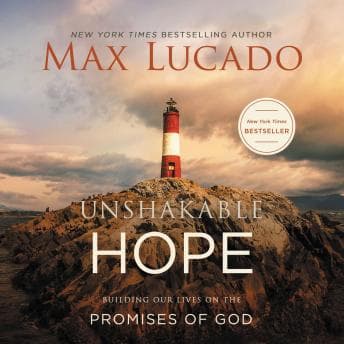

Most business books promise transformation. Most faith books promise hope. Both usually deliver about 20% of what they advertise. So when I started Unshakable Hope during a 5am flight to Austin—consulting gig, sleep-deprived, running on airport coffee—I had my skeptic hat firmly on.
Here's the thing: Max Lucado isn't trying to sell you a framework. He's not pitching a 7-step system or a productivity hack dressed up in Scripture. And that simplicity? It actually works.
What My Parents Already Knew
Lucado breaks down 12 biblical promises into digestible chunks. God is unchanging. God is faithful. God cannot lie. My mom would read this and shrug—she's been operating on these assumptions for 40 years while running that dry cleaning shop. But here's where Lucado earns his keep: he takes what feels abstract and makes it practical.
The section on God's faithfulness during failure hit different. I've watched three startups I consulted for crater in the past year. Good founders, solid ideas, brutal market timing. Lucado doesn't offer easy answers—he just keeps pointing back to promises that outlast quarterly reports. There's something almost subversive about that in our metrics-obsessed culture.
At 5 hours, this respects your time. Most devotional books pad themselves to 10+ hours with repetitive stories. Lucado keeps it tight. I finished it in two sessions. Jenny would be proud.
Ben Holland Knows What He's Doing
Holland has narrated over 25 Lucado titles. You can tell. His deep voice has this academic-yet-accessible quality—like a seminary professor who actually likes people. The pacing is steady, never rushed, which matters for content you're supposed to sit with rather than consume.
No dramatic character voices here (there aren't really characters to voice). No sound effects or musical interludes. Just clean, straightforward narration that gets out of the way. For this type of book, that's exactly right. Holland sounds like he believes what he's reading. In faith content, that authenticity gap shows up fast when it's missing.
The ROI Question
Look, I evaluate everything through an ROI lens. It's a disease. But here's my honest assessment: the "return" on this book isn't measurable in the way I usually track things.
Lucado isn't going to help you close more deals or optimize your morning routine. What he does—and does well—is provide a framework for stability when everything else feels unstable. Heart disease, job failure, addiction, family disasters. He lists them all in the intro. Not exactly beach reading.
But if you're in one of those seasons (and if you've lived long enough, you will be), having 12 promises you can actually remember and return to? That's worth something. My parents never had a framework like this articulated—they just lived it. Lucado gives language to what they did instinctively.
Who This Is For (And Who Should Skip It)
This is for people who already have some faith foundation and need reinforcement during hard seasons. It's not apologetics. It's not evangelism. It's pastoral care in audiobook form.
If you're looking for theological depth or scholarly analysis, skip it. Lucado writes at an accessible level—some would say too accessible. If you want your faith content to challenge you intellectually, this isn't it.
If you're in crisis mode and need something steady to listen to at 2am when sleep won't come? This works. Holland's voice is genuinely calming. I'd put this in the same category as comfort food—not gourmet, but nourishing when you need it.
The Bottom Line on the Balance Sheet
I've sat in too many boardrooms watching executives chase the next strategy while ignoring fundamentals. Lucado is basically arguing for fundamentals. Build on promises, not circumstances. Simple. Almost too simple.
But simple isn't the same as easy. And in a world that keeps getting more complicated, there's something almost rebellious about a book that says: here are 12 things that don't change. Hold onto them.
My parents would approve. And honestly? That's a higher bar than most business books clear. Educated cleared that same bar—another story about building on fundamentals when everything else falls apart.