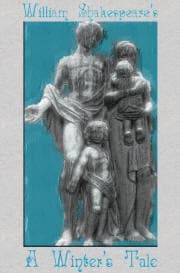

Okay, I need to rant for a second. Why does nobody talk about this play? Hamlet gets all the glory, Romeo and Juliet gets the movie adaptations, and meanwhile The Winter's Tale is over here being this wild, gorgeous, emotionally devastating thing that people just... sleep on? I'm genuinely annoyed about it. I found this Arkangel Shakespeare full-cast recording because I was deep in a 2 AM rabbit hole after finishing a client's branding project, half-delirious, Diego purring on my chest, and I thought - you know what, let me try some Shakespeare while I wind down. Wind down. Ha.
This book felt like someone took a telenovela, fed it through 400 years of English literature, and handed it back with the drama fully intact.
Leontes Is the Worst Husband in All of Literature and I Need Everyone to Know
So here's the thing about this play that hit me like a truck: Leontes, King of Sicilia, convinces himself - with ZERO evidence - that his pregnant wife Hermione is sleeping with his best friend Polixenes. And it's not a slow burn of suspicion. It's like a switch flips and suddenly this man is frothing with jealousy, ordering his newborn daughter abandoned in the wilderness, putting his wife on trial. The speed of it is terrifying. Abuela would have been screaming at the screen - I mean, at the speaker - like she used to yell at Don Fernando on her novelas. "¡Estás loco, hombre!"
What got me about this cast performance is how Ciaran Hinds plays Leontes. He doesn't ease into the jealousy. He's already vibrating with it from the moment the paranoia hits. His voice gets this tight, coiled quality - like a man who's already convicted everyone in his mind and is just going through the motions of confirmation. It's chilling. And then Sinead Cusack as Hermione during the trial scene? She delivers her defense with this quiet dignity that made me set down my stylus and just... sit there. She's not begging. She's not hysterical. She's calm because she knows she's innocent, and that calm is more devastating than any breakdown could be.
The Sixteen-Year Jump That Shouldn't Work But Absolutely Does
Here's where Shakespeare pulls a move that would get you laughed out of any modern writing workshop. He literally has Time walk onstage as a character and say "hey, sixteen years have passed, deal with it." And Sir John Gielgud - actual Sir John Gielgud - voices this moment with such gravitas that you don't question it for a second. His voice has this ancient, almost amused quality, like Time itself finds the human drama both heartbreaking and a little funny. It's maybe three minutes of audio but it reframes the entire play.
And then you're in Bohemia, and the tone flips completely. Shepherds, a rogue named Autolycus who's basically a Renaissance con artist, a sheep-shearing festival. The cast leans into the comedy hard. It's jarring at first - I'd been on the verge of tears and suddenly there's folk music and banter - but that contrast is the whole point. Life keeps moving. Joy exists alongside grief. That's the thesis.
At 2 hours and 45 minutes, this is basically a long podcast episode. I listened in one sitting, which is the way to go. Shakespeare's language needs you to stay in its rhythm. If you pause for three days in the middle, you'll come back lost.
The Statue Scene Made Me Lose It at 1 AM
I'm not going to spoil the ending for anyone who somehow doesn't know, but - the statue scene. MY HEART. My actual heart. The way the cast plays this moment, the silence before Hermione moves, the catch in Leontes' voice when he realizes what's happening. I ugly-cried. Diego jumped off my chest. Frida looked at me from the bookshelf like I was unhinged. I am unhinged. This play is about forgiveness and grace and whether you can ever undo the damage you've done to the people you love, and the answer is complicated and messy and beautiful. Anne of Green Gables is one of the few other stories I've encountered where that same ache - the specific grief of damage done to a child, and what it costs everyone to rebuild - lands with anywhere near this much weight.
The full-cast format is everything here. You're not listening to one narrator doing voices - you're hearing actual stage actors playing off each other, and the energy between them crackles. The production includes subtle music cues that signal the tonal shifts between Sicilia's court and Bohemia's countryside without being intrusive.
Who This Is For (and Who Should Maybe Start Elsewhere)
If you already love Shakespeare, this is a gorgeous way to experience one of his most underrated plays. If you've never listened to Shakespeare as audio, this is actually a solid entry point - it's short, the emotional stakes are crystal clear even when the language takes a minute to parse, and the cast does the heavy lifting of interpretation for you. But if you need modern pacing and can't sit with Elizabethan English for almost three hours, this might frustrate you. That's fair. Not every book is for every person.
The Spreadsheet Gets Another Entry
One crying session. Just the one, but it was a big one. Abuela would have loved this one - the jealousy, the lost child, the impossible reunion. Pure telenovela bones underneath all that iambic pentameter. She would've clutched her rosary and then asked me to play it again.