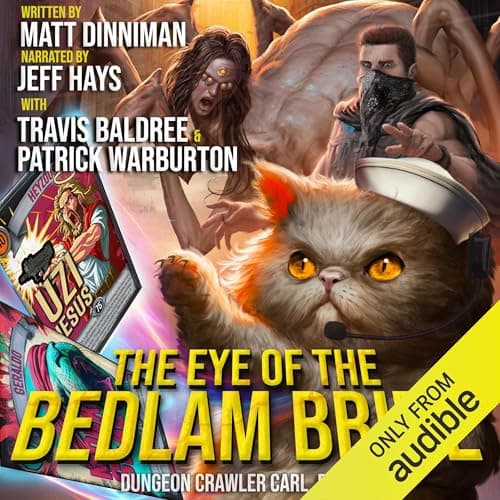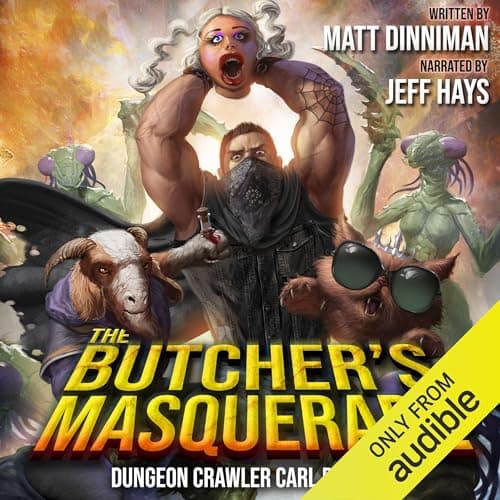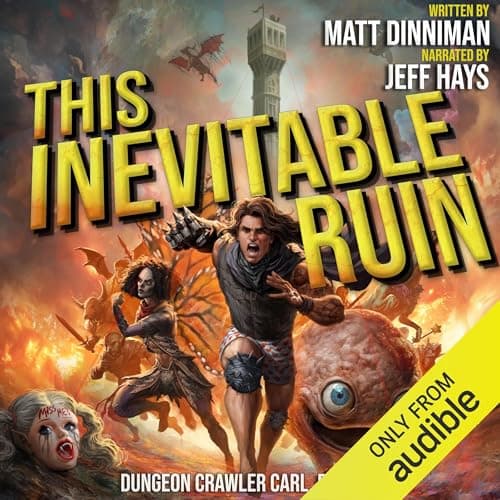

I started this one while snowshoeing a ridge above my cabin, wind needling through lodgepole pine, and I actually muttered out loud, Oh, so we're doing war now. Not skirmish. Not chaos-as-entertainment. War. By the time the ninth floor fully opened into Faction Wars - nine alien-led armies fighting for a central castle, plus Carl's side, plus that gloriously destabilizing tenth army of self-aware NPCs - the whole thing had shifted from savage game-show satire into something heavier and meaner. The snow was squeaking under my boots, Jeff Hays had that static-laced AI dread buzzing in my ears, and the mood matched. Bleak. Funny, yes, but less funny than before. More terminal.
What hit me first is how much this book asks of your attention. At 28 hours and 40 minutes, this isn't one you toss on while chopping onions or half-answering emails. I listened at 1.0x because the plot density pretty much demands it. There are alliances, betrayals, battlefield turns, system weirdness, NPC awakenings, and the ugly cosmic rich-people spectacle of it all - where these powerful aliens usually treat war like a safe hobby because they don't really die. Except this time they do. That one change gives the whole floor a different weather pattern.
The land itself is the main character in a lot of the books I love. Here, weirdly, the battlefield functions the same way. The castle, the factions, the floor design, the collapsing ruleset - it all presses back on the characters. Nothing feels decorative. Even the AI decay matters beyond flavor text; in audio form, those static-filled effects create real unease, like hearing a radio fail in a storm.
Why this one hurts more than it jokes
If you've been coming to this series mainly for the feral comedy, the pop-culture swings, and Princess Donut being an absolute menace in formal diction, you should know this installment tilts harder toward emotional cost. Donut still lands, and the sassy Persian cat absolutely gets scenes that punch way above the joke setup. But this book keeps dragging her - and Katia especially - toward an impossible edge: only one of them is allowed to leave the level. That is a cruel engine to build under a long-running character dynamic, and Dinniman knows it.
So yes, I laughed. But not with the same frequency as earlier books. A few listeners have complained about that, and honestly, I get it. This is a war book wearing a clown mask. The humor is still there, but it has frost on it.
What I respected is that the emotional turns don't feel pasted in just to manufacture tears. They come out of accumulated damage, loyalty, and the series' central question about what happens when sentient beings are reduced to content. Something like climate grief hit different in this one - not because the book is about ecosystems, obviously, but because the background rot is impossible to miss. Systems are failing. The intelligence running the world is decaying in public. The people in charge keep monetizing collapse. Romanticized vs real - this gets real.
Jeff Hays is doing absurd amounts of labor here
Let's just say it cleanly: Jeff Hays is the reason a book this complicated stays legible in audio. He's juggling a ridiculous number of voices - crawlers, goblins, bosses, alien elites, comic grotesques, wounded people trying not to crack - and he keeps them distinct without turning everyone into a cartoon. That's the hard part. Plenty of narrators can do "different." Fewer can do different and still hold tension.
And he really understands tonal pivots. He can snap from a bit that's fundamentally ridiculous into panic, heartbreak, or pure battlefield urgency without making it feel like he's changed books on you. That's rare.
Travis Baldree's presence works too, adding weight rather than novelty. No gimmickry. No full-cast clutter. Just smart deployment in a series already built on vocal control.
The production choice I kept noticing was the AI texture - that static-shot anxiety threaded through scenes involving the system's decline. It doesn't overrun the performance, but it changes the pressure in your chest a little. Good audio production should do that. Not distract. Disturb.
If I have a real reservation, it's the same one some other listeners flagged: the pacing can feel overwhelming. Not slow. Overwhelming. There's a difference. The book has so many plates spinning that stretches of it feel like trying to track migrating elk in a sleet storm - possible, but you better stay present. If you miss a turn, the next emotional beat won't land as hard because you were busy remembering which faction just shifted allegiance.
Who should listen (and who should walk on)
You should pick this up if you love long-form chaos with consequences, and if you want your LitRPG to stop pretending stakes are just numbers on a screen. You should also pick it up if you've trusted this series so far and are ready for it to cash in years of emotional debt. This is payoff. Bloody, crowded payoff.
You should probably skip it - or at least wait until you can give it real focus - if you mostly listen in fragments. Same if your favorite part of the series is the nonstop comedy. This book still has teeth, but now it's biting down harder than it grins.
One more thing. A lot of long series start sounding exhausted by book seven. This one sounds cornered. That's better. More dangerous. Nature doesn't forgive mistakes. Neither do I. And this book understands that once the game board becomes a graveyard, every move matters. Echo Burning has that same quality - the sense that the ground under your feet has already decided how this ends, and the characters are just catching up.
I'd spend the credit. Just don't make it your bedtime listen unless you enjoy waking up confused about castle sieges, alien politics, and why a Persian cat suddenly made you feel things.