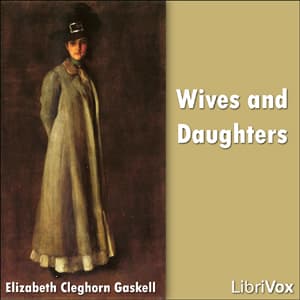

I finished this one walking the lakefront last Tuesday, and I just stood there for a minute watching the waves. Twenty-seven hours with Molly Gibson, and then - nothing. The book just stops. Mrs. Gaskell died before she could finish it, and honestly? That abrupt ending hit me harder than I expected.
But let me back up.
Why Gaskell Deserves the Jane Austen Comparison (And Why She's Different)
Look, everyone says "if you like Austen, you'll like this." And yes, fine, there are provincial towns and marriage plots and sharp observations about class. But Gaskell does something Austen rarely bothered with - she gets her hands dirty with the working class. The dialect work here is remarkable. This was 1864, and Gaskell was writing characters who spoke like actual people from specific places. My students would roll their eyes at the pacing (they roll their eyes at everything), but the linguistic authenticity? That's craft.
Molly Gibson is one of those protagonists who grows on you slowly. She's not Elizabeth Bennet with her wit and fire. She's quieter, more observant, sometimes frustratingly passive. But there's something deeply real about watching her navigate a stepmother who means well but doesn't quite understand her, a stepsister who is - let's be honest - exhausting in the best dramatic way, and a father who loves her but keeps making choices that complicate her life.
The social observations are meticulous. Almost too meticulous, if I'm being fair. There were moments during faculty meetings (sorry, Principal Martinez, I definitely wasn't listening to Victorian social commentary during your technology integration presentation) where I found myself drifting. I had the same experience with Moby Dick - those long, meditative stretches that demand you slow down and live in the prose. The pacing is Victorian through and through. If you need constant plot momentum, this will test your patience.
The Voice in My Head - Or Rather, Voices
Here's where it gets interesting. There are multiple versions of this audiobook floating around, and the narrator situation is... complicated. Josephine Bailey's version seems to be the gold standard - ten AudioFile Earphones Awards don't lie, and apparently Publishers Weekly named her Best Female Narrator back in 2002. The woman knows what she's doing with Victorian prose.
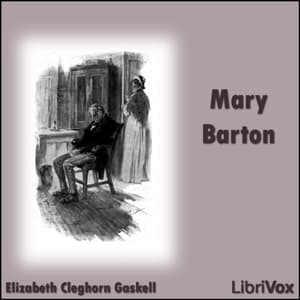
What I found remarkable across the performances is how the narrators handle Gaskell's dialect work. Remember what I said about her linguistic authenticity? A lesser narrator would flatten those regional voices into generic "old-timey English." But the good versions here - Bailey, Nadia May, Patience Tomlinson in the LibriVox dramatic reading - they actually differentiate the characters. You can hear class distinctions. You can hear geography. That's not easy.
Patience Tomlinson's vocal range in the dramatic reading is apparently astonishing enough that listeners specifically call it out. And Nadia May has that particular gift for Victorian narration - warm but not saccharine, clear but not clinical.
The LibriVox version is free, which matters. It's a full cast dramatic reading, which means you get different voices for different characters. Some people love that immersive quality. Others find it jarring. I tend to prefer single narrators for novels - there's something about one voice interpreting all the characters that feels more like reading to me - but for a 27-hour commitment, the variety might actually help.
The Unfinished Business
Okay, we need to talk about the ending. Or the non-ending.
Mrs. Gaskell died suddenly in 1865, mid-serialization. Frederick Greenwood wrote a brief conclusion summarizing what would have happened, but it's not the same. You spend all this time with these characters, watching Molly grow, watching the romantic tensions slowly build, and then - someone else just tells you how it was supposed to end.
It's startling. Some listeners find it frustrating. I found it oddly moving? There's something about knowing you're listening to a story that was cut short by real death that adds weight to all those pages about marriage and mortality and the passage of time. Gaskell was writing about the fragility of domestic happiness, and then life demonstrated that fragility in the cruelest possible way.
(Don't tell my students I got emotional about a Victorian novel's incomplete ending. I have a reputation to maintain.)
Who This Is For (And Who Should Walk Away)
This is not a casual listen. Let's be clear about that.
If you love Austen and want something with similar DNA but more social range, this is your book. If you appreciate detailed character work over plot momentum, you'll find plenty to love. If you have a long commute or you're the type who listens while grading papers at 11 PM (hypothetically), the length becomes a feature rather than a bug.
But if slow pacing makes you reach for the 2x speed button - and I will never understand you people, the author chose those words - this might not be your match. If you need tidy endings, you'll be frustrated. If Victorian social manners feel like watching paint dry, skip it.
Class Dismissed
I'm glad I spent those twenty-seven hours. Molly Gibson deserved to have her story finished, and she didn't get that. But what we have is still worth hearing. The prose deserves to be savored. The narration - whichever version you choose - makes it live in ways that silent reading sometimes can't.
Now if you'll excuse me, I have a podcast episode about Gaskell's use of dialect to record. All 47 of my listeners are waiting.