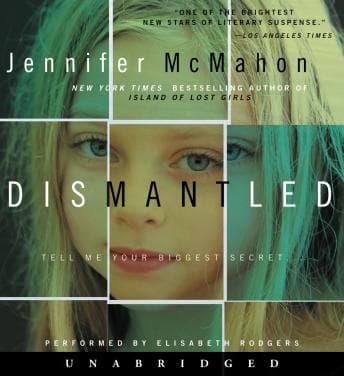

Couldn't sleep last Tuesday night. Linda was out cold, Ranger was snoring at the foot of the bed, and my brain wouldn't shut off after a long day of reviewing vulnerability assessments for a client's Houston facility. So I popped in my earbuds and started Dismantled by Jennifer McMahon, figuring a thriller about college friends with a dark secret would knock me out in twenty minutes.
It didn't. But not entirely for the reasons I expected.
The Secret History Went to Art School
Let me cut to the chase - the premise here is solid. A group of college-age misfits form a radical art collective called the Compassionate Dismantlers, devoted to the idea that you have to take things apart to understand them. Deconstructing objects, relationships, identities. It's pretentious in exactly the way college kids can be, and McMahon captures that specific brand of youthful pseudo-intellectual recklessness pretty well. Then someone dies during one of their "projects," and they scatter, burying the truth for years.
Fast forward to adulthood. These people are now married, raising kids, running businesses - and the past starts clawing its way back. Mysterious postcards. Objects from that night reappearing. Someone who might be a ghost, or might be something worse.
The comparison to Donna Tartt's The Secret History isn't wrong, but it's also not quite right. Where Tartt gave us classical scholars with a murder problem, McMahon gives us art-school anarchists with a guilt problem. The vibe is more rural Vermont creepy than Ivy League gothic. I appreciated that McMahon wasn't just copying the template - she's genuinely interested in how people who did something terrible as kids carry that weight into middle age. The dual timeline structure works, bouncing between the college years and the present, and McMahon keeps the "what actually happened" question dangling long enough to maintain tension.
But here's where I start having problems.
Characters I Wanted to Care About (But Couldn't Quite Reach)
I've seen other listeners say they couldn't connect with the characters in this one, and I have to agree. McMahon's done better elsewhere - her earlier books had people I genuinely worried about. Don't Breathe a Word had characters that burrowed into my chest and stayed there for days. Here, the adult versions of the Dismantlers feel... muted. Henry, the central figure haunted by guilt, reads more like a checklist of anxiety symptoms than a person. His wife Tess is interesting on paper - she's got secrets of her own - but I never felt like I understood what drove her beyond plot necessity. Their daughter Emma might be the most alive character in the book, which is ironic given the supernatural elements swirling around her.
The problem isn't the writing, exactly. McMahon can construct a scene. There's a moment where Henry finds a piece of the past literally nailed to his workshop door that genuinely made the hair on my neck stand up at 2 AM. And the slow reveal of what the Dismantlers actually did that night is paced well - she feeds you just enough to keep you listening through the next chapter.
No, the bigger problem with this audiobook specifically is Elisabeth Rodgers.
When the Narrator Builds a Wall Between You and the Story
I don't enjoy going after narrators. It's a hard job - I've done enough public speaking to know that standing behind a mic for twelve hours and making it sound natural is no joke. But Rodgers' performance here is stiff. There's a formality to her delivery that sits wrong against McMahon's material. These are messy, damaged people in a rural New England setting, and Rodgers reads them like she's narrating a Victorian novel. I've heard Rodgers deliver a more adaptable performance in Vendetta, where the material gave her more room to flex. The emotional beats that should hit hard - a character's breakdown over what they've done, a confrontation between former friends - land flat because the voice delivering them doesn't shift enough to match the moment.
At 1.25x (my standard speed), the stiffness actually becomes more pronounced. The pauses that might feel deliberate at 1x just feel awkward sped up. I tried dropping back to normal speed for a few chapters and it helped marginally, but the fundamental disconnect between narrator and material remained.
This is a case where I'd genuinely recommend reading the print version instead. The story deserves a performance that gets dirty with it, and this one stays too clean.
Who Should Deploy and Who Should Stand Down
If you're a McMahon fan who's read everything else and wants to complete the collection, this is worth streaming through your library app. The mystery at the center is genuinely interesting, the Vermont setting has real atmosphere in McMahon's prose, and the "art as destruction" philosophy of the Dismantlers is a more original hook than most thrillers offer.
But if you're coming to this as your first McMahon - don't. Start with Promise Not to Tell or Island of Lost Girls. McMahon's Winter People is another solid entry point with stronger characterization and a tighter narrative drive. And if you're specifically looking for a great audiobook experience in this lane, this isn't it. The narration puts too much distance between you and a story that needs intimacy to work.
Ranger Slept Through This One
Worth your time? Here's the debrief: decent thriller, wrong narrator. McMahon built something with real potential here - the concept of taking things apart to understand them, applied to friendships, to guilt, to identity - that's genuinely clever. But a stiff narration turned a story that should've kept me up all night into one that almost put me to sleep. Almost. The mystery itself carried me through, but I spent twelve hours wishing I was reading instead of listening. And that's the worst thing I can say about an audiobook.