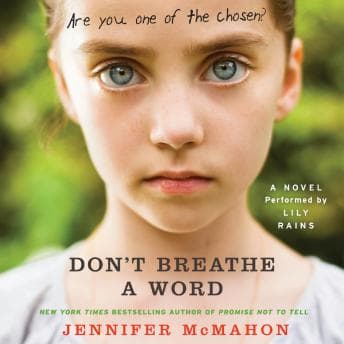

I was supposed to be grading sophomore essays on The Great Gatsby at 11:30 PM. Instead, I was sitting at my kitchen table with a cold cup of coffee, completely ignoring the stack of papers about the green light while Jennifer McMahon's dark fairy tale unspooled in my ears. Denise came down around midnight, saw my face, and just said "Another one got you, huh?" She knows the look.
This reminds me of what Hemingway said about writing—the iceberg theory, where seven-eighths of the story lives beneath the surface. McMahon operates the same way here. What looks like a supernatural thriller about fairies and a missing girl is really about something much darker: how childhood trauma echoes through decades, how family secrets metastasize, how the stories we tell ourselves become prisons.
The Dual Timeline Problem (Except It's Not a Problem)
Look, I teach literature. I've seen a thousand dual timeline structures fail because writers don't understand that both threads need equal weight. McMahon gets it. The 1993 sections with twelve-year-old Lisa vanishing into the woods after claiming she'd meet the Fairy King—those hit different than the present-day investigation. And here's the thing: just when you think you've figured out whether this is supernatural or psychological thriller, she throws in a detail that makes you question everything. My students would call this "unreliable narrator energy." They'd be right.
Lily Rains handles both timelines with distinct vocal registers—younger Lisa has this breathless, almost fevered quality, while adult Phoebe carries the weight of fifteen years of not knowing. The shift between past and present never confused me, even when I was half-asleep and definitely should have been reading about Nick Carraway's observations.
McMahon's Dark Fairy Tale Tradition
If you've read McMahon's other work—Promise Not to Tell, Island of Lost Girls—you know her territory. She lives in that uncomfortable space where Grimm's fairy tales meet small-town secrets. But Don't Breathe a Word feels more ambitious than her earlier novels. She's not just playing with fairy mythology as metaphor; she's building an entire alternate logic where believing in fairies might be the sanest response to an insane situation.
This is why we still read the classics, honestly. The fairy tale tradition—real fairy tales, not the Disney versions—was always about danger. About children being taken. About the woods being hungry. McMahon understands that primal fear and updates it without losing the ancient dread.
Why I Refused to Speed This Up
I listened at my usual 1.0x speed because—and I will die on this hill—the author chose those words. McMahon's sentences have a particular rhythm, almost incantatory in places. There's a section where the narrator describes the woods at twilight, and Rains slows down just slightly, letting the descriptions breathe. That pause is punctuation. Speed that up and you lose the atmosphere entirely.
The twelve-hour runtime felt right. Not padded, not rushed. Though I'll admit the middle section—around the five or six hour mark—gets tangled in relationship drama between Sam and Phoebe that occasionally felt like it was stalling the central mystery. But even that serves a purpose: McMahon is building dread through domestic unease. The scariest thing isn't the Fairy King. It's realizing you might not know the person sleeping next to you.
Who Should Follow Lisa Into the Woods (And Who Should Stay Home)
If you loved The Stolen Child by Keith Donohue, this is its spiritual successor—same liminal space between reality and myth, same refusal to give you easy answers. Tana French fans will recognize the slow-burn investigation style, though McMahon leans harder into the supernatural ambiguity. In a Dark, Dark Wood plays in that same space between psychological tension and genre expectations, though Ruth Ware keeps things more grounded. Golden Girl left me with that same haunted feeling, though Hilderbrand's ghost story operates in brighter daylight.
Skip this if you need your thrillers resolved with a neat bow. McMahon doesn't do neat bows. She does lingering questions that follow you into your own dreams. Also skip if you're sensitive to child endangerment themes—the content warnings about abuse and violence aren't gratuitous, but they're not sanitized either.
Mr. Williams's Final Grade
I finished this audiobook during Principal Martinez's monthly budget presentation. (Sorry, Principal Martinez. But also, you've been giving the same presentation for three years.) The ending landed while someone was discussing copier allocations, and I had to pretend I was having an allergic reaction to explain why I looked so unsettled.
McMahon and Rains together create something that feels genuinely literary while still delivering thriller momentum. It's the kind of book I'd teach in a class about genre fiction transcending its category—if I could get anyone to approve that curriculum. My students would hate this. I love it.
The final twist recontextualizes everything you've heard, and unlike most "twist" endings, it doesn't cheat. Go back and listen again—the clues were there. McMahon played fair. She just played better than you.