
Look, I usually spend my evenings wrestling with student essays on The Great Gatsby, trying to figure out if a green light is ever just a green light. (Spoiler: It never is.) So, sometimes—usually around 11 PM when my eyes are burning—I need something that isn't "literature" with a capital L. I need a mess. A beautiful, dramatic, train-wreck of a mess.
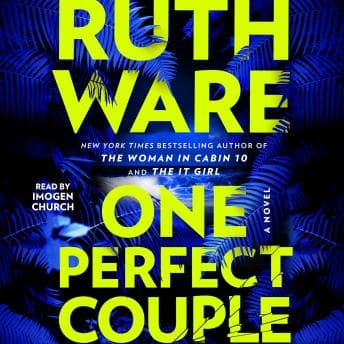
That's how I ended up in the woods with Ruth Ware.
I picked this up because I heard the buzz. "Agatha Christie for the modern age," they said. Well, Agatha Christie usually didn't have this much tequila involved, but I get the comparison. It's a "locked room" mystery, except the room is a glass house deep in the English countryside, and the suspects are a bunch of friends at a hen do (bachelorette party) that nobody actually wants to attend.
The Woman Who Saved the Weekend
Let's be real for a second. If I had read this book with my eyeballs, I might have thrown it across the room. The main character, Lee, spends a solid chunk of the book complaining. Just... so much internal monologue about how much she doesn't want to be there.
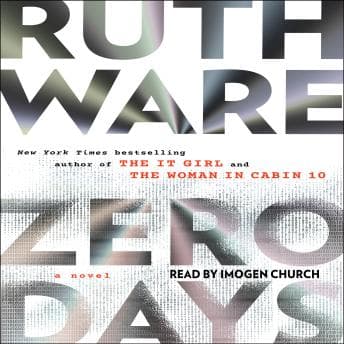
But then there's Imogen Church.
I tell my students that voice is everything, and Imogen Church proves it here. She doesn't just read; she inhabits. She takes a cast of somewhat unlikable characters and makes them distinctly, vividly unlikable in their own unique ways. She does this thing with her voice—shifting from the posh, aggressive maid of honor to the timid protagonist—that is pure performance art. She's practically doing a one-woman show in your ear canal.
Honestly, she makes the slow parts bearable. And there are slow parts. But when Church whispers, you lean in. When she screams, you check the volume on your dashboard. She elevates the material well beyond what's on the page.
Glass Houses and Obvious Stones
The setting is a character here. (Yes, I know, that's the most English Teacher thing I could possibly say, but bear with me.) It's a glass house in the middle of a dark forest. Who builds that? Who rents that? It's basically asking for a murder to happen.
The atmosphere is thick. You feel the cold, the snow, the isolation. That same sense of being trapped with people you can't escape—though in a completely different setting—shows up in Their Eyes Were Watching God, where Janie's isolation is more emotional than physical. It reminds me a bit of Lord of the Flies, but with more Pinot Grigio and passive-aggressive comments about prom.
Here's the catch though: if you've read more than three thrillers in your life, you're going to figure this out. I had the "twist" pegged by Chapter 4. It's not exactly The Sixth Sense. But here's the thing: I didn't care. I was enjoying the ride. It's like watching a horror movie where you know the girl shouldn't go into the basement, but you're yelling at the screen anyway.
Why I Kept Listening
My wife Denise asked me why I was listening to "that screaming lady" while I was doing the dishes. I told her it's about the tension.
Even though the plot has holes you could drive a truck through, and the characters make decisions that would make a horror movie survivor facepalm, it works. It works because it taps into that primal fear of being watched. Of old friends who aren't really friends anymore.
Who Should Listen (And Who Should Skip)
If you want a propulsive, atmospheric thriller for your commute and you're willing to forgive some predictability, this one's for you. Skip it if you need airtight plotting or characters who make sensible choices—you'll just get frustrated.
It's not high art. It's not going to replace Jane Eyre on my syllabus. But for a few snowy commutes along Lake Shore Drive? It was exactly the kind of distraction I needed. Imogen Church, you can read my grocery list anytime.