
Let me cut to the chase: I went into this one expecting a standard psychological thriller and came out genuinely unsettled. Not "oh that was creepy" unsettled—I mean Ranger lifted his head off his bed at 2 AM because I'd apparently made some kind of noise during the courtroom scenes. My wife asked if I was having a nightmare. Close enough.
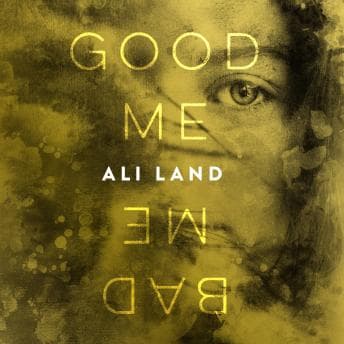
Here's the situation. Milly turned in her own mother—a serial killer—and now she's the star witness in the trial while trying to build a new life with a foster family. The premise alone had me hooked. I've worked with enough people carrying impossible burdens to recognize that particular kind of internal warfare. Ali Land was a mental health nurse specializing in child and adolescent trauma before she wrote this, and it shows. The psychological authenticity here isn't Hollywood trauma—it's the real, ugly, contradictory mess of loving someone who's done monstrous things. That same uncomfortable authenticity shows up in In the Drink, though the stakes there are more personal than criminal.
Inside Milly's Fractured Head
Imogen Church's narration is going to be divisive. I've read reviews calling her "over the top" and "hammy"—and I get it. She doesn't do subtle. Her vocal distinction between Milly's internal voice and her mother's is stark, almost theatrical. The mother's voice has this particular quality that crawled under my skin.
But here's my take: that intensity works for this material. Milly isn't a reliable narrator in the traditional sense—she's a traumatized teenager whose internal landscape is fractured, sometimes performing for herself, sometimes dissociating. Church captures that instability. The whispered staccato that some listeners found annoying? To me, it felt like being inside a mind that's constantly checking itself, constantly wondering if the darkness is hereditary.
That said, Church's accent work gets shaky in places. Some of the secondary characters—particularly the "mean girls" at Milly's new private school—come across cartoonish. Not her strongest showing on that front.
Where The Mission Gets Complicated
The foster family dynamics are where Land really earned my respect. Milly's new life looks perfect from the outside—affluent family, exclusive school, fresh start. But the foster mother's daughter, Phoebe, is a piece of work, and the scenarios between them escalate in ways that felt almost too heightened at times. I've seen bullying operations in my career. Some of this pushed credibility.
What kept me engaged was the central question threading through every scene: Is Milly fighting against her nature or slowly surrendering to it? The internal dialogue Church delivers—Milly arguing with herself, with her mother's voice, with the "good me" and "bad me"—that's the real horror here. Not what her mother did. What Milly might become. Gingerbread Cookie Murder couldn't be more different tonally, but it's got that same quality of voices competing for control—just with significantly lower body counts.
The pacing is deliberate. This isn't a thriller that throws action at you every chapter. It's a slow burn, building pressure through psychological tension rather than plot twists. At 10 hours, I listened at 1.25x and it felt right—gave the heavy material room to breathe without dragging.
The Landing That Wasn't
Here's where I have to be honest: the ending let me down. After all that careful psychological construction, the final act feels rushed and somewhat far-fetched. It's like Land built this intricate pressure cooker and then just... opened the lid too fast. The resolution doesn't quite earn the complexity of what came before.
I've seen this happen in real operations too—meticulous planning, solid execution, then the extraction goes sideways because someone got impatient. That's what this ending feels like. Impatient.
Deploy or Stand Down?
This is not background listening. Don't put this on while doing dishes or driving through Austin traffic. You need focus. The psychological layers demand attention, and Church's performance requires you to be present—her vocal variations carry meaning that you'll miss if you're distracted.
If you've got experience with trauma—professional or personal—this might hit differently. Land knows her subject matter. Some readers will find that authenticity cathartic. Others might find it too close.
Skip this if: You need tight endings. You want action over introspection. You're sensitive to child abuse content (it's implied rather than graphic, but it's there). Or if theatrical narration genuinely bothers you—Church is not going to dial it back.
Cooper Out
Worth your time? Mostly. Good Me Bad Me is a genuinely disturbing exploration of inherited darkness, carried by a narrator who commits fully to the psychological intensity—maybe too fully for some listeners. The ending doesn't stick the landing, and that's a real problem in a thriller. But the journey there? That's the kind of uncomfortable that stays with you.
Ranger approved this one, though he gave me some concerned looks during the trial scenes. Smart dog.