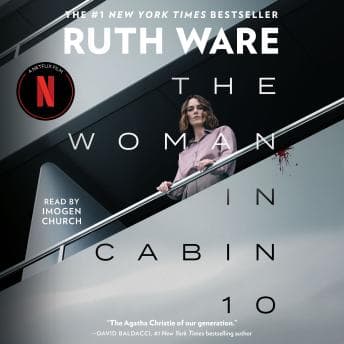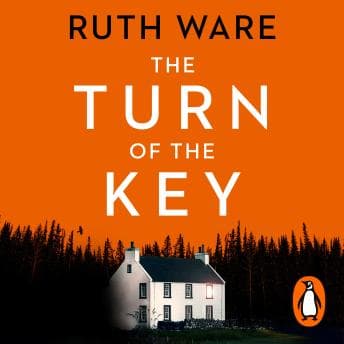

"I didn't kill anyone."
That line, delivered with such desperate conviction by Imogen Church somewhere around the two-hour mark, stopped me mid-stride on my morning jog through Cambridge. I actually had to slow down because my heart was already racing and I couldn't tell anymore if it was the cardio or the audiobook.
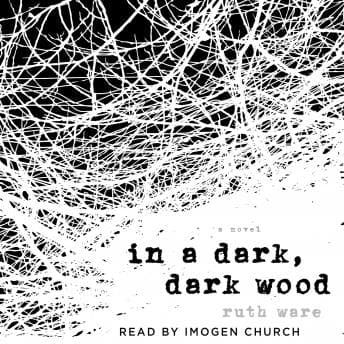
Ruth Ware has constructed something fascinating here—a psychological thriller formatted as a series of letters from prison, which is either brilliant narrative framing or a gimmick depending on your tolerance for epistolary fiction. (My dissertation committee would have opinions. Strong ones.) But here's what makes it work: Rowan Caine is a genuinely unreliable narrator, and the audiobook format amplifies every crack in her facade.
The Protagonist Exhibits Classic Self-Deception Patterns
Let me be clear about something. Rowan is not a likeable protagonist. She's impulsive, she makes catastrophically poor decisions, and she whines. A lot. Some listeners apparently found this exasperating—I found it psychologically accurate. People in crisis don't become noble. They become messy, defensive, and increasingly desperate. The research actually shows that individuals under extreme stress often double down on self-justification rather than course-correcting.
What makes this character compelling is watching her construct an elaborate narrative where she's the victim while simultaneously revealing—through small slips and inconsistencies—that she's hiding something significant. Church's narration walks this tightrope beautifully. She makes Rowan sympathetic enough that you want to believe her, while layering in just enough vocal tension to keep you suspicious. That same vocal precision—making you question everything while staying completely invested—is what makes Strange Case of Jekyll and Hyde (Version 4 - Dramatic Reading) such an effective study in duality.
The Scottish housekeeper gets a distinct burr that immediately signals "knows more than she's saying." The children each have their own vocal signatures—the older ones' wariness, the baby's cries that Church somehow makes genuinely unsettling. But my favorite performance choice? Happy, the smart home system. Church delivers those cheerful automated responses with an undercurrent of menace that had me side-eyeing my own phone.
When Your House Gaslights You (Literally)
The "smart home as horror" concept could have been gimmicky. Instead, Ware uses it as a brilliant externalization of Rowan's psychological state. The lights that turn on by themselves. The doors that lock without explanation. The nursery camera footage that shows... things. It's a fascinating case study in how technology can amplify paranoia—or reveal genuine threat. Silent Woman explores similar territory with its protagonist's deteriorating grip on reality, though without the tech angle. The audiobook production leans into this with those eerie blasts of music when Happy activates, creating an atmosphere that text alone couldn't achieve.
I found myself asking: why does Rowan really stay in this house? The salary is absurd—suspiciously so. The previous nannies left under unclear circumstances. Every rational instinct should be screaming "run." But Rowan has her own secrets, her own reasons for needing this job to work out, and watching her rationalize increasingly dangerous situations is like watching a car crash in slow motion. You can't look away, but you also want to shake her.
The Pacing Problem (And Why It Might Not Matter)
Here's where I have to be honest. At twelve hours, this book takes its time. The middle section—Rowan's daily routine at Heatherbrae House, the escalating small horrors, her deteriorating mental state—can feel repetitive. Some listeners called it boring. I'd call it deliberately oppressive. Ware is trapping you in Rowan's increasingly claustrophobic world, and that requires patience.
But Church's narration during Rowan's late-night Google searches? Okay, yes, it gets a bit melodramatic. There are moments where the breathless terror of "I typed 'Heatherbrae House deaths' into the search bar" made me roll my eyes. (My therapist would have thoughts about this character's coping mechanisms. Specifically: she has none.)
The ending reframes everything. I won't spoil it, but I will say this: the twist worked for me because it's psychologically coherent. Looking back, the clues were there. Rowan's version of events has gaps that suddenly make sense. It's the kind of ending that rewards close listening—or makes you immediately want to relisten with fresh perspective.
Who Gets Trapped in This Smart Home
This is for you if: you enjoy unreliable narrators who are genuinely unreliable (not just "I forgot to mention I'm secretly a spy"), you appreciate slow-burn atmospheric dread over jump scares, and you're willing to spend time with a flawed protagonist who makes you uncomfortable.
Skip it if: you need to like your main character, you want a fast-paced thriller, or you're easily frustrated by people who don't just leave the creepy house.
Closing the Case File
Imogen Church has narrated all of Ruth Ware's thrillers, and there's a reason for that. She understands the assignment: make us doubt everything while keeping us invested. The production is clean, the atmosphere is effective, and the psychological portrait of a woman unraveling is disturbingly convincing.
Is it perfect? No. Rowan's choices strain credulity at times, and the pacing requires commitment. But as a study in self-deception and the ways we construct narratives to protect ourselves from uncomfortable truths, it's genuinely compelling work.
I finished it standing outside my apartment building, too absorbed to go inside. Then I immediately texted my sister: "Do NOT get a smart home system." She hasn't responded. I'm choosing not to read into that.