
The Lakefront, Janie, and Ruby Dee
I finished this one walking the lakefront at sunset with Denise, and I'm not exaggerating when I say I had to stop moving for the last twenty minutes. Just stood there like an idiot by the water, earbuds in, watching the light change while Ruby Dee's voice carried me through that ending. Denise knew better than to interrupt. Twenty years of marriage teaches you when your husband is having a moment with a book.
Look, here's the thing about Their Eyes Were Watching God - I've taught this novel. Multiple times. I've led discussions about Hurston's use of dialect, about Janie's journey toward selfhood, about the way the horizon functions as metaphor. I've graded papers on it. I thought I knew this book.
I did not know this book.
What Ruby Dee Understands
Ruby Dee doesn't read Hurston's prose. She inhabits it. And I don't say that lightly - I'm deeply suspicious of narrator worship. But this is something else entirely. This is a woman who understood, bone-deep, that Hurston wrote in music. The dialect that some of my students struggle with on the page? It flows. It breathes. Dee's pacing gives you room to catch the rhythm, and once you're in it, you realize the dialect isn't an obstacle - it's the whole point. It's the sound of a community, of a culture, of Janie's world made audible.
The voice work here is genuinely theatrical - and I mean that as the highest compliment. Dee ages with Janie. The young girl who marries Logan Killicks sounds different from the woman who runs off with Jody Starks, who sounds different still from the Janie who finally finds Tea Cake. It's not just pitch changes or accent adjustments. It's a lifetime of experience layered into vocal performance. When Janie finally speaks her truth at that trial near the end - I'm not going to spoil it, but if you know, you know - Dee delivers it with this quiet devastation that had me standing frozen on the path like a fool.
The pauses. Can we talk about the pauses? Dee understands that pause is punctuation. Hurston's sentences have this lyrical quality, this rise and fall, and Dee gives them exactly the space they need. She's not rushing to the next plot point. She's letting the prose do what prose is supposed to do - settle into you.
The Dialect Question
Okay, so. Fair warning. Some listeners find the Southern Black dialect challenging, especially early on. I get it. If you're not used to hearing it, if you've never encountered this particular music before, there's a learning curve. A few passages come fast and thick with accent, and you might need to rewind.
But here's my take, and my students would probably hate this: don't speed up. Don't try to power through. Let it wash over you. The comprehension comes. And when it does, you'll realize that Hurston wasn't writing in dialect to be difficult - she was preserving something. She was an anthropologist, a folklorist. This is how her people spoke, and she refused to sanitize it for white audiences. That same commitment to preserving authentic voice—refusing to dilute or apologize for how people actually speak—is something I've found in Club: A Novel, where the narrator's choices about dialect and vernacular feel equally deliberate and necessary. Ruby Dee honors that completely.
(I listened at 1.0x because the author chose those words and I choose to hear them properly. Yes, I know I'm ancient. My students remind me constantly.)
Why This Audiobook Specifically
I'll be honest - I'd read this novel in print three times before I ever heard it. And I genuinely believe the audiobook is the superior experience. Hurston's prose deserves to be savored, yes, but more than that - it deserves to be heard. She was writing for the ear. She was capturing speech patterns, call-and-response rhythms, the musicality of Black Southern vernacular. Reading it silently on a page is like reading sheet music instead of listening to the symphony.
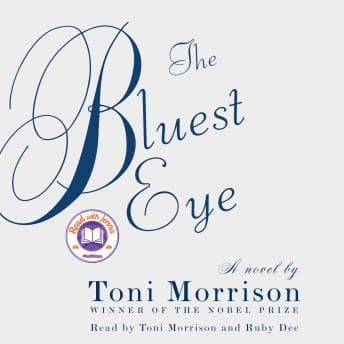
Ruby Dee was a legendary actress and a civil rights activist. She understood what this story meant, what it cost Hurston to write it, what it meant for Black women to see themselves in Janie Crawford. That understanding is in every syllable. This isn't a narrator doing a job. This is an artist completing another artist's work.
The production is clean - some editions apparently have music at chapter breaks, which sets a nice mood without being intrusive. Audio quality is crisp throughout. At just under seven hours, it's the perfect length for a weekend of walks or a long road trip.
Who Should Listen (And Who Should Skip)
If you love African-American literature, this is essential. If you've tried to read Hurston and bounced off the dialect, this audiobook might be your way in. If you appreciate poetic prose - the kind that makes you stop and replay sentences just to feel them again - this is for you. If you're interested in stories about Black womanhood, resilience, and the long journey toward claiming your own voice, this is absolutely for you.
Skip if you genuinely can't handle strong accents or dialects. Or if you need fast-paced plots. This is a slow burn. It's about interiority, about a woman's inner life unfolding over decades. If that sounds boring to you... well, you're wrong, but I can't force you.
Content-wise: there's racial discrimination, violence, a hurricane that functions as both literal and metaphorical devastation, and some difficult moments around sexual assault. It's not a light listen. It's a necessary one.
Final Grade
This reminds me of what Toni Morrison said about Hurston - that she was doing something no one else was doing, making Black life the subject rather than the spectacle. I had the same revelation listening to Anna Karenina (Dole translation)—a book I thought I knew from teaching it, until the right narrator made me hear it completely differently. Ruby Dee's narration doesn't just honor that legacy. It amplifies it.
This is why we still read the classics. And why, sometimes, we should listen to them instead.
Worth pausing the faculty meeting for. Worth standing frozen on the lakefront for. Worth every minute of those six hours and forty-five minutes.
My mom is definitely going to fall asleep during my upcoming podcast episode about this one. But I'm recording it anyway.