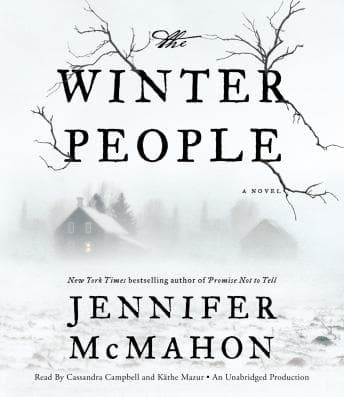
I was shelving returns at the library last Thursday — late shift, fluorescent lights buzzing that particular frequency that makes everything feel slightly wrong — when I hit play on this. By the time I locked up and walked to my car in the empty parking lot, I was genuinely checking my rearview mirror more than necessary. Jennifer McMahon gets something about rural New England dread that most horror writers miss entirely: it's not the ghosts that unsettle you. It's the quiet. The snow. The way a farmhouse can feel like it's keeping secrets in its walls.
This understands that horror isn't about gore — it's about dread.
The Diary Under the Floorboards Hit Different
The dual timeline structure is doing a lot of heavy lifting here, and mostly it works. Sara Harrison Shea's 1908 diary entries feel authentically period without being stiff, and McMahon threads this specific, gut-level desperation into Sara's voice — a mother who loses her daughter Gertie and then makes choices that are... well. Let's say Shirley Jackson walked so this author could run. The present-day storyline with Ruthie discovering her mother Alice has vanished follows a more conventional missing-person thriller structure, but McMahon keeps layering in these details about the town of West Hall — the disappearances, the legends, the way everyone seems to know something they're not saying — that prevent it from ever feeling safe.
What really gets under your skin is the mother-daughter bond as a source of horror. Not because the relationships are toxic (though some choices made here are deeply questionable), but because the love is so fierce it becomes dangerous. McMahon asks: how far would you go to keep your child? And then she answers that question in ways that made me set down the book of returns I was processing and just... stare at nothing for a second.
The pacing does wobble. The timeline jumps — 1908, present day, and a few stops in between — can feel disorienting, especially in audio where you can't flip back a few pages to reorient. There were moments around the midpoint where I genuinely lost track of which thread I was following, and I was actively listening, not multitasking. If you're someone who listens while doing dishes or driving, you're going to struggle. This demands your full attention.
Two Narrators, Two Problems, One Atmosphere
Cassandra Campbell and Kathe Mazur split narrator duties, and here's where my feelings get complicated. The good news: the dual narrator approach works beautifully for timeline differentiation. You always know where you are in time based on who's speaking, and both women are skilled at building atmosphere. Campbell especially commits to the creepy — her delivery during the diary sections has this hushed, confessional quality that made my dark apartment feel about ten degrees colder.
But. The children's voices. I need to talk about this because it nearly derailed the whole experience for me. The portrayal of the kids — particularly young Gertie — is so saccharine, so syrupy-sweet, that it actively pulled me out of scenes that should have been devastating. Horror relies on the audience caring about the vulnerable characters, and when a child sounds like they wandered in from a greeting card commercial, the stakes evaporate. I actually paused the audiobook, looked at Shirley (my cat, who was unimpressed as always), and said out loud, "Why does this child sound like a Precious Moments figurine?"
The male character voices are also a weak point — neither narrator quite lands them, and there's a flatness to the men that makes them feel less like characters and less like obstacles. In a story where the women are so vividly drawn, it's a shame the men come across as cardboard.
That said. The atmosphere. Both narrators understand that this is a ghost story first and a thriller second, and they lean into the silences, the pauses, the way a sentence can trail off and leave you filling in the horror yourself. I listened in the dark. Mistake? Maybe. Worth it? Absolutely.
Who Gets Snowed In With This
If you love atmospheric New England horror — the kind where the landscape itself feels hostile and the history of a place seeps into the present like water through old stone — this is your book. Fans of Simone St. James, fans of gothic-leaning literary horror, fans of stories where motherhood is treated as something primal and a little terrifying. You'll find something here.
Skip if: you need a tight, linear plot. Skip if children's voices done wrong will ruin your immersion. And definitely skip if you're planning to half-listen — this will punish you for it. The same demand for full attention applies to Family Upstairs — another one where the domestic dread is doing so much quiet work beneath the surface that if you're not actually present, the whole thing dissolves on you.
The Light's Still Off and I'm Not Getting Up
McMahon wrote a ghost story that's actually about grief wearing a ghost's face, and that distinction matters. The narration is uneven — brilliant in atmosphere, frustrating in execution on specific voices — but the story itself lodged in my brain the way good horror does. I finished it two days ago and I'm still thinking about Sara's diary. About what mothers build and what they bury. My podcast listeners are going to love this one, flaws and all. Finally, horror that respects the genre — even when its audiobook delivery doesn't quite keep up.