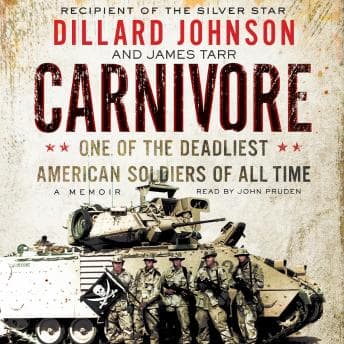

I was stress-eating kimchi jjigae at midnight - Jenny was asleep, a client's Series B pitch deck was a disaster on my laptop screen, and I needed something to pull me out of spreadsheet hell. So I put on Carnivore. Within twenty minutes I'd forgotten about the pitch deck entirely, which tells you something, because that deck was burning a $4M hole in my client's runway.
Bottom line: This is a visceral, uncomfortable, occasionally jaw-dropping war memoir that will make you rethink what "hard work" means. And I say that as someone who grew up watching his parents press shirts for 14 hours a day.
The Kill Counts Are Real. The Questions They Raise Are Bigger.
Let's get the elephant out of the room. The subtitle says "one of the deadliest American soldiers of all time," and the Pentagon numbers back it up - 488 estimated enemy KIA in a single engagement on March 22, 2003, with informal estimates pushing past 1,000 the next day. Dillard Johnson commanded a Bradley Fighting Vehicle nicknamed Carnivore during the initial push into Iraq, and the sheer scale of destruction his crew dealt is staggering. The book doesn't flinch from these numbers. It presents them almost matter-of-factly, which is either admirably honest or deeply unsettling, depending on where you sit.
Here's what got me: Johnson's cancer diagnosis from depleted uranium rounds. He's firing armor-piercing DU ammunition that's shredding Iraqi armor, and the radiation from those same rounds is quietly killing him. Stage three cancer. He beats it. Then he goes back. Back to Baghdad, this time as a sniper. I've seen startup founders mortgage their houses for their companies and I thought that was commitment. This is a different universe of commitment, one I'm not sure I fully understand, and the book doesn't try to make you understand it neatly. It just shows you.
Where the Credibility Gets Wobbly
Now - and Jenny would say I'm being harsh, Jenny is right - there's a real problem here. Multiple listeners and readers have flagged that parts of this book read more like fiction than memoir. The story order feels rearranged in places, and some accounts strain believability even with the Pentagon corroboration. James Tarr co-authored this, and you can feel the "co" in co-authored. There are moments where the prose slides into action-movie territory, all quick cuts and Hollywood pacing, and you lose the authentic voice of a soldier telling you what happened. It starts feeling like what a screenwriter thinks a soldier sounds like.
I've worked with enough founders to know the difference between a real story and a pitch. Real stories are messy, contradictory, full of dead ends. Pitches are clean. Parts of Carnivore are suspiciously clean. The Department of Defense reviewed and approved it, which gives it institutional credibility, but institutional credibility and personal truth aren't always the same thing. The display at Fort Stewart, the Soldier of Fortune cover story - all verified. But the connective tissue between those verified moments sometimes feels manufactured.
This is where the book lost me from a five-star trajectory. I wanted raw. I got raw mixed with polish, and polish in a war memoir is a red flag.
Pruden Carries What the Text Can't
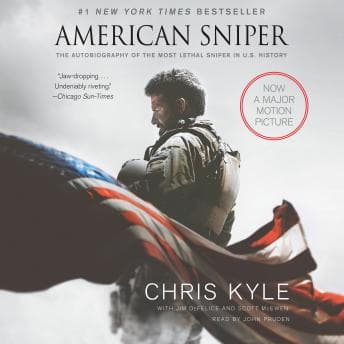
John Pruden narrates, and the man knows his way around military memoirs - he's done American Sniper and Viper Pilot too. There's a steadiness to his delivery that works perfectly here. He doesn't oversell the combat sequences, doesn't go breathless when the body counts climb. He reads them with the flat affect of someone delivering an after-action report, which is exactly right. When the emotional beats hit - the cancer diagnosis, the decision to redeploy - he lets the silence do work. No dramatic pauses that feel staged. Just... weight.
No sound effects, no music, just Pruden and the text. Solo narration, clean production. For a nine-hour military memoir, that's the correct choice. You don't need cinematic production when the content is already this intense.
Who Gets Value Here (And Who Doesn't)
If you consume military memoirs regularly - if you've already done American Sniper, Lone Survivor, the Marcus Luttrell shelf - this belongs in your rotation. The Bradley Fighting Vehicle perspective is genuinely different from the infantry or sniper memoirs that dominate the genre. Mechanized warfare gets almost no first-person treatment in popular military lit, and Johnson's account of operating inside that vehicle during engagements fills a real gap. The same appetite for voices that don't usually get the spotlight is what drew me to Journey of Crazy Horse: A Lakota History — another account of warfare told from inside a perspective that mainstream military history keeps filing away in the margins.
If you're coming to this expecting a straight, unvarnished, journal-style account? Manage expectations. This is a polished product. Sometimes that polish serves the story. Sometimes it obscures it.
Skip to the Iraq invasion chapters if you're short on time. The pre-deployment setup is standard military memoir preamble - grew up tough, found the Army, became the guy. You've heard it. The war chapters are where your credit earns its keep.
The Consulting Debrief
My parents never served, but they understood something Johnson clearly understands too: you do the work in front of you, you don't complain, and you deal with the consequences after. The difference is my parents' consequences were arthritis and bad knees. Johnson's was cancer from his own ammunition. That contrast sat with me long after the audiobook ended.
The key takeaway is worth the listen. The credibility questions keep it from greatness. At 2.0x speed, you're looking at about four and a half hours - manageable, and honestly the pacing holds up at that speed without losing combat clarity. Pruden's delivery is clean enough to handle it.
Worth a credit if military memoir is your genre. If you're on the fence, borrow it first and see if the Bradley perspective hooks you. It hooked me. I just wish I trusted every word of it.








![Steve Jobs [unabridged audiobook] audiobook cover](/_next/image?url=https%3A%2F%2Fcovers.audiobooks.com%2Fimages%2Fcovers%2Ffull%2F9788499923406.jpg&w=1920&q=75)