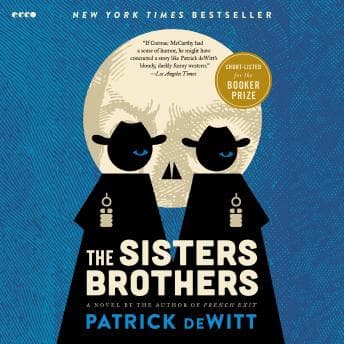

Everyone told me this was a dark comedy Western. A romp. A buddy road trip with guns. And sure, yeah, it is those things. But I finished The Sisters Brothers on a Sunday morning walk along the lakefront with Denise, and I had to stop on a bench near Montrose Harbor because the last hour hit me somewhere I wasn't expecting. This isn't just a funny Western. It's a quiet, aching meditation on whether a violent man can choose to stop being violent - and whether the world will let him.
Patrick deWitt does something I try to teach my juniors every semester and mostly fail: he writes a first-person narrator whose voice is so specific, so fully inhabited, that you forget you're reading fiction. Eli Sisters speaks in this formal, slightly archaic register - he'll describe shooting a man with the same measured politeness he uses to describe brushing his horse's teeth. (Yes, there's a toothbrush subplot. It's wonderful.) The gap between his gentleness and his profession is the whole engine of the book, and it never stops being both funny and devastating.
The Cowboy Who Reads Like a 19th-Century Gentleman
Here's what deWitt is really doing with Eli's voice: he's built a man who is too sensitive for his own life. Eli worries about his weight. He develops genuine affection for his horse. He contemplates the morality of what he does while his brother Charlie drinks himself into blackout rage beside him. The comedy comes from Eli narrating genuinely horrible frontier violence with the same measured, slightly bewildered tone he uses to describe trying a new brand of toothpaste. It's deadpan in the best sense - not flat, but so controlled that the horror sneaks in through the cracks.
This reminds me of what Hemingway said about the iceberg theory, except deWitt's iceberg is wearing a cowboy hat and apologizing for the blood. The prose deserves to be savored. DeWitt writes sentences that sound simple until you realize they're carrying three or four emotional registers at once.
John Pruden's Gamble - And Why It Mostly Pays Off
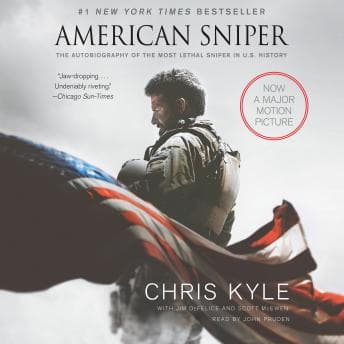
Now, the narration. I need to be honest here because this is where your mileage will genuinely vary. John Pruden reads Eli with a laid-back cowboy drawl - not cartoonish, not Sam Elliott gravel, just this quiet, slightly sad Western inflection that suits the character's temperament perfectly. His comedic timing is excellent. He understands that pause is punctuation. When Eli describes something awful happening and then immediately pivots to worrying about his horse, Pruden doesn't wink at the audience. He plays it straight, which makes it ten times funnier.
But - and I say this as someone who listens at 1.0x because the author chose those words - there are stretches in the middle third where the deliberate pacing tests your patience. Not because Pruden is doing anything wrong, exactly. He's matched his pace to Eli's temperament, which is contemplative and measured. The problem is that when the story itself slows down between set pieces, contemplative-on-contemplative can feel like wading through mud. I was grading sophomore essays on The Great Gatsby during one of these stretches and caught myself drifting to the papers. That's not a great sign.
Pruden's character differentiation is subtle - tone shifts and slight accent variations rather than full-on voice acting. Charlie gets a rougher, more impatient edge. Hermann Kermit Warm (what a name) gets something slightly more earnest. It works because the book is really Eli's interior monologue with other people occasionally interrupting.
My Students Would Hate This. I Love It.
What stayed with me isn't any single scene but the accumulation - the way Eli's small acts of decency keep bumping up against the requirements of his job. He wants to be good. He just has no framework for it. If you loved True Grit by Charles Portis, this is its spiritual successor - not in plot, but in the way it uses archaic diction to create a voice so distinctive you'd recognize it in a single sentence. I kept thinking about how that same quality - a narrator so embedded in their historical moment that the language itself becomes the characterization - is what makes Dragon and the Raven work too, even if that one doesn't quite stick the landing the way deWitt does. And at seven hours and change, it doesn't overstay its welcome. DeWitt knows when to get out, which is more than I can say for most novels I assign.
The movie adaptation with Joaquin Phoenix and John C. Reilly is fine, but it can't do what the audiobook does - sit inside Eli's head while he quietly talks himself through the contradictions of his life. That's prose territory. That's what this medium is for.
Who Rides and Who Walks Away
If you want explosive Western action every chapter, you'll get restless. If monotone narration drives you nuts regardless of intent, try the print version instead - the book is genuinely great either way. But if you appreciate a narrator who trusts silence, who lets dark comedy land without underlining the punchline, Pruden's performance rewards your patience. Listen with focus. This isn't a background book.
Worth Pausing the Faculty Meeting For
This is why we still read the classics - or in this case, the books that'll become classics. DeWitt wrote a Western that's really about the impossible desire to be gentle in an ungentle world. Pruden mostly nails the delivery, even when the pacing dips. I'll be recommending this on the podcast. All 47 of my listeners are going to love it. Mom might even stay awake for this one.