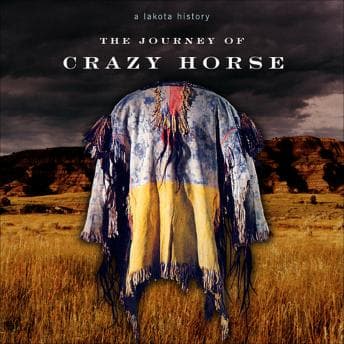

The "Anti-Textbook" Experience
I was grading a stack of juniors' essays on The Great Gatsby last Tuesday—which, let's be real, is mostly me correcting comma splices and wondering if anyone actually read the book—when I needed a break. A serious break. I switched over to The Journey of Crazy Horse, put my headphones on, and started chopping vegetables for dinner.
And immediately, the noise in my head stopped.
Look, I teach American Literature. I know the textbook version of Crazy Horse. The warrior. Little Bighorn. The statue being carved out of a mountain in South Dakota that never seems to get finished. But listening to Joseph M. Marshall III—who is Lakota himself—tell this story? It's not history class. It's sitting around a fire while an elder speaks. (And honestly, after listening to teenagers use "literally" incorrectly for six hours, this was the spiritual cleanse I didn't know I needed.)
Not Just Narrating, But Remembering
Here's the thing about author-narrated audiobooks: usually, they're a gamble. Writers aren't actors. But Marshall isn't trying to be an actor. He's a storyteller in the oral tradition sense.
His voice is warm, gravelly, and deliberate. And I mean deliberate. There's a rhythm to his speech that feels ancient. He understands that pause is punctuation. When he pronounces Lakota names and phrases, it flows like water—none of that awkward stumbling you get when a British narrator tries to read American Indigenous history. That authenticity can't be faked.
But—and I have to be honest here—it is slow.
My students, who listen to podcasts at 2.0x speed while playing Minecraft, would hate this. They'd say it drags. And yeah, if you're looking for a high-octane thriller pace, you're going to bounce off this hard. There were moments, specifically during the descriptions of camp life, where I felt my eyelids getting heavy. (Though that might've been the wine. Or the grading. Let's blame the grading.)
The Man Behind the Legend
What really got me, though, was the content itself. We usually see Crazy Horse as this mythical figure of resistance. Marshall strips that away to show us the guy—the son, the quiet strategist, the person who had a vision that terrified and drove him.
The production includes these little interludes of Lakota flute music. Usually, sound effects in audiobooks make me cringe (looking at you, Star Wars audiobooks with the laser noises), but here? It worked. It creates a mood. A vibe. It grounded the story in a way that felt respectful rather than gimmicky.
Marshall paints this portrait of a man who was humble to a fault, which stands in such stark contrast to the egos I deal with in the faculty lounge every day. Hearing about Crazy Horse's reluctance to lead, juxtaposed with his absolute brilliance on the battlefield, made me rethink how I talk about this era in my classroom.
Who Should Listen (And Who Should Skip)
If you want to understand American history from a perspective that usually gets relegated to a sidebar in a textbook, this is essential. Skip it if you need fast pacing or plan to listen on late-night drives—the meditative rhythm will put you to sleep.
Final Thoughts
Is this audiobook perfect? No. The audio quality is clean, but the pacing is sleepy.
But that same need to hear the untold side of the story is what drew me to The New Jim Crow—another book that completely reframes what I thought I knew about American history. It's poetic, it's heartbreaking, and it feels like a privilege to listen to. I kept it at 1.0x speed because speeding up an elder just felt disrespectful, you know?
My mom would probably love this one. I might actually send it to her. She'd appreciate the quiet dignity of it. Me? I'm just glad I listened. It reminded me that history is made by people, not statues.









