
"The evil witch."
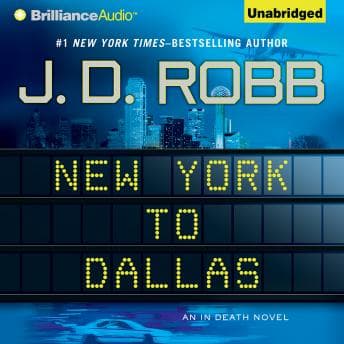
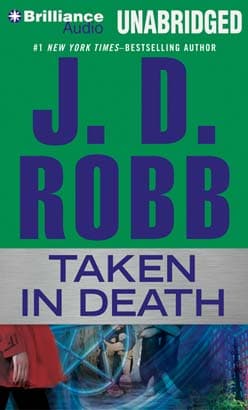
That's what little Henry MacDermit calls the woman who took him and his sister. And somewhere around the 2-hour mark, sitting in my driveway at 7:45 AM with the engine still running, I realized I was gripping my steering wheel like I was about to code someone. Because J.D. Robb took a fairy tale breadcrumb trail - literally, a child leaving electronic clues like some futuristic Hansel - and turned it into something that made my chest tight.
This is a short one. Four hours. I finished it in two shifts of driving, and honestly? That's about right for what it is.
When the Case Gets Personal and It Actually Works
Look, I've read enough In Death books to know the formula: murder, Eve gets intense, Roarke is ridiculously competent and hot, Peabody says something grounding, case closed. And this novella follows that structure pretty faithfully. But here's what got me - the kidnapping angle hits Eve differently, and Robb doesn't just tell you it connects to her childhood trauma. She puts you in it. Eve's brain keeps pulling her back to being that hurt kid, and the way it bleeds into her investigative focus feels... real. Not melodramatic. Just the way trauma actually works when you're trying to do your job.
As someone who's actually worked a code on a pediatric patient while thinking about her own kids at home - yeah. That compartmentalization that's not quite compartmentalization? Robb nails it.
The kidnapper herself is genuinely unsettling. Ritualistic killings, coercion, this whole twisted revenge motive that unfolds piece by piece. She's not some criminal mastermind - she's damaged and dangerous, which is scarier. That same slow-burn villain reveal, where the danger comes from psychology rather than power, is what I kept chasing when I picked up Razor Girl - though that one goes considerably darker and weirder before it's done. The reveal of her history comes through the investigation in a way that felt procedurally honest. Eve and her team actually do police work. They follow digital trails, they run backgrounds, they piece together a sordid past. Nobody just intuits the answer. (Medical thrillers, take notes.)
Now - the toy clue. Henry uses a child's toy to leave a trail for the cops to follow, and it's both heartbreaking and clever. A little kid trying to be brave in a situation no child should face. That's the scene Carlos asked about when I came inside looking like I'd been crying. I blamed allergies. In June. In Phoenix. He didn't buy it.
Susan Ericksen Doing What Susan Ericksen Does
I've listened to enough of this series to know that Ericksen IS Eve Dallas at this point. But what I noticed specifically in this one is how she handles the scenes with the children. Her voice for Henry has this trembling determination - not a cartoonish "kid voice" but something smaller, tighter, that makes you feel how scared he is while trying to be brave for his sister Gala. And then she snaps back to Eve's clipped, no-BS tone and the whiplash is intentional. It works.
Her Roarke is consistent - that slight accent, the warmth underneath the control. And her tech team voices have this specific energetic shorthand, like people who've been working together long enough to finish each other's sentences. The differentiation between characters is solid. You always know who's talking, even during rapid-fire team scenes.
The medical details are accurate. Finally. Or rather - the procedural details. The crime scene processing, the way injuries are documented, the forensic approach. Nothing made me yell at my dashboard this time. Which is high praise, trust me.
The Four-Hour Question
Here's where I have to be honest. At four hours, this is a novella, and it costs the same credit as a 15-hour novel. The story is tight, well-paced, and emotionally effective. But you feel the compression. Characters who would normally get more development in a full-length In Death book get sketched rather than painted. The kidnapper's backstory, while disturbing, gets resolved faster than it probably deserves. And if you're not already invested in Eve and Roarke's relationship, the emotional shorthand won't land the same way.
For series fans, that shorthand is actually a feature - you get to slide right back into this world without setup. For newcomers, start elsewhere.
Night Shift Prescription
Night shift approved - but with a caveat. If you've got kids, maybe don't listen to this one right before you go home and check on them sleeping. Or do, and just hold them a little tighter. Either way.
Perfect for that post-shift decompression when you need something with tension but also resolution. Because unlike real life in my trauma center, this one wraps up. The kids come home. And sometimes that's exactly what you need to hear at 7 AM.
My mom would love this. (She still thinks I should've been a doctor, but she borrows my Audible login, so who's really winning here?)
Series fans - grab it. Just maybe wait for a sale if you're credit-conscious about the runtime.