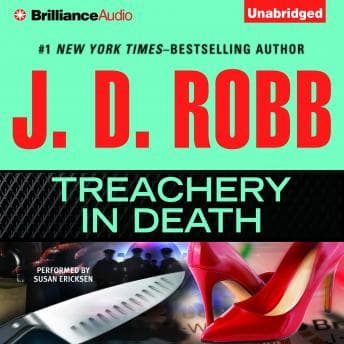

What happens when the people supposed to protect us are the ones we need protection from?
I was three hours into my drive home after a particularly brutal night shift - we'd had a multi-vehicle trauma come in around 2 AM, and I was running on coffee and spite - when Peabody found herself naked in that shower stall, listening to two dirty cops discuss murder like it was their grocery list. And I swear my exhaustion evaporated. I sat in my driveway for twenty extra minutes because I couldn't stop listening.
The Vulnerability That Hooked Me
Here's the thing about Peabody's situation that J.D. Robb absolutely nails: the powerlessness. She's literally naked, dripping wet, crammed into a shower stall, overhearing cops - her colleagues, people with badges and guns - casually referencing someone named Keener who needs to "look like an OD." As someone who's actually worked a code on overdose patients, that phrase hit different. The clinical detachment of planning someone's death to look like just another statistic? Chilling.
And Peabody can't move. Can't breathe too loud. Can't do anything but stand there and absorb every damning word. That vulnerability - physical, professional, emotional - drives this entire book. She's just been promoted to primary detective, finally stepping out of Eve Dallas's shadow, and now she's got the weight of exposing police corruption on her shoulders. No pressure.
Susan Ericksen Owns These Characters (And That Irish Accent)
I've been listening to this series for years now, and Susan Ericksen has become Eve Dallas in my head. There's no separating them. But can we talk about Roarke for a second? That Irish accent is - okay, I'm a married woman, Carlos doesn't need to know how that voice affects me during my commute. It's impeccable. Alluring. The kind of voice that makes you understand exactly why Eve Dallas fell for a reformed criminal billionaire.
What gets me is how Ericksen differentiates the characters. Garnet and Oberman - the dirty cops - have this particular edge to their voices. You can hear the entitlement, the arrogance of people who think they're untouchable. It's not just "villain voice," it's specific. These are cops who've been getting away with it long enough to get sloppy. That's in the performance.
The Procedural Details (Finally, Someone Gets It Right)
Look, I spend half my audiobook life yelling at my dashboard about medical inaccuracies. But police procedurals can be just as bad - the shortcuts, the "we got DNA results in three hours" nonsense. Robb doesn't do that here. The investigation unfolds methodically. Eve and Peabody can't just arrest these cops - they need hard evidence, they need to build a case that won't get thrown out, and they're working against people who know exactly how to cover their tracks.
The tension of investigating your own? Of not knowing who else might be dirty? That paranoia seeps through every scene. And it's realistic. Internal affairs investigations are political nightmares. Robb clearly did her homework.
Who's This For?
If you're new to the In Death series, this is book 32. Can you start here? Technically yes - Robb gives enough context. But you'd be missing years of relationship development between Eve, Roarke, and Peabody. The emotional stakes hit harder when you've watched Peabody grow from nervous rookie to this moment where she has to prove she's ready. Long-time fans? This one's essential. Peabody finally gets her moment, and it's earned.
Who should skip: If you need fast-paced action over methodical investigation, this might feel slow. And content-wise - violence, language, and yes, some spicy scenes between Eve and Roarke. (Carlos asked why I was blushing at a red light once. I blamed the heater.) If that's not your thing, you might want to skip ahead during certain chapters.
Night Shift Approved
Thirteen hours is a commitment, but this moved. I finished it over four night shift commutes and one very long Saturday where I pretended to be cleaning the house while actually just wandering room to room with my earbuds in. The pacing kept me alert even at 7 AM when I should've been unconscious. That same methodical tension kept me hooked through Sycamore Row, where the legal procedural details felt just as authentic.
The dirty cop storyline hit close to home in a weird way. Healthcare has its own version of this - people in positions of trust who abuse it. Watching Eve and Peabody navigate the politics of exposing colleagues, knowing the personal cost, knowing some people won't believe them? That's real. That's uncomfortable. That's exactly what good thrillers should do.
My mom would love this. She's been asking what I'm listening to lately, and honestly, I might finally convert her from her telenovelas. Strong women taking down corrupt systems? That's her love language.