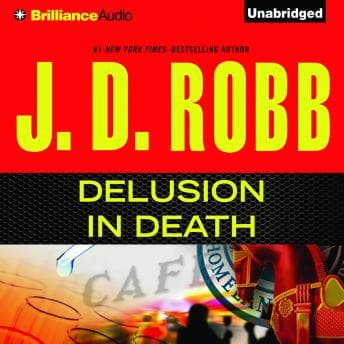

I was on my morning jog through Cambridge when the first mass murder happened in my ears. Not ideal timing, honestly. There's something deeply unsettling about listening to eighty people die from chemically-induced psychosis while you're trying to maintain a steady heart rate. My Fitbit probably thought I was having a cardiac event.
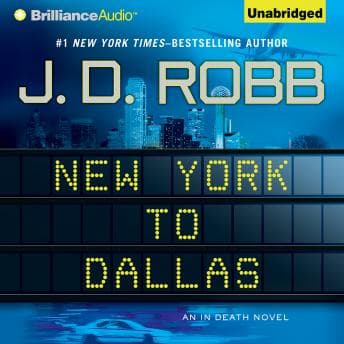
But here's the thing about J.D. Robb's Delusion in Death—it grabbed me by the throat and wouldn't let go. And I've read enough crime fiction to be pretty jaded about fictional body counts.
The Psychology of Mass Hysteria (Finally, Someone Gets It)
Look, I spend my professional life studying why people do terrible things to each other. So when a thriller tackles mass delusion and chemically-induced psychosis, I'm immediately suspicious. Most authors get it embarrassingly wrong. The human mind doesn't work like a light switch—you can't just flip someone into "murder mode" with a cocktail of drugs.
Except... Robb actually understands the mechanics here. The way she describes the progression—the friction in the air, the creeping paranoia, the hallucinations of monsters and swarms of bees—that's not random thriller nonsense. That's a pretty accurate depiction of how certain hallucinogenic compounds interact with the fear centers of the brain. The amygdala hijack is real, and she captures it without turning it into a neuroscience lecture.
What makes this character study fascinating is watching Eve Dallas process something that defies her usual investigative toolkit. She can't interrogate the dead. The survivors are unreliable witnesses because their perceptions were literally chemically altered. It's a beautiful psychological puzzle, and I found myself taking mental notes like I was reviewing a case study.
Susan Ericksen Is The Voice In My Head Now
I've listened to maybe... forty? Fifty audiobooks in the thriller genre over the past few years. Housekeeper: A twisted psychological thriller had similarly strong narration that elevated the psychological tension. Susan Ericksen is now in my top five narrators, and I'm a little annoyed it took me this long to discover her.
Her Eve Dallas is perfect. Tough without being cartoonish. Emotionally guarded in that way that tells you exactly what she's protecting. When Eve's processing a crime scene, Ericksen's delivery is clipped and professional. When she's with Roarke, there's this subtle warmth that creeps in—not sappy, just... present. The contrast tells you everything about Eve's psychology without the author having to spell it out.
(My therapist would have thoughts about Eve's attachment style, by the way. Classic avoidant with secure tendencies emerging through her relationship with Roarke. But I digress.)
The supporting cast voices are equally impressive. Each character is immediately distinguishable—not through gimmicky accents but through rhythm and tone. Peabody sounds like Peabody. Roarke sounds like Roarke. I never once had to rewind to figure out who was speaking.
Where the Investigation Slows Down
The pacing here is interesting from a structural standpoint. Robb front-loads the horror—you get the mass casualty event early, which is smart. It gives Eve (and the listener) something visceral to carry through the investigation. But then the middle section becomes almost procedural. Interview, forensics, theory, repeat.
Now, I didn't mind this. I actually find procedural investigation soothing in a weird way. (Don't psychoanalyze me.) But if you're the type who needs constant action beats, you might find yourself checking how much time is left around the six-hour mark.
The payoff is worth it, though. When the pieces start clicking together—when Eve figures out the "why" behind the "how"—it's genuinely satisfying. The villain's motivation is rooted in actual human psychology, not some comic book evil plan. That same psychological authenticity is what made Housekeeper work so well for me—the antagonist felt like someone I could actually encounter in a case file. The research actually shows that ideological extremism combined with personal grievance creates the most dangerous perpetrators, and Robb clearly did her homework.
The Roarke Factor
I should mention—Roarke owns the bar where the attack happens. This could've been a lazy plot device, but Robb uses it to explore something more nuanced: how do you investigate a crime that's personally connected to your spouse without compromising the case? Eve's internal conflict here is compelling because it's realistic. She doesn't magically separate personal and professional. She struggles. She snaps at people. She makes mistakes.
This is a fascinating case study in how intimate relationships complicate professional judgment. Eve's aware of her bias and actively fights against it, which is more psychologically sophisticated than most thriller protagonists manage.
Case Closed (My Assessment)
Honestly? I probably won't re-listen immediately—I don't typically revisit mysteries once I know the solution. But I'm absolutely continuing with this series. Ericksen's narration is the kind that makes thirteen hours feel like six, and Robb writes characters who behave like actual humans with actual psychological complexity.
Who should listen: Anyone who appreciates crime fiction that respects both the procedural elements AND the psychology. If you want your villains motivated by recognizable human pathology rather than cartoon evil, this is your book. Who should skip: If you're sensitive to violence, fair warning—the opening sequence is brutal. Not gratuitous, but unflinching. The chemical paranoia descriptions might also be triggering for anyone with anxiety disorders.
For everyone else, put it on during your commute. Just maybe not during your morning jog. Your heart rate will thank you.