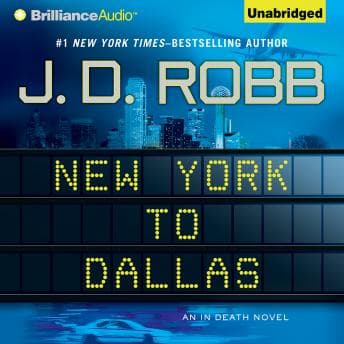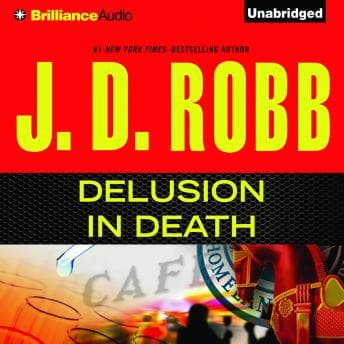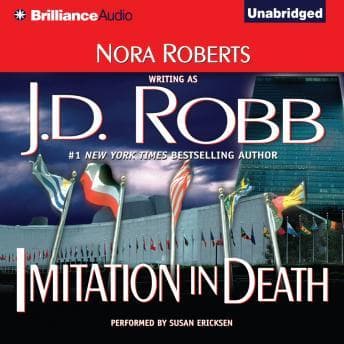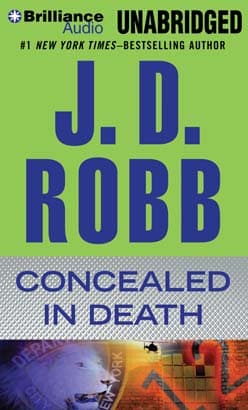

Here's something I wasn't expecting: I cried for the murderer.
I know. I KNOW. As someone who studies criminal psychology, who has read countless case studies on perpetrators of violence, who approaches these narratives with clinical distance—I should be immune to this. But J.D. Robb got me. Forty-something books into this series, and she still found a way to make me feel something complicated about someone who killed twelve teenage girls.
Let me back up. Concealed in Death opens with Roarke—Eve Dallas's impossibly wealthy, impossibly attractive husband—swinging a sledgehammer into a wall and discovering human remains. Two skeletons. Then more. Twelve total, all girls, all hidden in what was once a shelter for homeless teens called The Sanctuary. The irony of that name isn't lost on anyone, least of all Eve.
Reconstructing the Forgotten
What makes this installment fascinating from a behavioral standpoint is how Robb handles the challenge of investigating victims who've been dead for decades. These girls aren't fresh cases with grieving families demanding answers on the evening news. They're cold. Forgotten. Some of them were runaways whose parents stopped looking. Others were throwaways—kids the system failed so completely that their disappearance barely registered.
Eve has to reconstruct not just their deaths, but their lives. Who were these girls before they became bones in a wall? The forensic anthropologist work here is genuinely interesting—putting faces to skulls, identifying old injuries, piecing together fragments of identity. It's slower than the typical In Death thriller, and I get why some listeners find that frustrating. But psychologically? This is rich territory.
The research shows that cold case investigators often struggle with what we call "secondary trauma by proxy"—they're absorbing the grief of families who've been waiting years, sometimes decades, for closure. Eve experiences this. You hear it in how she talks to the parents, how she processes each identification. Susan Ericksen's delivery during these scenes—particularly when Eve has to tell parents their missing child is dead—is genuinely affecting. One listener mentioned it "chokes them up," and yeah. Same.
Why Susan Ericksen Just Works
I've been listening to Ericksen narrate this series for... honestly, I've lost count of how many books. At this point, her voice IS Eve Dallas in my head. That slightly rough, no-nonsense New York cop cadence. The way she softens—just barely—when Eve is alone with Roarke. The distinct voices for Peabody (endlessly enthusiastic), Summerset (perpetually disapproving), and the rotating cast of suspects and witnesses.
Someone described her performance as "like listening to a play or old-time radio show," and that's accurate. She's theatrical without being over-the-top. Every character sounds like themselves. After 40+ books, that consistency is remarkable—and honestly, it's what keeps me coming back to audio instead of reading these in print. The production quality is clean, no weird audio artifacts or jarring transitions.
Where This One Gets Complicated
Look, I'm going to be honest—this isn't my favorite In Death novel. The pacing is slower because it's procedural by necessity. You can't rush a cold case. The victims are long dead, the witnesses have fuzzy memories, and the physical evidence is decades old. Eve has to grind through interviews and records and dead ends.
But here's what elevates it: the ending. Without spoiling anything, Robb does something I rarely see in crime fiction—she makes you understand the killer. Not excuse them. Not forgive them. But understand the psychological mechanisms that led to this horror. The protagonist exhibits classic compartmentalization, a fractured sense of self that allowed them to commit these acts while maintaining a facade of normalcy.
It's a case study in how trauma begets trauma. How the abused can become abusers. How good intentions can curdle into something monstrous when mixed with mental illness and opportunity. Wife Between Us explores similar psychological territory—that uncomfortable space where you understand someone's trauma without excusing their choices.
I found myself asking: why does this particular killer affect me differently? And I think it's because Robb refuses to make them a cartoon villain. The evil here is human-scale. Recognizable. Which makes it worse. That same recognition of everyday horror shows up in From Dead to Worse, where the supernatural elements can't hide the very human motivations underneath.
Who This Is (and Isn't) For
Skip this if you're new to the series—start earlier, get to know Eve and Roarke first. And if you're looking for fast-paced action, look elsewhere. But longtime fans who appreciate character depth over body count? This one hits different. It's quieter, sadder, more contemplative.
Eve is forced to reckon with the limits of justice—she can identify the killer, but she can't give these girls their lives back. She can't undo the decades of not-knowing their families endured.
Ericksen delivers all of this with the emotional intelligence the material demands. When she voices Eve's final confrontation with the killer, there's something almost mournful in it. Justice served, but at what cost?
Case Notes, Closing
I listened to most of this during morning runs through Cambridge, and I'll admit—I slowed down more than once. Not because I was tired, but because I needed to sit with what I was hearing. That's the mark of something that works.
My therapist would probably have a lot to say about why I keep returning to stories about murdered women. But that's a session for another day.