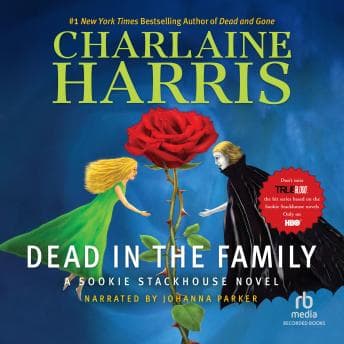

Look, I'm going to admit something that might get my academic credentials revoked: I've been listening to the Sookie Stackhouse series during my morning jogs through Cambridge, and my therapist would have thoughts about why a behavioral psychologist finds a telepathic barmaid's love life so compelling. But here we are, eight books deep, and I'm not stopping.
The Psychology of Supernatural Politics
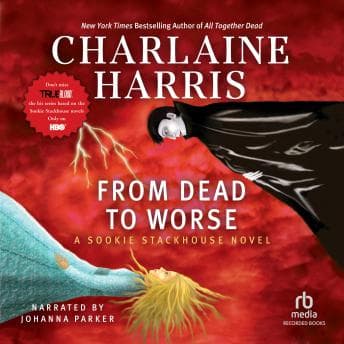
What makes From Dead to Worse genuinely interesting from a character study perspective is how Charlaine Harris handles trauma accumulation. Sookie's just survived Hurricane Katrina and a vampire summit explosion, and now her boyfriend Quinn has vanished. The protagonist exhibits classic avoidant coping mechanisms—throwing herself into work, compartmentalizing the supernatural chaos around her—and honestly? It tracks. This is how real people respond to overwhelming stress. They don't process it neatly. They shove it in a mental drawer and keep moving until the drawer explodes.
The political machinations in this book are where Harris really shines. We've got werewolf pack power struggles, vampire territory disputes, and Sookie caught in the middle because of course she is. The research actually shows that humans are hardwired to be fascinated by status hierarchies and alliance formation—it's why we love watching reality TV and reading about vampire courts. That same fascination with group dynamics under pressure shows up in It, though King takes it to much darker places. Same psychological itch, different packaging.
What I found myself asking: why does Eric Northman work so well as a character? He should be a red flag factory. Ancient vampire, manipulative, blood-bonded to our protagonist without her full consent. But Harris writes him with enough complexity that you understand his internal logic, even when you're side-eyeing his choices. That's harder to pull off than it looks.
Why Johanna Parker Is Sookie Stackhouse
Okay, so I need to talk about Johanna Parker's narration because she's doing something really clever here. Her Southern accent isn't just an affectation—it's a characterization tool. The warmth in her voice sells Sookie's fundamental decency, the way she keeps trying to do right by people even when those people are literally supernatural beings who could kill her without breaking a sweat.
Parker's pacing is what elevates this from good to genuinely immersive. She knows when to let a moment breathe and when to push forward. The transitions from light banter to genuine menace? Smooth as anything. I was folding laundry during one of the darker scenes and had to stop because the shift in tone was so effective I forgot I was holding a sock.
The character voices are distinct enough that you always know who's speaking, which sounds basic but is surprisingly rare. Eric sounds different from Bill sounds different from Sam sounds different from the various werewolves running around causing problems. (Don't get me started on werewolf pack dynamics. The alpha-beta hierarchy stuff is pseudoscience, but Harris uses it as a storytelling framework, and I've made my peace with it.)
The Betrayal Problem
Here's where I put on my psychologist hat more firmly: this book deals with betrayal by someone Sookie loves, and the way she processes it is—frustratingly realistic. She doesn't have a dramatic breakdown. She doesn't immediately cut ties. She does that very human thing of being hurt and confused and still caring, which is messy and uncomfortable and exactly how attachment works.
The thing about the Sookie Stackhouse series is that it's secretly a character study disguised as paranormal romance. Yes, there's action and supernatural politics and romantic tension. But the core of it is watching one woman navigate impossible situations while trying to maintain her sense of self. That's compelling. That's why I keep jogging through Cambridge with vampires in my ears.
Would I Listen Again?
Probably not immediately—I've got a stack of research papers that won't write themselves and my mother keeps asking when I'm going to settle down (Maa, I'm busy analyzing fictional telepaths). But for fans of urban fantasy who want character-driven storytelling with genuine emotional stakes? This delivers.
Johanna Parker's narration makes this a better experience than reading the physical book would be. I don't say that lightly. Some audiobooks are just books read aloud. This one is a performance. The ten-hour runtime flew by, and I found myself taking longer routes just to keep listening.
Who should listen: Urban fantasy fans who want a protagonist whose psychological responses actually make sense, and anyone who appreciates strong character work wrapped in supernatural packaging. Who should skip: If you're sensitive to violence, spicy content, or language that would make my grandmother clutch her pearls, sample first. I got similar satisfaction from Giving Up The Ghost, though that one's more of a quick psychological case study than a full character arc. Sookie Stackhouse has been waiting for you.