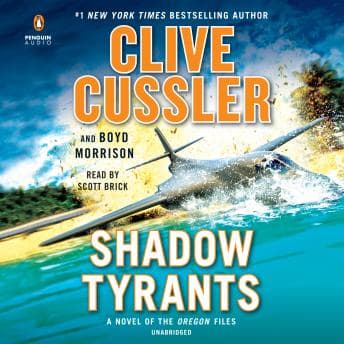

Look, I'll be honest - I picked this up because I needed something to listen to while debugging a particularly nasty memory leak, and Cussler books are basically the literary equivalent of comfort food. You know exactly what you're getting. And that's... kind of the problem? But also the appeal?
The Nine Unknown Men (Yes, Really)
So the premise involves an ancient secret society called the Nine Unknown Men - which, fun fact, is actually based on a real legend from Indian history. As someone who spends way too much time on worldbuilding wikis instead of writing his thesis, I appreciated that they pulled from actual mythology here. The idea is that these nine dudes have been guarding humanity's most dangerous secrets for nearly two thousand years, and now their descendants have split into rival factions trying to save the world through... well, potentially destroying it.
It's got that Cussler DNA all over it. Secret societies, ancient mysteries, cutting-edge tech, and Juan Cabrillo being basically a maritime James Bond with better toys. The Oregon itself is basically a character - a disguised spy ship packed with more gadgets than my D&D group's artificer character. There's a supercomputer at sea, satellites that can wipe out technology globally, and enough action set pieces to fill three movies.
But here's where it gets complicated for me. The worldbuilding is surface-level. Like, really surface-level. In a Sanderson book, you'd get the whole history of the Nine Unknown Men, their internal politics, maybe a magic system with clear rules. Here it's more like "ancient secret society exists, they have cool stuff, now watch things explode." Which is fine! That's the genre! But my brain kept wanting more depth that wasn't coming.
Scott Brick Carrying the Party
Okay, so Scott Brick. The man has won like twenty Earphone Awards and an Audie, and you can hear why. His narration is clean, dramatic, and he keeps the pacing tight even when the plot gets a little... let's say "enthusiastic" with its action sequences. His character voices are distinct enough that I never lost track of who was talking, which is crucial when you're half-focused on why your code is throwing null pointer exceptions.
Honestly? Brick is carrying this book harder than our party's cleric carries our combat encounters. Several listeners basically said the same thing - the narration elevates material that might otherwise feel generic. And yeah, I felt that. There were moments where the dialogue got a bit stilted (Boyd Morrison's characterization isn't his strongest suit), but Brick smoothed over those rough edges with sheer vocal charisma.
The production quality is pristine. No weird audio artifacts, no jarring transitions. I listened at 1.25x during coding sessions and it held up perfectly.
Where the Gears Grind
Here's my main gripe - the characters feel like action figures rather than people. Juan Cabrillo is competent and cool, but I couldn't tell you what keeps him up at night beyond "bad guys doing bad things." The crew of the Oregon are skilled professionals who... do skilled professional things. There's banter, sure, and some of it's genuinely funny. But when I compare it to something like Joe Abercrombie's First Law series, where every character has depth and contradictions and you feel their humanity - it's just not the same league. I got more emotional investment from It Starts with Us: A Novel, and that's saying something given how different the genres are.
(And yes, I know I'm comparing a Cussler thriller to grimdark fantasy. My advisor would call this "scope creep." I call it "having standards.")
The plot itself is pretty over-the-top. Two factions with world-ending technology, satellites that can brick every computer on Earth, and our heroes somehow managing to be in exactly the right place at the right time. It's not trying to be realistic, and that's fine. But if you're looking for something that'll surprise you? This ain't it.
Roll for Initiative (Or Don't)
Queue it up if: You want background entertainment for commutes, coding sessions, or any activity where you need something engaging but not demanding. Cussler fans already know the drill. Newcomers to the Oregon Files might want to start earlier in the series, but this works fine as a standalone popcorn listen.
Skip it if: You need deep character work or worldbuilding that rewards close attention. If you're the type who reads Sanderson appendices for fun (guilty), the surface-level mythology here will leave you hungry.
Logging Off
I listened to this over about a week of commutes and coding sessions, and it did exactly what I needed it to do. Kept me entertained. Didn't require my full attention. Scott Brick's voice is genuinely pleasant to have in your ears for ten hours.
Is it going to blow your mind? No. Is it the literary equivalent of a big-budget action movie you watch on an airplane? Absolutely. And sometimes that's exactly what you need.
Now if you'll excuse me, I have a thesis I should probably be working on. (I won't be.)