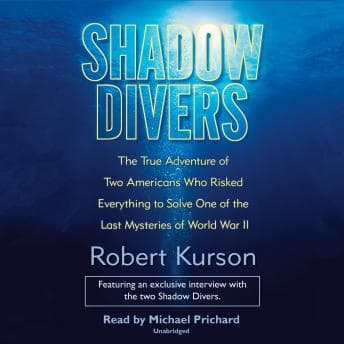

This book is the best nonfiction thriller I've listened to in years, and I've been through a lot of them.
I picked it up on a recommendation from a buddy who used to do EOD work - he said it was the only book that made his palms sweat while reading. I started it on a long drive to a client site in Houston and nearly missed my exit twice. By the time I got home, I sat in the driveway for another forty minutes because I couldn't turn it off. Linda knocked on the truck window thinking something was wrong. Nothing was wrong. Everything was very, very right.
Two Guys, 230 Feet of Dark Water, and Zero Margin for Error
Let me cut to the chase - Robert Kurson took a true story about deep-wreck scuba diving and turned it into something that reads like the best kind of war narrative. John Chatterton and Richie Kohler are the real deal. Chatterton's a Vietnam combat medic turned obsessive wreck diver. Kohler's a brash, confrontational guy who collects Nazi memorabilia - and yes, Kurson doesn't shy away from how uncomfortable that is before showing Kohler's genuine transformation as he learns the actual human cost of what he'd been romanticizing.
The setup: an uncharted German U-boat sitting in 230 feet of water off the New Jersey coast, which shouldn't exist according to every naval record from both Allied and German archives. Nobody can figure out what boat it is or why it's there. And these two guys spend six years - six years - trying to solve it. During that time, three divers die on the wreck. A father and son. Gone.
What got me was how Kurson explains the physiology of deep diving. Nitrogen narcosis at depth basically makes you drunk and stupid at the worst possible moment. The descriptions of divers losing cognitive function while navigating pitch-black compartments inside a collapsing submarine hull - I've been in some bad spots in my career, but the idea of your own brain betraying you while you're threading through a dead man's ship at 230 feet hits different. There's no calling for backup. No medevac. You solve it or you don't come back up.
The Research Obsession That Makes This More Than a Diving Book
Here's where the book surprised me. I expected an adventure story. I got that, but I also got a detective story that spans two continents. Chatterton and Kohler teach themselves German. They dig through archives. They track down U-boat veterans in Germany - old men in their seventies and eighties who served on submarines and hadn't talked about it in fifty years. These interviews, the way Kurson renders them, carry real weight. You're hearing from the other side of a war, from men who were teenagers when they climbed into those steel coffins.
The author clearly did their homework. And I mean homework at a doctoral level. The U-boat command structure, the patrol patterns, the mechanical details of a Type IXC submarine - it all checks out. I've read enough shoddy WWII history to know when someone's faking it, and Kurson isn't faking anything. He even walks through the bureaucratic nightmare of dealing with the German government's war records office, which is exactly the kind of institutional friction that rings true to anyone who's ever tried to get information from a government agency. (The Army taught me patience with paperwork. Almost.)
Michael Prichard Earns His Keep
Prichard's narration is the right call for this material. No theatrics, no over-performance. His voice has a gravity to it that matches the subject - when he's describing a diver entering a compartment full of skeletal remains, there's a weight in his delivery that you feel physically. He handles the technical diving terminology and the German names and locations without stumbling, which matters more than people realize. Nothing yanks you out of a story faster than a narrator who can't pronounce "Oberleutnant zur See" without sounding like he's reading a menu.
The bonus interview with Chatterton and Kohler at the end is worth the listen on its own. Hearing their actual voices after fifteen hours of the story gives you this jolt of reality - these aren't characters, these are real men who watched friends die pursuing an answer that the entire historical establishment said didn't exist.
Who Needs This in Their Ears
If you have any interest in WWII history, diving, or just obsessive people doing dangerous things for reasons that don't entirely make rational sense - this is your book. It's also for anyone who thinks nonfiction can't be as suspenseful as fiction. Skip it if you need constant action; there are stretches of archival research that require patience. But those stretches pay off.
I listened at my usual 1.25x and it worked perfectly. Prichard's pace is measured enough that the bump doesn't lose anything.
Mission Accomplished - And Then Some
Worth your time? Here's the debrief: I've already recommended this to four people, including two who "don't read history." The final dive sequence had me white-knuckling the steering wheel. Ranger slept through it, but he sleeps through everything that doesn't involve the word "treat," so his judgment is suspect on this one.
Three divers died trying to solve this mystery. Chatterton and Kohler risked everything - their marriages, their finances, their lives - to give sixty dead German sailors their names back. That's not just adventure. That's honor. And I don't use that word lightly.







![Steve Jobs [unabridged audiobook] audiobook cover](/_next/image?url=https%3A%2F%2Fcovers.audiobooks.com%2Fimages%2Fcovers%2Ffull%2F9788499923406.jpg&w=1920&q=75)