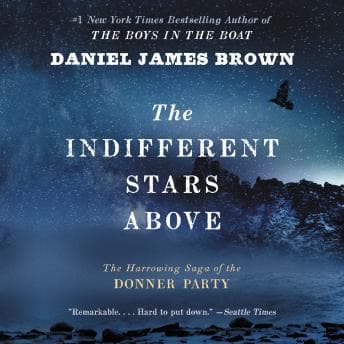

I was grading a stack of junior essays on The Great Gatsby — it was maybe 11:30 PM, red pen bleeding dry — when I hit the part about the snowshoe party eating rawhide lashings off their makeshift frames. I put my pen down. I didn't pick it back up for a long time.
Daniel James Brown does something here that most Donner Party accounts don't bother with: he makes you care about Sarah Graves before she's starving. She's twenty-one, just married, headed west with her entire family because that's what people did in 1846 — you hitched your future to an oxcart and rolled the dice against geography. Brown spends real time building her world before dismantling it, and that patience is what separates this from the Wikipedia version most of my students think counts as research.
The Science of Freezing to Death
What surprised me most is how much science Brown weaves into the narrative. This isn't just "it was cold and people died." He explains what happens to the human body at various stages of hypothermia — the way your brain starts making increasingly irrational decisions, the paradoxical undressing, the metabolic math of how many calories you burn just shivering through a Sierra Nevada night versus how many calories exist in a strip of boiled oxhide. It's clinical and devastating at the same time. This reminds me of what Hemingway said about the dignity of movement of an iceberg — Brown shows you the surface horror, but the real weight is in those physiological details lurking underneath.
The prose deserves to be savored. Brown doesn't sensationalize the cannibalism — and yes, we need to talk about the cannibalism — so much as he contextualizes it. He walks you through the specific social negotiations, the taboos that held and the ones that broke, who ate whom and why it mattered that certain lines were crossed along ethnic and familial boundaries. It's unflinching but never exploitative. My students would hate this. I love it. I had a similar feeling reading Beautiful Country: A Memoir — that specific sensation of being handed something unflinching and feeling grateful for it rather than punished by it.
Michael Prichard's Old-School Gravity
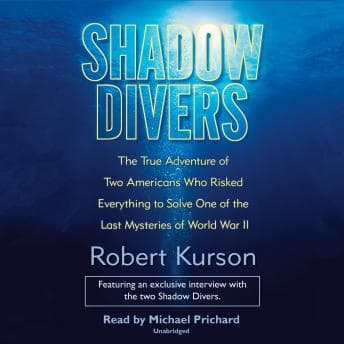
Here's where I need to be honest: Michael Prichard's narration is going to be a dealbreaker for some listeners and a gift for others. His voice has this mid-century gravity to it — steady, unhurried, almost professorial. I've seen people compare it to a 1950s newsreel, and I understand that criticism. There's no vocal theatrics here. No dramatic pauses before the big reveals. He reads Brown's prose the way I'd want my own writing read: straight, trusting the words to do the work.
But I get it. If you're used to narrators who perform — who shift registers for dialogue, who build tension with pacing tricks — Prichard will feel flat. He's not flat, exactly. He has a soothing quality that, paradoxically, makes the gruesome passages hit harder because he doesn't try to sell the horror. The narrator understands that pause is punctuation, and Prichard uses restraint as his primary tool. At eleven hours, though, that restraint asks a lot of you during the sections where Brown steps back from Sarah's story to give broader historical context. Those stretches — the political backdrop, the route decisions, the Hastings Cutoff debacle — are fascinating on the page but can drift under Prichard's even keel.
I listened at 1.0x because the author chose those words. But I'll concede this might be one where 1.15x or 1.25x doesn't lose anything essential during those middle chapters.
Who Should Strap on the Snowshoes
If you loved The Boys in the Boat — Brown's breakout — this is its darker, leaner sibling. Same meticulous research, same gift for centering a massive historical event through one person's eyes, but with stakes that make a rowing race feel quaint. If you're the kind of reader who wants to understand not just what happened but what it felt like in the body — the specific weight of wet wool, the caloric deficit, the snowblindness — this is your book.
Skip it if you need your narrators to be performers. Prichard is a reader, not an actor, and at nearly eleven hours that distinction matters. Also skip it if you're squeamish about — well, about the thing the Donner Party is famous for. Brown handles it with care, but he doesn't flinch.
(Content warning, genuinely: violence, death, descriptions of starvation and cannibalism. I wouldn't assign this to my sophomores. My AP kids, maybe.)
Worth Pausing the Faculty Meeting For
Denise asked me why I was so quiet on our lakefront walk the morning after I finished this. I told her I'd spent the night walking through the Sierra Nevada with a twenty-one-year-old woman who watched her husband die in the snow and kept going. Sarah Graves survived. Not everyone did. Brown makes sure you understand what survival cost — not in abstract terms, but in frozen toes and moral compromises and the specific silence of a mountain pass after everyone stops screaming.
This is why we still read history. Not for the facts. For the human math underneath.