What happens when the American Dream is something you can't legally have?
I finished this at 1 AM on a Tuesday, which is unusual for me. I don't do late nights anymore—that's a young consultant's game. But I was lying in bed, Jenny already asleep, and I couldn't stop. Kept thinking about my parents' dry cleaning shop in Koreatown. The 14-hour days. The way my mom's hands looked after years of pressing shirts. Wang's mother working in a sushi factory so cold her fingers went numb—that hit different.
The Sweatshop Math My Parents Never Talked About
Bottom line: This is what my parents did instinctively. Now it has a memoir and a Yale Law degree attached to it.
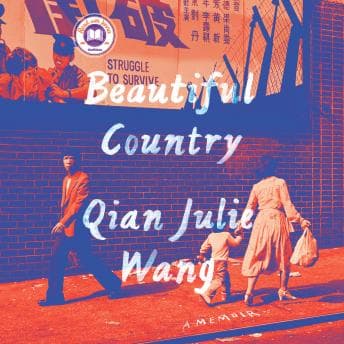
Wang's family goes from professors in China to undocumented workers in Brooklyn. Her father assembles umbrellas. Her mother packs sushi until she literally collapses. Meanwhile, seven-year-old Qian is learning English from The Berenstain Bears because school is hostile territory and the library is free. The economics of survival are brutal and specific—not abstract poverty, but the kind where you treasure-hunt through trash on "shopping days" because that's where you find things.
I've seen plenty of immigrant hustle narratives get sanitized into inspiration porn. This isn't that. Wang shows how the pressure fractures a family from the inside. Her parents fight constantly—not because they stopped loving each other, but because fear and exhaustion leave no room for tenderness. That's the part most immigrant success stories edit out. My parents never fought in front of me, but I remember the silences. Different symptom, same disease.
Why Author-Narrated Actually Works Here
Here's the thing about author-narrated memoirs—they're usually a gamble. Writers aren't voice actors. But Wang earned that AudioFile Earphones Award for good reason. She reads with what I can only describe as controlled emotion. Not overwrought, not detached. There's this lyrical clarity that sounds like she's telling you something important but also trusts you to feel the weight without her pushing.
The childhood perspective stays consistent throughout. You're genuinely inside a seven-year-old's head trying to decode America—the first bite of greasy pizza, the Christmas trip to Rockefeller Center that proves the movie version of New York actually exists. These moments of wonder hit harder because they're surrounded by so much scarcity.
No distinct character voices, which some listeners might want. But honestly? This is a memoir, not a novel. The intimacy of one voice—her voice—telling her story works. You're not here for performance. You're here for testimony.
The Criticism That's Not Wrong But Misses the Point
Some reviewers complained the memoir doesn't evolve much beyond age 12, that it repeats similar sad stories. They're not technically wrong. The book stays focused on childhood, and there's a rhythm of hardship that does loop back on itself.
But here's my take: that's the reality of survival mode. It's not a hero's journey with clear act breaks. It's the same fears, the same grind, the same invisible weight—day after day. Wang isn't being repetitive. She's being honest about what chronic precarity actually feels like. If you wanted a neat arc with a triumphant ending, you wanted a different book.
Jenny would say I'm being harsh on those reviewers. Jenny is right. But I also think some people want immigrant memoirs to make them feel good about America, and this one refuses to do that until you've sat with the cost.
Who This Is For (And Who Should Skip)
Listen if: You want an immigrant story that doesn't flinch. If memoirs like Angela's Ashes or The Glass Castle worked for you, this is in that weight class. Dressmakers of Auschwitz operates in similar territory—survival stories told without the Hollywood gloss. If your family has any version of "we don't talk about the early years," this might unlock some understanding.
Skip if: You need plot momentum or you're looking for something lighter. This requires focused listening—not a background book. And if poverty and family trauma aren't where your head's at right now, that's valid. Protect your peace.
The Dry Cleaner's Kid Verdict
I listened at 1.5x, which is slow for me. Didn't want to rush it. The writing is sparse enough that faster speeds would lose the rhythm.
My parents never wrote their story down. Most immigrant parents don't—too busy surviving, then too tired to revisit it. Wang did the work of remembering, and she did it with precision and grace. That matters. All nine and a half hours of it.







![Steve Jobs [unabridged audiobook] audiobook cover](/_next/image?url=https%3A%2F%2Fcovers.audiobooks.com%2Fimages%2Fcovers%2Ffull%2F9788499923406.jpg&w=1920&q=75)