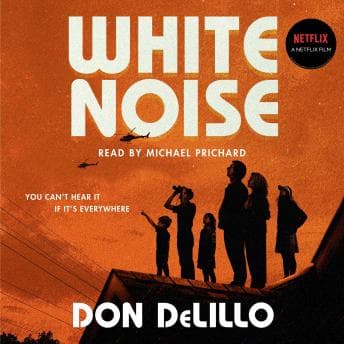

I need to file a complaint with someone. Not about the book - about myself. I spent twenty years telling students that DeLillo was essential postmodern reading, assigning excerpts from White Noise like I was handing out vitamins. And I'd never actually finished it. Just... never got around to it. The cobbler's children go barefoot, the English teacher's reading list goes unread.
So there I was, 11 PM, red pen in hand, sophomore essays on The Great Gatsby bleeding across my kitchen table, and I finally pressed play. Denise had gone to bed. The apartment was quiet except for the refrigerator hum and - this is almost too perfect - the low drone of the neighbor's TV through the wall. White noise listening to White Noise. DeLillo would appreciate the irony. Or maybe he'd find it too obvious.
The First Two Hours Will Test Your Faith
Look, I'm going to be honest with you because that's what we do here. Michael Prichard's narration in the opening stretch is... difficult. His voice has this tinny quality, almost like he's reading through a drive-through speaker. One reviewer said he sounds like he's announcing trains at a station, and that's not unfair. The Gladney family's dialogue comes out flat, and when you're dealing with DeLillo's already stylized, almost robotic conversations between Jack and Babette about their fear of death, flat delivery amplifies what's already alienating.
I almost stopped. I'm being honest. Around hour two, I was grading faster just to have something else to focus on.
But here's what I tell my students about difficult texts: sometimes the resistance is the point. Somewhere around hour four, something clicks. Whether Prichard warms up or your ear adjusts, the deadpan starts working with DeLillo's satire instead of against it. The absurdist conversations about who's more afraid of dying, the academic posturing at the College-on-the-Hill, the brand-name liturgies that punctuate every scene - suddenly the monotone feels intentional. Like the voice of consumer culture itself, droning on.
Death, Dylar, and the Supermarket as Cathedral
This reminds me of what Hemingway said about writing - the dignity of movement of an iceberg is due to only one-eighth of it being above water. DeLillo's surface is all absurdist comedy: a professor of Hitler Studies who can't speak German, a family that treats the supermarket like a spiritual pilgrimage, an "airborne toxic event" that everyone discusses with the same detachment they'd use for a weather report. But underneath? Pure existential terror.
The prose deserves to be savored. DeLillo writes sentences that sound like they should be carved into modernist architecture - clean, geometric, somehow cold and beautiful at once. That same architectural precision shows up in Wuthering Heights, though Brontë's geometry is all Gothic spires where DeLillo's is brutalist concrete. At 1.0x speed (yes, I'm that person, my students mock me relentlessly), you catch the rhythm. The repetitions. The way characters talk past each other while discussing the most intimate fears humans possess.
My students would hate this. I love it.
The airborne toxic event section - when the black chemical cloud descends and the Gladneys evacuate - is where the audiobook earns its keep. Prichard finds something approaching urgency, and DeLillo's genius becomes undeniable: even facing possible death, Jack Gladney is worried about whether his exposure data has been properly entered into the computer. We're all going to die, but first, let me check if I'm in the system.
Who Should Brave the Static (And Who Should Run)
If you loved Underworld or Libra, this is DeLillo at his most accessible - which is still pretty demanding. If you're coming to postmodern fiction fresh, maybe start with the print version where you can control your own pacing through the rough patches.
This is for listeners who treat audiobooks as study, not escape. For the faculty meeting where you need to look engaged while your mind is elsewhere. For the late-night grading sessions when you need something that makes you feel like your brain still works. Skip it if you want character voices that pop, or if you're looking for something to share with your partner on a long drive - Denise would have questions, and explaining DeLillo's theory of death as the white noise underlying all consumer experience tends to kill the road trip vibe.
Class Dismissed (But the Reading Continues)
White Noise won the National Book Award for good reason. It predicted our current moment - the information overload, the ambient anxiety, the way we process catastrophe through media filters - with eerie precision. The audiobook is a flawed vessel for a brilliant work. Prichard's narration improves but never transcends. You're getting the text delivered competently, not interpreted.
But the text itself? Those words are worth hearing. Even through the static.