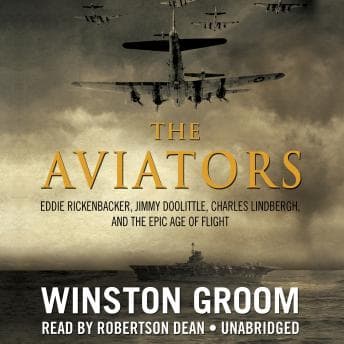

I went into this one skeptical. Three aviation legends crammed into one book? Sounded like a recipe for surface-level hero worship. The kind of thing where you get the Wikipedia version of each guy's life and call it a day.
I was wrong. Dead wrong.
Winston Groom - yeah, the Forrest Gump guy - actually pulls off something I didn't think was possible. He weaves Rickenbacker, Doolittle, and Lindbergh together in a way that makes sense. Not chronologically neat, but thematically tight. These weren't just pilots. They were men who kept going back up when any sane person would've stayed grounded.
The Details That Actually Matter
Here's where Groom earned my respect: he did his homework. And I mean real homework, not the kind where you skim a few biographies and call it research. The technical details are right. The military protocols are accurate. When he describes Rickenbacker's WWI dogfights, you can tell he understands what it meant to fly those rickety deathtraps against German aces.
Doolittle's Tokyo Raid gets the treatment it deserves - not just the glory of launching B-25s off a carrier deck (which, by the way, was considered borderline suicidal at the time), but the brutal aftermath. The crews who didn't make it to friendly territory. The ones who got captured. Groom doesn't shy away from the ugly parts, and that's exactly how it should be.
Lindbergh's section is... complicated. Groom handles his pre-war politics honestly without turning it into a character assassination. The guy was wrong about a lot of things, but he also flew combat missions in the Pacific when he didn't have to. At 42 years old. Against orders. That takes a certain kind of stubborn courage that's hard to dismiss.
Robertson Dean Nails the Mission
Seventeen hours is a long haul. I've listened to plenty of audiobooks where the narrator runs out of gas around hour eight. Dean doesn't. His pacing is excellent - he knows when to push through the technical stuff and when to slow down for the moments that matter.
The Rickenbacker raft survival story? That section had me white-knuckling my steering wheel on I-35. Dean captures the desperation without overdoing it. No melodrama, just steady delivery that lets the horror of the situation speak for itself. Twenty-four days adrift in the Pacific with sharks circling. Men dying. And Rickenbacker, who was already in his fifties, holding his crew together through sheer force of will.
Dean's got this warm quality to his voice that works perfectly for Groom's storytelling style. He's not performing - he's telling you something important, and he wants you to understand it. Ranger perked up during the combat sequences more than once. (He's got good instincts, that dog.)
Where It Drags - And Why That's Okay
I won't pretend every minute flies by. Some of the early biographical material on all three men gets a bit slow. Childhood stuff, early career moves, the kind of foundation-building that's necessary but not exactly pulse-pounding. I bumped it to 1.25x during those stretches and it smoothed right out.
But here's the thing - that groundwork pays off. When you understand where these men came from, the later heroics hit different. Rickenbacker's childhood poverty. Doolittle's academic achievements (the man had a doctorate from MIT - not exactly your stereotypical flyboy). Lindbergh's complicated relationship with fame. It all matters when the stakes get real. Understanding how power works - both earning it and wielding it - runs through all three stories, which is why 48 Laws of Power kept coming to mind during the Lindbergh sections.
What Groom's Really After
Groom's not just writing about aviation history. He's writing about a certain kind of American character that either clicks with you or it doesn't. That same stubborn conviction shows up in the Federalist Papers - different era, same belief that some principles are worth fighting for. These were men who saw impossible odds and said "let's go anyway." Not because they were reckless, but because they understood that some things are worth the risk.
I've known men like this. Served with a few. The book captures something authentic about that mindset without turning it into propaganda. Groom lets these men be human - flawed, sometimes wrong, occasionally insufferable - while still honoring what they accomplished.
Who Should Strap In - And Who Should Stand Down
If you've got any interest in military history, aviation, or just want to understand what drove the generation that fought WWII, this is essential listening. Skip it if you need constant action - the biographical groundwork requires patience. Dean's narration makes those 17 hours feel like a conversation with someone who actually knows what they're talking about.
Mission accomplished, Groom. Ranger approved.








![Steve Jobs [unabridged audiobook] audiobook cover](/_next/image?url=https%3A%2F%2Fcovers.audiobooks.com%2Fimages%2Fcovers%2Ffull%2F9788499923406.jpg&w=1920&q=75)