
"Silver was the oil of the sixteenth century." That line hit me somewhere around hour six, stuck in Austin traffic on I-35, and I actually said out loud to Ranger in the backseat, "Well, damn."
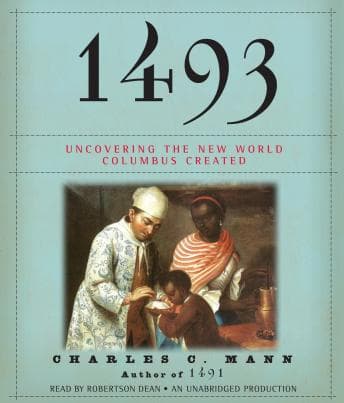
Let me cut to the chase. This is one of those history books that makes you realize everything you learned in school was, at best, incomplete. At worst? Straight-up wrong. Charles Mann isn't just recounting dates and battles - he's showing you how earthworms, malaria, and the global silver trade shaped the modern world. And honestly? The author clearly did their homework. This is the kind of deep research I respect. That same commitment to getting the details right shows up in United States Constitution - another case where understanding the original source material beats any secondhand summary.
When History Reads Like an Intelligence Briefing
I've sat through more briefings than I can count. Good ones get to the point, connect the dots, show you the bigger picture. Bad ones drone on with data that goes nowhere. Mann? He runs a tight operation. The way he connects African slaves mining Peruvian silver to the collapse of Ming Dynasty China - that's not just history, that's systems analysis. Strategic-level thinking.
The section on malaria as a weapon of war genuinely stopped me cold. I've seen disease take down more soldiers than bullets ever did. In Iraq, we lost more guys to dysentery and heat casualties than enemy contact some months. So when Mann explains how mosquitoes basically determined which colonial powers could hold which territories, I'm nodding along. That's not theory to me. That's operational reality.
But here's where it lost me a bit - the middle section on potatoes and guano drags. I get it, fertilizer changed agriculture. Important stuff. But around hour ten, I was checking how much time was left. Ranger was asleep. Even at 1.25x, some of those chapters needed tighter editing.
Robertson Dean Keeps the Mission on Track
Now, about the voice in my head for eighteen hours. Robertson Dean has this neutral, professorial tone that works for dense material like this. He's not trying to be dramatic. He's not adding theatrical flair. He's just delivering the intel clearly, and for a book this packed with information, that's exactly what you want.
Is it exciting narration? No. But it shouldn't be. This isn't a thriller. Dean's pacing is steady - never rushed, never plodding - which matters when you're trying to follow trade routes from Manila to Madrid to Mexico City. Some reviewers complained he's too dry. I disagree. Dry works here. You don't want someone hamming up statistics about silver mining output.
The production quality is solid. Clean audio, no weird background noise or level issues. No bonus content, which is fine. The book itself is bonus content enough.
Why This Matters Beyond the History
Look, I run a security consulting firm. Half my job is explaining to corporate clients how global supply chains create vulnerabilities. Mann wrote this book in 2011, and it reads like a warning about everything we're dealing with now - invasive species, pandemic disease, economic interdependence, immigration debates. All of it traces back to 1493.
The section on how escaped African slaves - the maroons - built independent communities in the Americas and essentially ran guerrilla operations for centuries? That's military history that never made it into any course I took at West Point. And it should have. These were sophisticated resistance movements with better jungle survival skills than their European pursuers. I've seen similar dynamics play out in modern conflicts. The strategic thinking behind asymmetric warfare - where the weaker force uses knowledge and terrain against superior numbers - connects directly to principles laid out in 48 Laws of Power, particularly the laws about economy of force and choosing your battles.
Who Should Listen (And Who Should Skip)
If you want to understand how the modern world actually got built - not the sanitized textbook version, but the messy, biological, economic reality - this is essential listening. It's long. It's dense in places. But it's the kind of book that changes how you see everything from your morning coffee (thank you, Columbian Exchange) to current trade policy debates.
Skip it if you need action and narrative drive. This might test your patience. It's not a story with a protagonist. It's a thesis with evidence. Very well-argued evidence, but still.
Ranger approved this one. He slept through the guano chapters, but perked up for the sections on how African cattle changed the American landscape. Smart dog.
Mission accomplished. Mostly. Minus half a star for the middle-section drag.






![Steve Jobs [unabridged audiobook] audiobook cover](/_next/image?url=https%3A%2F%2Fcovers.audiobooks.com%2Fimages%2Fcovers%2Ffull%2F9788499923406.jpg&w=1920&q=75)