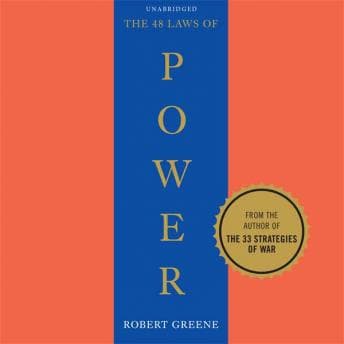

Look, I started this audiobook thinking I'd finally understand why half my junior AP students keep quoting it in their persuasive essays. Twenty-three hours later, I get it. I also feel like I need a shower.
I listened to most of this during a particularly brutal stretch of grading final papers - the kind where you're reading the same recycled thesis about symbolism in The Great Gatsby for the fortieth time. Richard Poe's voice became this weird counterpoint to teenage mediocrity. Here I am, marking up passive voice and unclear antecedents, while Poe is calmly explaining how Cardinal Richelieu destroyed his enemies through patient manipulation. The cognitive dissonance was something.
The Voice Behind the Manipulation
Richard Poe narrates this thing like your most charming history professor - the one who could make the Treaty of Westphalia sound like a thriller. His tone sits in this interesting space between documentary narrator and bedtime storyteller. Not theatrical, not dry. Just... knowing. Like he's letting you in on secrets that have been hiding in plain sight for three thousand years.
What works particularly well is how he handles the historical examples. Each law comes loaded with stories - Louis XIV, Catherine the Great, con artists, courtiers, everyone from antiquity to the twentieth century. Poe gives each anecdote enough weight to land without turning twenty-three hours into a slog. There's a conversational quality that keeps it from feeling like a textbook, even when Greene is essentially teaching you how to be a Renaissance prince.
I couldn't find much about Poe's background or other work, but based purely on this performance - the man understands that pacing is everything in nonfiction. I did track down Deception Point just to hear what he does with fiction, and yeah - the guy's got range. He knows when to punch a particularly Machiavellian line and when to let Greene's already sharp prose do the heavy lifting.
What Greene Gets Right (And Wrong)
Here's the thing about this book that my students never grasp when they cite it: Greene isn't writing a self-help manual. He's writing intellectual history dressed up as strategy. The real pleasure here - and yes, I said pleasure - is watching how power dynamics repeat themselves across centuries. The same patterns that destroyed Ottoman viziers show up in Hollywood boardrooms. The same laws that Machiavelli articulated appear in Sun Tzu, appear in Clausewitz, appear in the behavior of everyone from P.T. Barnum to Henry Kissinger.
As someone who teaches literature, I found myself nodding along to Greene's analysis more often than I expected. Lady Macbeth? She violates about twelve of these laws. Iago? He follows them perfectly. (Don't tell my students I said that. They don't need more reasons to sympathize with Iago.)
But let's be honest about the shadow side. Some of these laws are genuinely sociopathic. "Crush Your Enemy Totally" - Law 15 - isn't metaphorical. Greene means it literally, with historical examples of people who showed mercy and paid for it with their lives. "Use Selective Honesty to Disarm Your Victim" teaches manipulation techniques that would make a con artist blush. The book's amorality isn't a bug; it's the entire architecture.
Which raises the question I kept asking myself during those late-night grading sessions: Why am I enjoying this?
The Uncomfortable Listening Experience
I think it's because Greene frames everything through historical distance. These aren't instructions - they're observations. He's describing how power has worked, not necessarily how it should work. The audiobook format amplifies this distinction. When you're reading print, you're actively engaging with the text. When you're listening while grading papers on To Kill a Mockingbird, the laws wash over you like a dark history lecture. You're observing, not implementing.
Poe's measured delivery reinforces this scholarly distance. He never sounds like a motivational speaker. He sounds like someone presenting evidence. "Here's what Talleyrand did. Here's why it worked. Draw your own conclusions."
The 23-hour runtime is both a feature and a challenge. This isn't a book you'll finish in a weekend. I spread it over three weeks of evening walks and grading marathons. The length actually works in its favor - you absorb laws gradually rather than cramming. But fair warning: there's no narrative arc. Each law is essentially self-contained. You can listen out of order without losing much. Useful for commutes, but it means the audiobook lacks momentum.
Who Should Listen (And Who Should Skip)
This audiobook is for people who want to understand power dynamics, not necessarily wield them. History buffs will love the deep dives into court intrigue across centuries. Literature people will recognize the patterns from every tragic hero who fell from grace. Business types will find confirmation for suspicions they already had. Skip it if you're looking for ethical guidance or a quick read - this is a 23-hour commitment with no moral compass. Read Marcus Aurelius instead. (The other Marcus - the one who was actually an emperor.)
If you want more Greene but with less sociopathy, Mastery channels the same historical deep-dive approach toward actually constructive ends.
My students quote this book because it makes them feel sophisticated and slightly dangerous. After twenty-three hours with Richard Poe, I understand the appeal. Greene has synthesized centuries of human backstabbing into digestible principles. Poe delivers them with the gravity they deserve.
Worth the listen? Yes, but know what you're getting into. This is intellectual history with a Machiavellian heart. Poe makes it feel like wisdom. Whether you act on it says more about you than about the book.