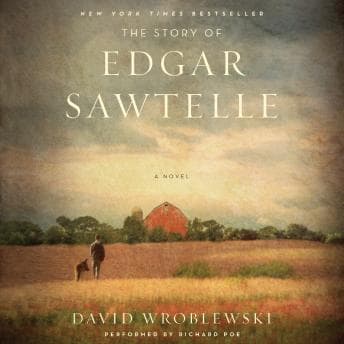

I was walking the lakefront with Denise last Saturday — one of those late October mornings where Lake Michigan looks like hammered steel and the wind's sharp enough to make your eyes water — when Edgar Sawtelle's dogs started running through the Wisconsin woods in my earbuds, and I stopped dead on the path. Denise had to loop back for me. She gave me that look. The one that says, 'You're doing it again.' I was.
Here's the thing about this book: David Wroblewski wrote what is essentially Hamlet set on a dog-breeding farm in northern Wisconsin, narrated partly from the perspective of dogs, with a mute protagonist who speaks in sign language. On paper, that sounds like a creative writing workshop gone sideways. In practice, it's one of the most quietly devastating novels I've encountered in years.
Shakespeare in the Kennel, and It Actually Works
Let's talk about what Wroblewski is really saying. The Hamlet bones are obvious once you see them — the dead father, the uncle who moves in too comfortably, the son who knows something is wrong but can't quite prove it, the agonizing delay. But Wroblewski isn't doing a cute literary remix. He's using the structure to ask something genuinely interesting: what happens when your Hamlet literally cannot speak? Edgar communicates in sign. His dogs understand him better than most humans do. And Wroblewski writes Edgar's silence not as a disability but as a different kind of literacy — one that makes him more attuned to gesture, to breath, to the way a dog shifts its weight when it's lying.
This is why we still read the classics. Because a writer in 2008 can take a 400-year-old revenge plot and make it feel like it grew organically from Wisconsin soil. Homegoing does something similar with its generational structure — takes a framework that could feel academic and makes it feel inevitable, like it couldn't have been told any other way.
The dog chapters — yes, there are chapters from the dogs' perspective — should be corny. They aren't. Wroblewski writes canine consciousness as something between instinct and intuition, never anthropomorphizing but never reducing them to simple animals either. Almondine's chapter, where she perceives Edgar's grief through scent and sound and the particular weight of his hand on her back, is the kind of writing that makes you set down what you're doing and just listen. My students would hate this. I love it.
Richard Poe Understands That Pause Is Punctuation
At 21 hours and 40 minutes, this is a commitment. I need to be upfront about that. This is not a book you throw on during a half-hearted treadmill session. Wroblewski writes in long, deliberate sentences — prose that accumulates meaning the way snow accumulates in a Wisconsin winter, layer by quiet layer. And Richard Poe gets this completely.
Poe's voice is — how do I describe it — full-throated without being theatrical. He reads like a man sitting across from you in a dim room, telling you something important, and he's not going to rush. When the point of view shifts from Edgar to Almondine to Edgar's father Gar, Poe doesn't do cartoon voices. He adjusts tone. There's a firmness when he's in Gar's head, something looser and more searching when he's with Edgar, and for the dog passages, he drops into this almost meditative register that feels exactly right. The prose deserves to be savored, and Poe savors it.
I listened at 1.0x. Obviously. But I'll say this — even at standard speed, there were stretches in the middle third where the pacing tested me. Wroblewski lingers. He wants you inside those woods, inside that barn, inside the rhythm of training a dog across months of repetition. If you're the kind of listener who needs plot every thirty seconds, you're going to struggle. If you're the kind who gets lost in language the way you get lost on a trail — where being lost is sort of the point — you'll be fine.
The Ending Will Make You Argue With Your Steering Wheel
I have to address this because it's the most divisive thing about the book and I'd be dishonest not to. The ending is abrupt. After 21 hours of slow, careful, almost geological storytelling, Wroblewski accelerates into a conclusion that feels — compressed. Rushed, even. I've been turning it over for a week now. Part of me thinks it's a deliberate echo of Hamlet's bloody final act, that sudden violence after hours of delay. Part of me thinks he just didn't know how to land the plane.
Denise asked me on our walk this morning if I'd figured it out yet. I haven't. But the fact that I'm still thinking about it — that I brought it up at dinner twice, that I almost derailed my podcast recording to talk about it — says something.
Who Gets the Assignment (And Who Gets a Pass)
Listen to this if: you love literary fiction that earns its length, you're a dog person who wants to see canine intelligence treated with real seriousness, or you've ever wished someone would retell Shakespeare without winking at the camera about it. If you loved East of Eden for its sprawling family ambition and sense of American place, this is its spiritual successor — quieter, stranger, but cut from similar cloth.
Skip it if: you need fast plotting, you find extended nature writing tedious, or ambiguous endings make you want to throw your phone in the lake. (I considered it.)
Worth Pausing the Faculty Meeting For
Twenty-one hours is a lot to ask. Poe's performance makes every one of them count — even the ones that test your patience. Wroblewski wrote a book about a boy who can't speak, and somehow made it one of the most articulate novels about love, betrayal, and the strange wordless bond between humans and animals that I've ever heard. The ending frustrated me. The rest of it haunted me. I'll take that trade.
Principal Martinez, if the budget meeting runs long again next Tuesday, I know exactly what I'm listening to. Again.