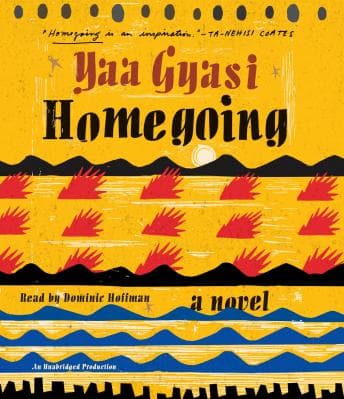

I finished this one on a Saturday morning walk along the lakefront with Denise, and I had to stop on a bench because I couldn't see where I was going. Not because of my failing eyesight this time - because I was crying. In public. A grown man on a park bench, pretending to check his phone while actually processing three hundred years of inherited grief.
Look, I teach literature. I've read the slave narratives. I've taught Morrison and Douglass and Jacobs. I thought I understood what this book would do to me. I was wrong.
The Architecture of Pain
Here's what Gyasi does that's genuinely remarkable: she gives you fourteen chapters, each following a different descendant across two family lines - one in Ghana, one in America. And each chapter is essentially a complete short story. You'd think this would feel fragmented. Choppy. Like reading an anthology.
It doesn't.
Because Gyasi understands something about generational trauma that most writers only gesture at - it's not just that pain gets passed down, it's that the shape of that pain changes. Morphs. What starts as enslavement becomes sharecropping becomes the Great Migration becomes Harlem becomes... well. You'll see.
The structure reminded me of what Faulkner was trying to do with the Compsons, honestly. (My students would hate this comparison. I'm making it anyway.) Each generation carries the weight of the ones before, even when they don't know what they're carrying. Especially then.
Why Dominic Hoffman Works
I couldn't find a ton about Hoffman's background before this, but based on this performance? The man understands that narration is interpretation. His baritone has this slightly hoarse quality that feels lived-in - not polished, not theatrical. Just... present.
What he does with the Ghanaian chapters is particularly impressive. There's a rhythm to West African English that's musical in a specific way, and Hoffman captures it without tipping into caricature. When he shifts to the American chapters - the Alabama coal mines, the jazz clubs, the contemporary sections - his voice shifts too. Not dramatically. Subtly. The way a family's speech patterns actually evolve over generations.
The chapter with H - I won't spoil it, but there's a scene in a basement that Hoffman delivers with such devastating restraint. He doesn't push the emotion. He trusts it. And that's when I had to sit on that bench.
(Don't tell my students I cried at an audiobook. They already think I'm too soft on the Romantics.)
Where the Narrative Hits Different in Audio
Here's the thing about listening to this versus reading it: you can't skim. And this is a book that demands you don't skim.
Some of the chapters are brutal. The violence isn't gratuitous, but it's unflinching. There's a scene in a convict labor camp that I almost paused. But Hoffman's pacing - the way he lets silence sit after certain sentences - gives you room to breathe. Just enough.
At 13 hours, it's a commitment. I spread it over about two weeks, mostly on walks and during late-night grading sessions. (Principal Martinez, I was definitely grading those essays. The audiobook was just... background.) But honestly? I think the length serves the story. You need time between chapters. Time to sit with each life before moving to the next.
The production is clean - no weird audio artifacts, no volume inconsistencies. Just Hoffman's voice and Gyasi's words.
Who Should Listen (And Who Should Skip)
If you loved Beloved but found Morrison's prose density challenging in audio, this might actually be more accessible. There There works similarly well in audio - another multi-generational story about inherited trauma, but with contemporary Native American voices that Hoffman's approach here reminded me of. Gyasi's writing is literary but not labyrinthine. The sentences breathe.
If you're looking for something light? This ain't it. Skip this one if you need an escape right now. There's slavery, violence, addiction, loss. The content warnings are real.
But if you want to understand something about how history lives in bodies - how the choices made in an 18th-century castle echo in a 21st-century apartment - this is required listening. I'm adding it to my syllabus next year. My students will complain. They'll also cry on park benches eventually.
This is why we still read the classics. And why some new books become classics.
Worth pausing the faculty meeting for. Worth pausing everything for.