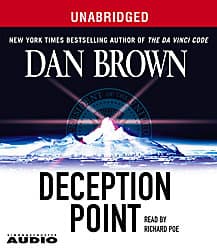

I was stuck in bumper-to-bumper traffic on I-35 in Austin—pretty much my natural habitat these days—when I decided to revisit some vintage Dan Brown. Before the symbology and the breathless running around European museums.
Deception Point. NASA. The Arctic. Delta Force. Politics. It sounded like the kind of operational chaos I usually enjoy. (And frankly, it beats listening to talk radio hosts scream about the economy while I'm trying to get to a client meeting).
Here's the debrief.
The Mission Profile
Look, nobody reads Dan Brown for realistic military procedure. We read him because he knows how to keep the adrenaline pumping. The setup here is classic high-stakes poker: NASA finds something in the Arctic ice that could save the agency and swing a presidential election. The President sends intelligence analyst Rachel Sexton to verify it.
Naturally, things go sideways immediately.
The setting is the real star here. The Arctic ice shelf. It's desolate, lethal, and creates this perfect claustrophobic atmosphere even though they're out in the open. I've done cold-weather training, and let me tell you, Brown captures that bone-deep freeze pretty well. The political maneuvering back in D.C.? Also surprisingly sharp. It reminded me of some of the bureaucratic nonsense I dealt with at the Pentagon. That kind of ruthless positioning is what 48 Laws of Power breaks down in excruciating detail—also narrated by Richard Poe, incidentally. Everyone has an angle, everyone is lying, and the people on the ground are the ones who pay the price.
But—and I have to say this—the portrayal of the Delta Force team... let's just say it's Hollywood. Highly entertaining, sure, but real operators don't monologue that much. I let it slide because the pacing is relentless. You don't really have time to roll your eyes before something explodes.
The Comms Check (Narrator Issues)
Here is where the mission hits a snag. A big one.
Richard Poe has a great voice. Seriously. He's got that deep, sonorous, "Voice of God" thing going on. He sounds like the guy giving the briefing that saves the world. He captures the gravitas of the politicians and the tension of the chase scenes perfectly. When the action heats up on the ice, his pacing is spot on—he doesn't rush it, he lets the dread build.
But. (And this is a major "but").
The audio engineering on this recording is rough. I don't know if the mic was inside his mouth or what, but the mouth noises are distracting. I'm talking breathing, swallowing, the wet click of a tongue.
I listen on high-quality noise-canceling headphones while walking Ranger, and there were moments I literally grimaced. It's a lack of discipline in the editing room. In my line of work, if you leave a trace, you're dead. In audiobooks, if I can hear you hydrating, you've broken the immersion. It's not constant, but when it happens, it pulls you right out of the story.
His character voices for the women? A bit shaky. Rachel Sexton sometimes sounded a little... fragile? For a senior intelligence analyst, I expected a bit more steel in the vocal cords.
SITREP
Despite the audio gremlins, the story hooks you. It's a solid techno-thriller that feels a bit more grounded than Angels & Demons. It's got gadgets, betrayal, and a plot that moves faster than a C-17 on a combat landing.
If you're listening in a car with road noise (like I was for half of it), the mouth noises might not bother you as much. If you're an audiophile with expensive earbuds in a quiet room? You've been warned.
Who should listen: Fans of political thrillers and techno-espionage who can tolerate some audio production issues. Who should skip: Audiophiles who can't forgive mouth noises, or anyone expecting accurate Delta Force tactics.
Bottom line: The story is mission-capable, but the audio quality needs a tune-up.