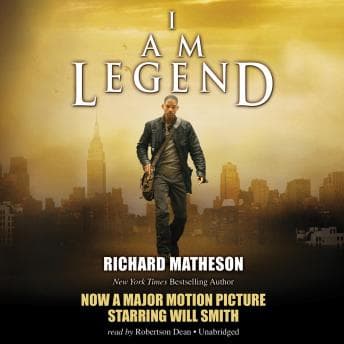

Robert Neville is the loneliest man in the world. And honestly? Richard Matheson makes you feel every single second of it.
I started this audiobook expecting a vampire thriller—you know, action sequences, close calls, maybe some heroic last stands. What I got instead was a psychological case study in isolation that made me genuinely uncomfortable. In the best way. Matheson wrote this in 1954, and somehow he understood what prolonged solitude does to the human mind better than half the research papers I've read on the subject.
The Psychology of Being the Last One Standing
Here's what makes this book fascinating from a behavioral perspective: Neville doesn't become some hardened survivor archetype. He becomes... kind of pathetic? And I mean that as a compliment to Matheson's understanding of human nature. The man drinks too much. He obsesses over mundane routines. He talks to himself constantly. He swings between rage and despair with the kind of emotional dysregulation that would make any clinician reach for their DSM.
The research actually shows that isolation causes exactly this—cognitive decline, emotional volatility, loss of purpose. Matheson nailed it decades before we had formal studies on the psychology of solitary confinement. If It Bleeds explores similar psychological territory, though King's characters at least have each other to anchor their deteriorating realities. Neville's attempts to understand the vampires scientifically become less about survival and more about having something to think about. A project. A reason to wake up.
What makes this character compelling is that he's not particularly likeable. He's crude, he's bitter, he makes questionable decisions. But psychologically? This doesn't just track—it's inevitable.
Robertson Dean's Voice in Your Head
Okay, so. Robertson Dean's narration is going to be polarizing. I need to be upfront about that.
He leans into the drama. Like, really into it. His voice has this quality that some listeners describe as "creepy"—waffling between anger and despair in a way that honestly mirrors Neville's unstable mental state. For me, this worked. The intensity benefits the audiobook format specifically because you're stuck in Neville's deteriorating headspace. There's no escape. Dean makes sure of that.
But I can see how it might be too much for some people. If you prefer narrators who step back and let the prose do the work, this isn't that. Dean is acting. Sometimes maybe over-acting. There were moments where I thought "okay, dial it back about fifteen percent"—but then I'd remember that Neville himself is constantly on the edge of a breakdown, and suddenly the performance made sense again.
The man earned his AudioFile Earphones Award for this one. Whether that style works for you is genuinely a matter of personal preference.
Why This Isn't Really About Vampires
Look, here's the thing about I Am Legend that the Will Smith movie completely missed (don't get me started). The vampires aren't the point. They're a mechanism for exploring what happens when everything that defines your identity—your relationships, your role in society, your sense of purpose—gets stripped away.
Neville was a factory worker before the plague. Average guy. Nothing special. Now he's the last human, and that should make him important, right? Except... important to whom? For what? The existential horror here isn't the monsters outside. It's the meaninglessness.
My therapist would have thoughts about this character. Many thoughts. Neville exhibits classic trauma responses—hypervigilance during the day, numbing through alcohol at night, intrusive thoughts about his dead wife. The hypervigilance piece especially reminded me of the paranoia threading through Locked On, though Jack Ryan at least gets to direct his toward actual tactical problems instead of existential dread. Matheson understood that survival isn't just physical. The mind has to survive too. And Neville's is barely hanging on.
The ending—which I won't spoil—reframes everything. It's the kind of twist that made me stop my morning jog and just stand there for a minute. Because suddenly you realize the title isn't about what you thought it was about.
Your Prescription (Or Warning)
If you want action-packed vampire hunting, skip this one. If you want to understand what isolation actually does to a person—wrapped in a suspenseful narrative that influenced basically every zombie and vampire story that came after—this is essential listening.
At just over five hours, it's tight. No padding, no unnecessary subplots. Just one man's mental deterioration against a backdrop of apocalyptic loneliness. Maybe don't listen alone at night, though. The quiet parts hit different when you're the only one awake in your apartment. Trust me on that one.