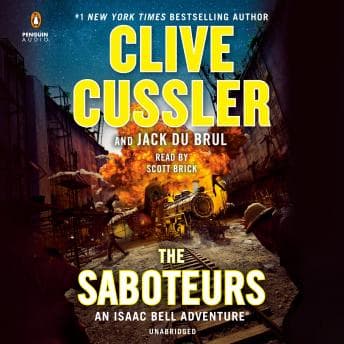

Isaac Bell books are basically the D&D campaigns of historical fiction. You've got your dashing hero with improbable skills, period-appropriate gadgets that feel like magic items, and villains with schemes just elaborate enough to require eleven hours of unraveling. Saboteurs drops Bell into 1914 Panama during canal construction, and honestly? I was here for it.
I started this one during a late-night coding session when my thesis code wouldn't compile for the fifth time. Nothing like early 20th century espionage to distract from segmentation faults. By hour three, I'd completely forgotten about my broken algorithm and was fully invested in whether Bell could stop the Red Vipers from blowing up America's greatest engineering project.
The Panama Canal as Dungeon Crawl
Here's what Cussler and Du Brul get right—the setting is practically a character. The canal construction site in 1914 is this massive, dangerous, fever-ridden megaproject where thousands of workers are literally reshaping geography. Heart of Darkness captures that same colonial megaproject atmosphere, though Conrad's Congo is far bleaker than Cussler's Panama. It's got that same energy as a good fantasy city—layers of politics, engineering marvels, and enough dark corners for villainy to fester. The dirigible explosion scene? *Chef's kiss*. That's the kind of set piece that makes you pump your fist while walking across campus. (Yes, I got looks.)
But—and this is a real but—the book feels like it's missing something compared to earlier Bell adventures. The chapter 5 twist with the secret report lands well enough, sets up the conspiracy nicely. The courtroom confrontation crackles with tension. But between those peaks, there's a lot of... walking. Talking. Exposition that doesn't quite earn its runtime.
Some folks are saying this is the first casualty of Cussler's passing, and I don't know if I'd go that far. But there's a cohesion issue here. The plot threads don't weave together as tightly as Sanderson braiding his magic systems—more like someone started three different campaigns and tried to merge them at session six. Prince has similar pacing issues where the political maneuvering sometimes drags between the action set pieces.
Scott Brick: The Reliable Dungeon Master
Scott Brick narrating historical adventure is like getting a seasoned DM for your one-shot. You know exactly what you're getting, and what you're getting is solid. His accent work for the period characters—the Panamanian locals, the various American officials, the European schemers—creates that instant class and nationality divide that makes ensemble casts work in audio.
His emotional delivery when characters die in that explosion scene hit me harder than expected. I was supposedly debugging code and suddenly I'm having feelings about a fictional engineer from 1914.
That said, Brick's pacing in action sequences runs a bit slow for my taste. When Bell is racing against time, the narration should race too. Instead, we get this measured, almost leisurely delivery that undercuts the urgency. I bumped to 1.25x during the climax and it helped considerably. Also caught a few character name mispronunciations that pulled me out—minor, but noticeable if you're paying attention.
The Cussler Paradox
Here's my thing with late-series Cussler: these books are comfort food. You know Bell will be impossibly competent. You know there'll be historical Easter eggs. You know the bad guys will have a scheme that's just plausible enough. And usually that formula delivers.
Saboteurs delivers about 70% of that promise. The Panama setting is genuinely interesting—my D&D group would absolutely steal this for a steampunk campaign. The central mystery has enough twists. Bell remains charming in that old-fashioned gentleman detective way.
But the ending feels rushed after all that buildup. Like the DM realized we were running out of session time and had to wrap the boss fight in two rounds. Several reviewers complained about this, and they're not wrong. After eleven hours of setup, you want a payoff that matches the investment.
Roll for Initiative (Or Don't)
If you're already in the Isaac Bell fandom, you'll find enough here to justify the listen. The setting alone is worth exploring, and Brick's narration—pacing issues aside—keeps things professional. It's a good commute book, requires just enough attention that you won't zone out but not so much that you'll miss your exit.
For newcomers? Maybe start with an earlier Bell book. This one assumes you already care about the character, and the slightly scattered plotting won't hook you the way the best entries in the series would. Skip if you need tight, propulsive pacing throughout—this one meanders.
Campaign Complete, XP Awarded
I finished this at 2 AM, thesis still unwritten, with that satisfied-but-not-thrilled feeling you get after a decent session that didn't quite reach the heights you hoped for. Not every campaign can be legendary. Sometimes you just have a solid adventure with friends.
The magic system is—wait, wrong genre. The historical engineering is *chef's kiss*. Close enough.