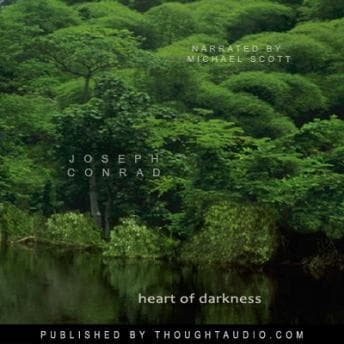

I was about three hours into a drive out to a client's ranch near Marfa—middle of nowhere, Texas—when I decided to finally tackle this beast. I've seen Apocalypse Now more times than I care to admit. (It's practically required viewing in the officer's mess, usually followed by a heated debate about whether Kilgore was a genius or a lunatic.) So, I figured I owed it to myself to check out the source material. Conrad's Heart of Darkness.
Let me be clear right off the bat: If you're expecting helicopters and "Ride of the Valkyries," you're in the wrong theater of operations. This is a slow, sweaty, psychological grind. And honestly? It hit a little too close to home.
The Mission: Into the Weeds
Conrad isn't writing an action novel. He's writing a psychological assessment of what happens when you strip away civilization and leave a man alone with his own power. I've seen that look in guys' eyes before—the "Kurtz" look. The thousand-yard stare where the morality lines get blurry.
Marlow, the narrator, is recounting his command of a steamboat going up the Congo River. It's dense. The writing is thick, atmospheric, and frankly, sometimes a slog. Reminds me of wading through mud in full kit. But that's the point, isn't it? You're supposed to feel the heat, the fog, and the confusion. Conrad nails that feeling of impending doom.
But—and this is a big but—it requires patience. I had to crank the speed to 1.25x just to keep my brain from wandering off to the horizon.
The Voice on the Comms
Here's where things got a little... complicated. The narrator, Michael Scott (no, not the guy from The Office), has a solid, dramatic voice. He sells the moodiness. Sounds like a guy telling a ghost story in a dark officers' club.
However.
There are some technical errors here that drove me absolutely up the wall. Look, I'm not a linguist, but I spent enough time working with British forces to know how to pronounce "Thames." It rhymes with "hems." Scott pronounces the "Th" like "Themes."
First time I heard it, I nearly drove my truck into a cactus.
He also does something weird with "row" and "pauper." It's jarring. Pulls you right out of the immersion. Scott does better work in Blue Cross, where his pronunciation is tighter and the pacing feels more disciplined. In my line of work, attention to detail is everything. If you can't get the name of the most famous river in England right, I start wondering what else you missed. It's like a soldier showing up to formation with his boots unbloused. Just sloppy.
SITREP
Despite the pronunciation hiccups, the performance has grit. Scott captures the madness of Kurtz and the weariness of Marlow pretty well. When he hits the famous line—"The horror! The horror!"—you feel it.
Ranger (my German Shepherd) slept through the whole thing, which is usually a sign that the narrator has a soothing cadence, even if the content is about the depths of human depravity.
Is it worth your time? If you want to understand the DNA of modern psychological thrillers, yes. The Midnight Library explores similar psychological territory with a more accessible narrative structure, if you're looking for that same existential weight without the Victorian prose. It's a short listen—just over four hours. But be prepared for a narrator who clearly didn't have a British dialect coach in the booth with him.
Who should listen: Anyone who wants the literary foundation for Apocalypse Now and can handle dense, atmospheric prose. Who should skip: If mispronunciations make you twitch, grab the paperback instead. As for me, I'm just glad to be back in civilization where the coffee is hot and nobody is putting heads on stakes.