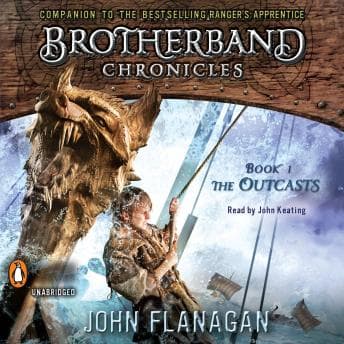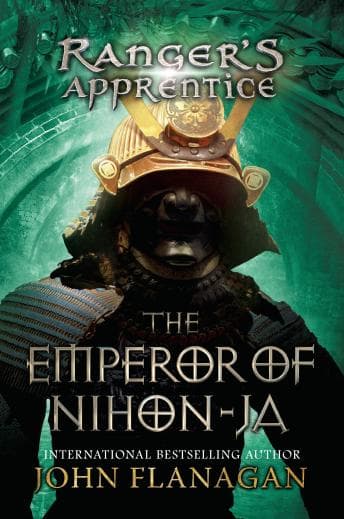

Look, I need to rant about something. Flanagan really said "let me take my pseudo-medieval European fantasy series and plop it into not-Japan for the finale" and somehow - SOMEHOW - it works? I'm annoyed about that. I went into Emperor of Nihon-Ja fully prepared to be the guy going "oh great, another Western author doing feudal Japan with the serial numbers filed off" and instead I got a genuinely fun underdog military campaign that had me pacing around my apartment at 1 AM instead of working on my thesis. (Dr. Patel, if you're reading this, I was definitely running simulations.)
I finished this one during a marathon board game organizing session - I'd been meaning to alphabetize my shelf for weeks, and 14 hours of audiobook is exactly the motivation you need to sort 200+ boxes. Turns out sorting Catan expansions hits different when Horace is training rice farmers to fight in phalanx formations.
Horace Becomes a D&D Party Leader and I'm Here For It
This is book ten. TEN. And Flanagan does something I genuinely respect here - he takes Horace, who's been the reliable fighter-class party member for nine books, and basically gives him the leadership arc. The whole Nihon-Ja setting is essentially an excuse to strand Horace away from his usual support structure and force him to be the strategic thinker. Training the Kikori timber workers - basically peasant conscripts - into a fighting force using terrain advantages and improvised tactics? My D&D group would love this. It's literally the "we have no resources, how do we beat the superior army" scenario I've run as a DM a dozen times.
The progression is satisfying. Watching the Kikori go from getting wrecked in open combat to using the mountainous terrain and timber-cutting skills to build fortified positions - that's the kind of tactical escalation that keeps me engaged. Flanagan doesn't do magic systems (this is a low-fantasy world, pretty much zero supernatural elements), but the tactical "system" of how Rangers operate, how formations work, how terrain gets exploited - that scratches the same itch for me. It's a different kind of world-building. Not Sanderson-level, but it's internally consistent and it respects the reader's intelligence about military logistics.
The Senshi warrior culture and the political dynamics between Emperor Shigeru and the usurper Arisaka give the setting actual stakes beyond just "foreign land looks cool." Shigeru defending common people's rights and getting overthrown for it is a simple but effective setup.
John Keating Does the Thing (Mostly)
Okay. John Keating. He's been with this series for a while and he's solid - his Will and Halt dynamic is locked in at this point, and that dry mentor-student banter lands every time because he nails Halt's deadpan delivery versus Will's earnest energy. Character differentiation between the core Araluen cast is easy to follow without thinking about it.
But here's where it gets bumpy. Nihon-Ja introduces a bunch of new characters with Japanese-inspired names and speech patterns, and Keating's approach to voicing them is... inconsistent. Some scenes he leans into a slightly different cadence for the Nihon-Ja characters, other times they sound basically the same as his Araluen voices. It's not terrible, but when you're in a scene with Emperor Shigeru, Shukin, and a couple Senshi warriors, it can blur together. Steven Pacey walked so other narrators could run, but Keating's more of a solid jogger - dependable, gets you there, occasionally trips on the accent work.
His pacing is good though. The battle sequences move well, and he doesn't rush through the quieter character moments - the scene where Horace and Shigeru discuss what leadership actually means has a weight to it in Keating's reading that I appreciated.
Book Ten Problems Are Real Problems
I gotta be honest about the elephant in the room: this is the tenth book in a YA series, and some of the emotional beats feel like Flanagan is running on formula. Will and Alyss's relationship stuff? Fine, but we've been here before. The comedy relief from characters like Selethen showing up works if you're invested in the ensemble, but it also spreads the narrative thin. There are stretches in the middle where the book bounces between too many POV groups - the Araluen rescue party, Horace's group in the mountains, political maneuvering back home - and some of those threads feel padded.
At nearly 14 hours, there's maybe 10-11 hours of actual story here. Some tightening would've helped. I won't lie, a few of the travel sequences got the 1.25x treatment while I was sorting my Gloomhaven box.
Who Gets the Credit and Who Walks Away
If you've listened to the first nine Ranger's Apprentice books, you're grabbing this regardless of what I say. And you should - it's a satisfying payoff for long-time fans, the Nihon-Ja setting is a genuine shake-up, and the Horace focus is a smart call this deep into the series.
If you haven't read any Ranger's Apprentice? Do NOT start here. This is a book ten, it's doing book ten things, and half the emotional weight comes from knowing these characters for thousands of pages.
For the target audience - younger readers, families listening together, or adults who grew up on this series - it delivers. It's not going to change your life, but it's a warm, competent adventure with good tactical setpieces. We Hunt the Flame scratched a similar itch for me - another non-European fantasy setting where the world-building earns its place rather than just dressing up a familiar plot. I read this instead of writing my thesis, and I regret nothing.