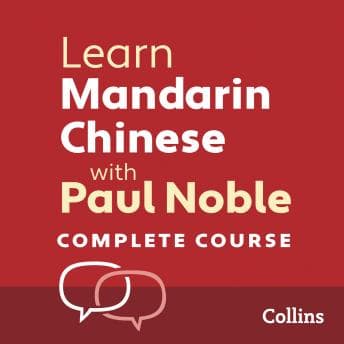

So there I was at 2 AM, supposedly debugging my procedural dungeon generator, actually just staring at my thesis document like it personally offended me. My brain needed something—anything—that wasn't recursive algorithms or Dr. Patel's latest "concerned" email. And somehow I ended up committing to 15 hours of Mandarin Chinese instruction.
Look, I know what you're thinking. "Tom, this is not fantasy. There are no magic systems here." And you're right. But hear me out—there's something weirdly satisfying about Paul Noble's approach that scratches the same itch as watching a well-designed progression system unfold.
The Anti-Grind Philosophy
Paul Noble's whole deal is basically the opposite of how I learned Spanish in high school (badly, with trauma). No conjugation tables. No vocabulary lists to memorize at 6 AM. Just... listening and building. It's like he designed a language learning system the way a good game designer would—immediate feedback, constant small wins, and the feeling that you're actually doing something rather than just absorbing information.
The interactive Q&A segments genuinely caught me off guard. I'm sitting there in my apartment surrounded by board games and unread thesis chapters, and suddenly I'm responding out loud to this British dude asking me to construct sentences in Mandarin. My neighbor probably thinks I've finally lost it. (They're not entirely wrong.)
Where the Tones Click (And Where They Don't)
Here's the thing that actually impressed me: after three years of casually trying to understand Mandarin tones through various apps and YouTube videos, Noble's explanations finally made them click. He breaks down the difference between Southern and Northern dialect pronunciations in a way that's genuinely useful—not just "here are four tones, good luck." The native speakers (one male, one female) jump in to demonstrate, and you can actually hear the contrast.
But—and this is a big but—some sections just... don't teach tones at all? It's weirdly inconsistent. Like having a DM who forgets to explain how spell slots work for three sessions and then suddenly expects you to know.
The pacing in the early parts is also glacial. I get it, he's building foundations. But when you're used to Sanderson dropping lore bombs every chapter, waiting through repetitive basics tests your patience. I ended up doing some sections at 1.25x speed, which helped considerably.
The Vocabulary Ceiling Problem
Let me be real with you: if you're expecting to emerge from these 15 hours ready to negotiate business deals in Beijing, you will be disappointed. The vocabulary coverage is limited. You'll learn to order food, ask directions, introduce yourself—the tourist survival kit, basically. It's a solid foundation, but it's explicitly a foundation.
This is a beginner course that knows it's a beginner course. Which is fine! But some marketing suggests more than it delivers. Think of it as the prologue to a fantasy series—necessary setup, but the real adventure comes later.
Production Notes From My Thesis-Avoidance Sessions
The audio is clean, with some relaxing background music that doesn't distract. No sound effects, no full cast—just Noble's clear British delivery and the native speakers jumping in for pronunciation checks. Straightforward instructional audio that works for what it is.
This is NOT a background listening experience. I tried doing it while coding once and ended up with variables named after Mandarin numbers. The interactive nature demands your attention—which is probably the point, but worth knowing.
Roll for Language Proficiency
Perfect for: Absolute beginners who've bounced off traditional language learning. People who hate grammar drills. Anyone wanting a stress-free introduction before committing to more intensive study.
Skip if: You already know basic Mandarin. You want comprehensive vocabulary. You're looking for something to play while doing other tasks. You expect fluency from a single course (no course does this, but still).
Campaign Notes: Would Recommend to My Party
Here's my weird conclusion: I'm going to recommend this to my old D&D buddies back in Georgia. We've been talking about running a campaign with more Asian-inspired worldbuilding, and having even basic Mandarin knowledge would help us not butcher the pronunciation of character names.
Is this a perfect language course? No. Is it the most engaging way I've found to start learning Mandarin while procrastinating on my thesis? Absolutely. The progression is satisfying in that same way leveling up feels satisfying—small incremental gains that add up to something real. That same sense of gradual mastery shows up in Dragon Orb, where the magic system actually rewards patient learning instead of just handing you power.
Now if you'll excuse me, I have a thesis to continue ignoring. Xièxiè for reading.