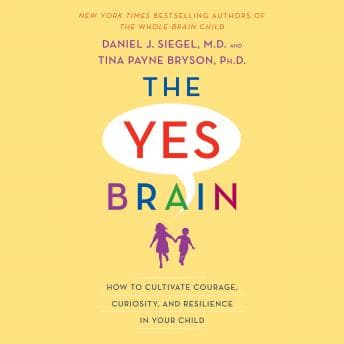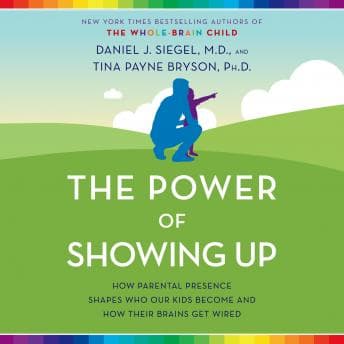

Look, I'll be honest—I started this audiobook expecting another one of those parenting books that makes you feel like garbage for not being perfect. You know the type. The ones that leave you spiraling at 2 AM wondering if you've already ruined your kid because you lost your temper over spilled cereal. (My therapist would have thoughts about my relationship with parenting literature.)
But Siegel and Bryson? They get it. They actually get it.
The Four S's: Attachment Theory Without the Jargon
As someone who spends way too much time analyzing attachment patterns in fictional characters, I was genuinely impressed by how accessible they made attachment theory here. Safe, Seen, Soothed, Secure—it's a framework that tracks psychologically. The research actually shows that secure attachment is one of the strongest predictors of positive outcomes across basically every domain of human functioning. It's the kind of foundational insight you see applied to entirely different contexts—even The Art of War touches on understanding underlying patterns rather than just surface tactics. And these two break it down without dumbing it down.
What makes this book compelling is the emphasis on repair. They're not selling you some fantasy of perfect parenting. They're saying: you're going to mess up. You're going to yell. You're going to miss cues. And that's—okay? Not in a hand-wavy dismissive way, but in a "rupture and repair is literally how secure attachment gets built" way. That's not just feel-good fluff. That's solid developmental psychology. There's something psychologically fascinating about how ordinary people navigate moral complexity under pressure—Ordinary Men explores that from a completely different angle, examining how context shapes behavior in ways we don't always want to acknowledge.
I found myself asking: why does this feel so different from other parenting books? And I think it's because they're not trying to fix your behavior. They're trying to help you understand what's happening in your kid's brain—and yours—so you can show up with intention rather than just following a script.
Authors Behind the Mic (And Why It Works)
Here's where things get interesting. Siegel and Bryson narrate this themselves, and usually I'm skeptical when authors read their own work. (Some people should stick to writing. I've suffered through enough monotone academic audiobooks to know.) But these two are clearly used to talking to parents. The warmth comes through. The pacing works for this kind of content—it's not rushing you through concepts, which matters when you're trying to actually absorb parenting advice while, I don't know, folding laundry or sitting in traffic.
Their voices are reassuring without being patronizing. There's clinical expertise underneath, but it doesn't feel like a lecture. More like a really good conversation with professionals who also happen to be human beings who understand that parenting is hard.
The included PDF summary—the "Refrigerator Sheet"—is a nice touch. Because let's be real, you're not going to remember everything. Having something to glance at when you're in the middle of a meltdown (yours or your kid's) is practical in a way I appreciate.
Who Should Hit Play (And Who Should Skip)
This is a fascinating case study in how to make neuroscience accessible. If you're the kind of person who wants to understand the WHY behind parenting strategies—not just "do this thing" but "here's what's happening in your child's developing brain when you do this thing"—this is your book. Parents dealing with guilt about not being present enough? This might actually help. New parents trying to build a foundation? Solid choice. Therapists or educators who work with families? Useful framework.
But if you're looking for quick fixes or step-by-step discipline scripts, skip this one. It's more about shifting your orientation than giving you a checklist. Some people find that frustrating. I found it refreshing. The pacing might also feel slow if you're used to more dynamic audiobooks—this isn't entertainment, it's education. Comfortable education, but still. I listened at 1.25x during my morning jogs and that felt about right.
My Therapist Would Approve
Yes, I'd recommend it. With caveats.
If you've already read a lot of attachment-focused parenting material, some of this will feel familiar. But the Four S's framework is genuinely useful as a mental shorthand. And hearing it from the authors themselves adds something—a sense of connection to the material that you don't always get.
My therapist would probably approve of this book. (She's big on understanding patterns rather than just fixing symptoms.) And honestly? The emphasis on self-compassion for parents—the idea that your own attachment history matters and that you can work on your own stuff while raising your kids—that's the kind of nuance that's often missing from parenting advice.
It's not going to solve all your problems. But it might help you show up a little differently. And apparently, that's the whole point.