
What happens when you study the psychology of belief for a living and then listen to a book that basically says 'just believe harder'?
I'll tell you what happens. You spend the first two hours arguing with a dead minister in your head while jogging through Cambridge. Very productive use of my time.
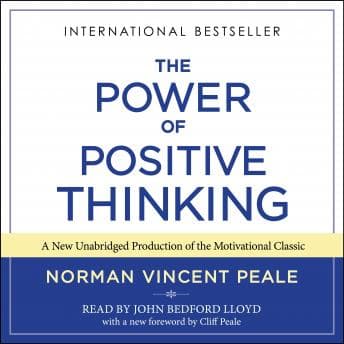
Here's the thing about Norman Vincent Peale's The Power of Positive Thinking - it's not a psychology book. I know, I know, obvious statement. But I went in with my researcher brain activated, ready to pick apart the mechanisms, and I had to consciously switch gears. This is a faith-based motivational text from 1952, and once I stopped expecting peer-reviewed citations, I actually found myself... nodding along? (Don't tell my dissertation committee.)
The Psychology Behind the Preaching
What makes this book genuinely interesting from my perspective is that Peale accidentally stumbled onto some principles that cognitive behavioral therapy would later formalize. The whole 'change your thoughts, change your life' framework? That's basically CBT's core premise, just wrapped in mid-century Protestant optimism instead of clinical language.
Peale's techniques - visualizing success, repeating affirmations, consciously interrupting negative thought spirals - these aren't just wishful thinking. The research actually shows that cognitive restructuring works. He just didn't have the vocabulary for it. I saw a similar translation gap in Golden Key: Modern Alchemy to Unlock Infinite Abundance - ancient wisdom repackaged in contemporary language, though with varying degrees of success. He called it faith. We call it neuroplasticity and cognitive reframing. Same mechanism, different packaging.
Now, does he oversimplify? Absolutely. The idea that positive thinking alone can cure illness or guarantee financial success is - look, it's problematic. My therapist would have thoughts about the potential for self-blame when things don't work out despite all your believing. The self-blame dynamic is something Adult Children of Emotionally Immature Parents addresses more directly - when positive thinking becomes a burden rather than a tool. But as a framework for managing anxiety and building resilience? There's something here.
John Bedford Lloyd's Steady Hand
The narration is interesting because Lloyd reads this with the authority of someone delivering important information, not the enthusiasm of a motivational speaker. Some listeners find it monotone. I actually think it works for this material.
Here's why: Peale's writing is already pretty energetic. He's throwing exclamation points around, telling dramatic stories of transformation, building to these crescendos of faith. If Lloyd matched that energy, it would be exhausting over ten hours. Instead, his measured, clear delivery lets the content breathe. It's like having a calm professor explain exciting research - the steadiness makes it easier to absorb.
That said, I get why some people want more variation. During the longer anecdotal sections, the consistent pace can feel a bit... samey. I found myself speeding up to 1.25x during my morning runs, which helped considerably.
Why This Book Still Sells Seventy Years Later
I kept asking myself: what's the staying power here?
Peale exhibits classic pastoral authority patterns - he positions himself as both expert and fellow traveler. He shares his own struggles with negative thinking, which creates connection. Then he pivots to stories of others he's helped, establishing credibility. It's a fascinating case study in persuasive structure, actually.
The research on narrative transportation suggests we're more likely to change our beliefs when we're absorbed in stories rather than presented with arguments. Peale understood this intuitively. Every chapter is stuffed with anecdotes - the businessman who visualized success, the woman who prayed away her anxiety, the salesman who repeated affirmations until he believed them. Are these stories verifiable? Probably not. Are they effective at conveying the principles? Undeniably.
The Reaffirmation Factor
One listener review caught my attention - someone said the information wasn't new but the 'reaffirming context' was refreshing. That's psychologically astute. Sometimes we don't need new information. We need to hear what we already know, said with conviction, at the right moment.
I listened to most of this while cooking elaborate dinners I'd eat alone (my preferred state, honestly). And there's something about hearing 'you have the power to change your circumstances' while you're chopping vegetables that hits differently than reading it on a page. The audiobook format creates intimacy. Lloyd's voice becomes the calm authority figure in your kitchen, reminding you that your anxious brain isn't the boss of you.
Is this scientifically rigorous? No. Did I roll my eyes at some of the more extreme claims? Yes. But did I also find myself consciously interrupting a negative thought spiral the next day and thinking 'huh, Peale might be onto something'? Also yes.
The Prescription
This works best if you're already somewhat open to faith-based frameworks, or at least willing to translate 'God' into whatever higher power or internal strength concept works for you. If you're a hardcore skeptic who needs citations, you'll spend ten hours frustrated. Skip it.
But if you're going through a rough patch, dealing with anxiety, or just need someone to tell you - with genuine conviction - that things can get better if you change your mental habits? There's value here. The techniques are solid even if the theology isn't your thing.
Just maybe don't expect it to cure your chronic illness. That's where Peale loses me completely.