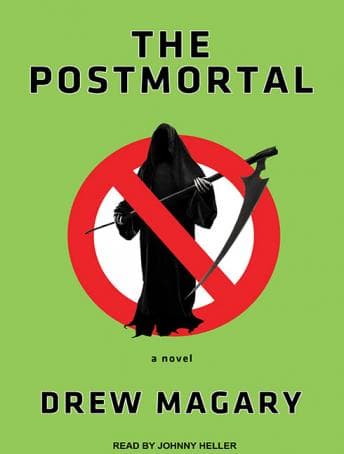

What happens when you remove death from the equation but leave everything else - war, jealousy, resource scarcity, human stupidity - completely intact?
I was supposed to be debugging my procedural terrain generator at 2 AM. Instead I'm eleven hours deep into Drew Magary's pre-apocalyptic nightmare, my thesis gathering dust while I contemplate the logistics of immortality. Dr. Patel would be so disappointed. Worth it.
The Magic System Is Actually Just Capitalism With Extra Steps
Here's where Magary does something clever that my D&D brain absolutely loves. The Cure isn't magic - it's just gene therapy. No mystical hand-waving. And because it's mundane, it spreads through mundane channels: black markets, insurance debates, political lobbying. The world-building happens through blog posts, news articles, chat transcripts. It's epistolary fiction for the Twitter age, and it works because Magary (a GQ correspondent who clearly knows how media actually functions) makes every format feel authentic. Magic Shop tried something similar with its fragmented narrative, though it never quite found the same rhythm.
The progression is satisfying in a deeply uncomfortable way. You watch society unravel in stages - first the marriage industry collapses (why commit forever when forever is literal?), then real estate, then resources, then... well. Evil green people and government euthanasia programs, as promised. Each domino falls with horrible logic. If you've ever sat around a table arguing about what would ACTUALLY happen if your wizard cast Wish wrong, this is that conversation extended to novel length.
Johnny Heller: The Narrator Choice That Divided The Internet
Look, I get why some listeners questioned this casting. Johnny Heller has this quick-witted, conversational delivery that sounds like your buddy telling you a story over beers. For a book about watching civilization collapse while your protagonist becomes increasingly hollow inside? It's... a choice.
But here's the thing - I think it actually works. John Farrell is kind of a jerk. He's apathetic, he makes questionable decisions, he's not particularly heroic. Heller's casual tone matches that energy. You're not supposed to admire this guy. You're supposed to watch him float through immortality the same way he floated through mortality: somewhat detached, occasionally witty, fundamentally lost. The narrator doesn't elevate the material into something noble. It keeps it grounded in uncomfortable reality.
That said, if you're coming from Steven Pacey's Logen Ninefingers voice acting or Tim Gerard Reynolds doing Red Rising - this is a different beast entirely. Less theatrical, more podcast-host-reading-his-memoir. Meant to Be had a similar conversational narrator approach that worked better for its lighter tone. Adjust expectations accordingly.
The Part Where I Complain (Because It's Deserved)
Some readers have noted the book feels hateful towards women at times, and... yeah, I can see that. The female characters often exist primarily in relation to John's desires or failures. In a book that's ostensibly about how immortality warps human relationships, the women feel more like plot devices than people wrestling with the same existential crisis. Magary's trying to show how immortality makes people MORE selfish, but the lens is uncomfortably narrow.
Also - and this is a weird complaint for someone who will defend 40-hour Sanderson epics - the middle section drags. The epistolary format that feels fresh in the first third becomes repetitive. Another news article about society collapsing. Another chat log about relationship dysfunction. I found myself speeding up to 1.25x around hour six, and that helped considerably.
Who's Rolling For This Encounter?
This is for the Black Mirror crowd. For people who read Paolo Bacigalupi and think "yes, more climate anxiety please." If you like your sci-fi philosophical and your philosophy deeply pessimistic, you'll find plenty to chew on here. It's also surprisingly funny - Magary's dark humor keeps things from becoming a total slog.
Skip if: You need a likeable protagonist. You want action-heavy plotting. You're sensitive to violence, sexual content, or language (the content warnings are earned). Or if epistolary formats make you impatient.
My D&D group would have a field day arguing about the worldbuilding implications, but half of them would DNF because John Farrell is kind of insufferable.
The Character Sheet Says It All
Philip K. Dick Award finalist. Arthur C. Clarke Award finalist. Those nominations make sense - this is idea-driven sci-fi that prioritizes concept over character warmth. The audiobook format works for the fragmented narrative structure, and Heller's delivery keeps eleven hours from feeling like a slog even when the pacing stumbles.
I finished it instead of my thesis. That's either a recommendation or a warning, depending on whether you're my advisor.