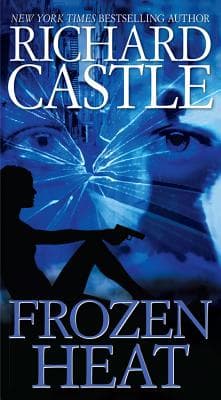

Look, I need to get something off my chest about this whole Richard Castle situation. The man doesn't exist. He's a fictional novelist played by Nathan Fillion on a TV show about a novelist who shadows a detective. And yet here I am, at 11:47 PM, red pen abandoned on a stack of ungraded Gatsby essays, genuinely invested in a murder mystery written by a character who writes murder mysteries. The meta-narrative rabbit hole is deep, friends. Hemingway would've hated this. I kind of love it.
When Your Mother's Murder Becomes a Cold Open
Frozen Heat does something I wasn't expecting from what is essentially licensed TV tie-in fiction—it gets genuinely personal. Nikki Heat has been our competent, quippy detective for three books, but this time the body in the suitcase connects directly to her mother's unsolved murder from a decade ago. Suddenly this isn't just procedural comfort food. It's a daughter reckoning with the woman she thought she knew.
I found myself pausing my grading entirely during the investigation sequences. Not because they're particularly innovative—they follow the genre playbook pretty faithfully—but because the emotional stakes transform the familiar rhythms. Every clue Nikki uncovers about her mother's hidden life feels like watching someone read their parent's diary. Uncomfortable. Necessary. The kind of truth-seeking that hurts.
The Paris detour feels slightly indulgent, like the ghost-author wanted a vacation and brought Nikki along. Troubles in Paradise has that same escapist geography thing going on, though Elin Hilderbrand commits to the vacation vibes way harder. But even that works thematically—there's something right about chasing your mother's secrets across an ocean, discovering she had a whole life you never suspected.
Johnny Heller's Rat-a-Tat Rhythm (That Grows on You)
Here's the thing about Heller's narration: it takes about forty-five minutes to stop fighting it. His delivery has this punchy, rhythmic, almost theatrical quality that initially feels too stylized for crime fiction. I kept thinking "slow down, let the prose breathe."
Then something clicked. This is exactly how Castle (the fictional author, keep up) would want his books read. It's performance, not just narration. The pacing mirrors the show's banter-heavy energy. Once I stopped expecting literary gravitas and accepted the entertainment-first approach, Heller became genuinely enjoyable.
His character differentiation is solid if imperfect. Rook gets this slightly smug journalist inflection that works beautifully. The male supporting cast comes through clearly. But—and this is worth mentioning—his female voices occasionally blur together. Nikki herself is distinct enough, but secondary women characters can sound interchangeable if you're not paying close attention. Not a dealbreaker, but noticeable during scenes with multiple women speaking.
The emotional moments land, though. When Nikki confronts painful family truths, Heller finds genuine weight. His action scenes have excellent pacing—tense without becoming breathless.
The Teacher's Confession
I should probably admit why this book worked for me specifically. I spend my days trying to convince seventeen-year-olds that literature matters, that character development and thematic weight are worth their attention. And then I come home and listen to tie-in fiction based on a procedural TV show.
But here's what I'd tell my students if they caught me: genre fiction done well teaches the same lessons as the classics. Frozen Heat is about identity—who our parents really were versus who we needed them to be. It's about the stories we tell ourselves to survive grief. It's about whether justice and closure are the same thing. (They're not. The book knows this.)
Is it Faulkner? Obviously not. But it's honest about what it is, and it executes that vision competently. The prose won't make you weep with its beauty, but it moves. The mystery has genuine twists. The relationship between Nikki and Rook has earned warmth after four books together.
Who Gets the Hall Pass
Castle fans will find this captures the show's spirit while adding depth the 42-minute episode format couldn't allow. Crime thriller readers who want emotional stakes beyond just "catch the killer" should give it a shot. Skip it if you need literary prose or can't tolerate stylized narration—Heller's approach isn't for everyone.
At twelve hours, this is a commitment. Best for focused listening—driving works well, dedicated evening sessions work better. Don't try to grade papers simultaneously. (I learned this the hard way. Sorry, period three, your comma splice feedback might be slightly incoherent.)
My students would probably love this, actually. It's accessible without being stupid. It respects the reader's intelligence while keeping the pages turning. Maybe I'll recommend it to the kid who claims he "doesn't read" but somehow knows every true crime podcast episode by heart.
The narrator understands that pause is punctuation—even when he's moving fast, the beats land where they should. That's craft. That's worth something.