
A Father's Skepticism Meets Real Magic
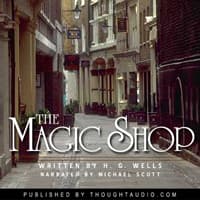
I was grading sophomore essays on The Great Gatsby - the ones where they all think Nick is "just a guy who moved to New York" - when I decided I needed a palate cleanser. Twenty-seven minutes. That's it. H.G. Wells's "The Magic Shop" seemed perfect for a quick break before tackling another paper claiming Gatsby's green light was "probably just a lamp."
And look, Wells delivers exactly what you'd hope for. This little story about a father taking his son Gip to a magic shop for his birthday is genuinely charming. The father narrates with this wonderful skeptical voice - he's determined to catch the shopkeeper in some sleight of hand, to prove it's all tricks and mirrors. But Gip? Gip just believes. And slowly, impossibly, the father starts to wonder if maybe his son is right.
This is why we still read the classics. Wells wrote this in 1903, and it still captures something true about the gap between childhood wonder and adult cynicism. The prose deserves to be savored - Wells describes the shop's impossible interior with such specificity that you can almost see the magic bleeding through the cracks of reality. There's a moment where toys come alive and the father's rational explanations start failing him, and Wells handles it with this perfect ambiguity. Is it real magic? Mass hypnosis? A father's love letting him see through his son's eyes? Wells never tells you. He trusts you to sit with the uncertainty.
The Narration Problem
Okay, so here's where I have to be honest. Michael Scott's narration is... fine. It's clear. The audio quality is clean. But that's about the best I can say.
A good narrator understands that pause is punctuation - except this narrator doesn't really seem to understand that at all. The delivery is flat. Monotone. I kept waiting for some vocal differentiation between the skeptical father, the enthusiastic Gip, and the mysterious shopkeeper. It never came. Everyone sounds basically the same, which in a story that's essentially a three-person play is a real problem.
I couldn't find much about this particular Michael Scott's other work, but based on this performance, I'd guess audiobooks aren't his primary gig. Though honestly, his narration of Prince was considerably stronger - he actually brought some energy to that one. There's a quality to the reading that feels almost... automated? Like someone reading competently but without any real investment in the material. And with Wells's prose - which is doing so much heavy lifting in creating atmosphere - you need a narrator who can match that energy.
My students would probably say I'm being too harsh. (They also think SparkNotes counts as "reading," so their judgment is suspect.) But seriously, a great narrator doesn't just read - they interpret. They make choices about emphasis, about character, about rhythm. This performance makes almost no choices at all.
Who Should Listen (And Who Should Skip)
Here's the thing: the story itself is wonderful. If you've never read "The Magic Shop," it's a perfect introduction to Wells beyond the sci-fi stuff everyone knows. It's got that same speculative edge as The Time Machine but wrapped in this warm, domestic package. Wells pulls off that trick again in War of the Worlds, though with considerably higher stakes than a birthday outing. A father and son. A birthday treat. Magic that might be real.
If you're introducing a young listener to classic literature, this could work. The clear enunciation means nothing gets lost, and at 27 minutes, it's short enough to hold attention. My wife Denise's niece is about Gip's age, and I could see her enjoying this - the monotone delivery might actually matter less to kids who are just following the adventure.
But if you're an audiobook person who cares about performance? If you believe, like I do, that narration is an art form? Skip this version. Find a free text online - it's public domain - and read it yourself. Or better yet, read it aloud to someone. Become the narrator Wells deserves.
I listened at my usual 1.0x because the author chose those words. But honestly, with this narration, speeding up wouldn't hurt anything. There's no vocal nuance to miss.
Cliff Notes
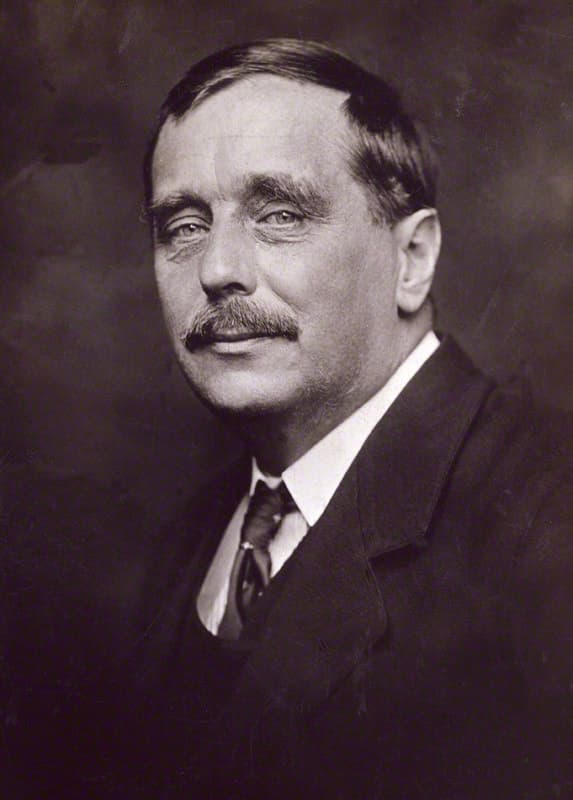
Look, I'm not saying skip H.G. Wells. Never skip Wells. The man basically invented science fiction and could write circles around most modern authors. "The Magic Shop" is a gem - this perfect little meditation on belief and skepticism and the magic we lose when we grow up.
But this particular audiobook? It's the equivalent of having someone read you a beautiful poem in a government-training-video voice. The words are all there. The soul isn't.
Worth 27 minutes if you're curious and have nothing else queued up. Worth seeking out in print if you actually want to experience what Wells was doing. Not worth pausing the faculty meeting for. (Though let's be honest, I'd pause Principal Martinez's budget presentation for almost anything at this point.)
If you loved Wells's other work, this is its spiritual successor in miniature. Just maybe find a different version - or let your own imagination do the voice work.