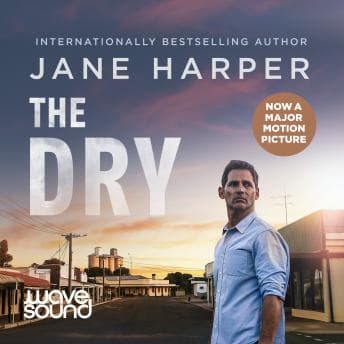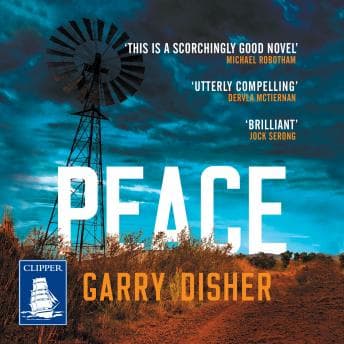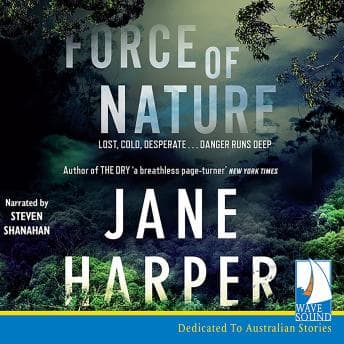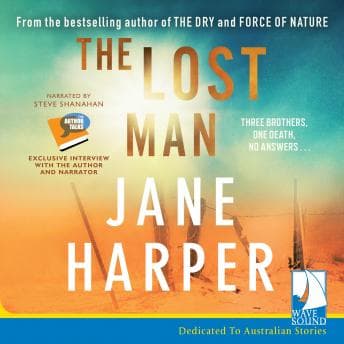
"The scant shadow it casts was the last hope for their middle brother, Cameron."
That line hit me somewhere around 3 AM, halfway through my shift, during one of those rare quiet stretches when the monitors are steady and the unit feels almost peaceful. I was charting, headphones in, and Jane Harper made me stop typing. A man walked into the desert to die under a stockman's grave marker. And the question isn't really whether he meant to—it's what drove him there.
The Outback Will Kill You and Nobody Will Find You in Time
As someone who's actually worked a code, I know what dying looks like. The desperate, ugly reality of it. Harper gets something right here that most thriller writers miss entirely: the body. Cameron's body, found at a landmark in the middle of nowhere, becomes almost a character itself. The medical examiner details, the way the family processes what happened to him physically—it's not sensationalized. It's just... accurate. Blue Cross had that same clinical accuracy when dealing with death—no Hollywood dramatics, just the grim reality. The dehydration, the exposure, the timeline of how long it takes for the outback to claim someone. I didn't yell at my dashboard once. That's high praise from me.
But here's the thing—this isn't a fast book. It's not trying to be. The pacing matches the landscape: vast, unforgiving, slow to reveal its secrets. If you're expecting The Dry's tighter structure, adjust your expectations. This is a family drama wearing a mystery's clothes. The Bright family—three brothers, their mother, their complicated histories—unfolds like those fencelines stretching to the horizon. You're walking the property with them, feeling the heat, understanding why isolation does things to people.
Stephen Shanahan Understands the Assignment
The narration here is something special. Shanahan's Australian accent is gentle enough that my American ears had zero trouble following, but authentic enough that I never forgot where we were. His pacing mirrors the story perfectly—measured, deliberate, giving you room to sit with the grief and the suspicion. Each brother sounds distinct: Nathan's guilt-ridden heaviness, Bub's younger-sibling energy. The women in the story—and there are several complicated, well-drawn women—get their own voices too.
I've listened to enough audiobooks with lazy character differentiation to appreciate when someone actually does the work. Shanahan does the work. The emotional moments land because he doesn't oversell them. When the family dynamics get ugly (and they do), he lets the ugliness speak for itself.
Slow and Bleak. That's the Point.
Look, I need to be straight with you. If you want car chases and ticking clocks, this book will frustrate you. Some listeners have called it "slow and bleak." They're not wrong. It IS slow. It IS bleak. The outback is bleak. Grief is bleak. Family secrets festering for decades are bleak.
But Harper isn't writing a beach read. She's writing about how isolation—geographic and emotional—warps people. How a family can live within driving distance of each other and still be utterly alone. That same suffocating family dysfunction drives Girl on the Train, though the landscape there is commuter rails instead of desert. How you can know someone your whole life and miss the signs that they're drowning.
Carlos asked why I was crying in the car after my shift ended. I blamed allergies. (It was not allergies.)
Perfect For That Post-Shift Decompression
This is a focused listening book. Don't put it on while you're multitasking—you'll miss the subtle reveals, the small moments that become significant later. I listened during charting and my drive home, and honestly? The 3 AM quiet suited it. The isolation of night shift matched the isolation of the outback.
At 11 hours, it's a commitment. But it earns that runtime. By the end, you understand why Cameron walked into the desert. And you understand why his family might have driven him there.
Who's Going to Love This (And Who Should Skip)
If you loved The Dry, you'll love this—possibly more. If you appreciate atmospheric crime fiction that's really about family dysfunction, this is your book. Skip it if you need constant action or if "slow burn" makes you twitchy. Not the right pick if you're not in the headspace for something heavy—this one sits with you.
Night Shift Approved
Jane Harper wrote a mystery about a dead man in the desert and made me care more about his living family than the whodunit. Stephen Shanahan made me feel the heat through my headphones at 3 AM in an air-conditioned hospital. The medical details are accurate. Finally. The emotional details are even more so.
My mom would love this. (She still thinks I should've been a doctor, but she'd appreciate a book that respects how bodies work and how families break.)