
What happens when horror isn't supernatural at all—when the monster is just human cruelty in a place too quiet to hide it?
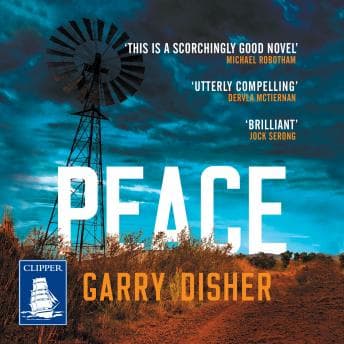
I've been chasing this question through 200+ episodes of my podcast, and Garry Disher's Peace might be the most unsettling answer I've found in months. Not because of ghosts or demons, but because of what people do to each other when they think nobody's watching. I finished this at 1 AM, Shirley curled against my leg, and I couldn't shake the dread for hours.
The Slow Knife Cuts Deepest
Some listeners complained nothing happens for most of this book. They're wrong, but I understand why they think that. Disher isn't interested in the chase—he's interested in the rot. Constable Paul Hirschhausen runs a one-cop station in South Australian farming country, doing welfare checks and community work, and for a while Peace feels almost cozy. Christmas approaching. A grass fire here. Some boys stealing a vehicle there. Brenda Flann driving her car into the front bar of the pub (which, honestly? Mood).
Then the incident on Kitchener Street happens, and everything curdles.
This book understands that horror isn't about gore—it's about dread. The violence here is appalling precisely because Disher doesn't sensationalize it. Animal cruelty. Inexplicable attacks. A family on a forgotten back road that the Sydney police want checked on. The content warnings are real—I'm someone who consumes horror for a living and certain scenes made me pause the audio. Not because they were graphic, but because they felt true. That's worse.
Shanahan Gets the Quiet Right
Steve Shanahan's narration is doing something subtle that I almost missed at first. He's not performing—he's inhabiting. The research calls his work "beautiful" and mentions how he captures "human strengths and fragility," and that's accurate but incomplete. What Shanahan actually does is match Disher's restraint. No dramatic flourishes when the horror arrives. No vocal pyrotechnics to signal THIS IS THE SCARY PART. He trusts the material.
For rural noir, this is exactly right. The Australian outback setting demands a certain flatness—these are people who don't emote loudly, who process trauma in silence, who notice things without commenting. Shanahan delivers that. The pacing is measured, almost meditative, which works brilliantly for focused listening but might frustrate anyone expecting thriller momentum.
I didn't catch specific character voice differentiation—the research came up empty there—but honestly? In a book this intimate, with a single cop's perspective anchoring everything, I didn't need it. This is Hirsch's story. Shanahan makes sure we never forget that.
The Ending Problem (And Why I Forgive It)
Okay, the ending is abrupt. Multiple listeners mentioned this and they're not wrong. After nearly ten hours of slow-building dread, the resolution arrives fast and then—it's over. I sat there in the dark waiting for more, and there wasn't any.
But here's the thing: life doesn't resolve cleanly. Rural noir especially shouldn't. Grass Roots wrestles with similar messiness—small-town corruption that can't be neatly excised. Hirsch solves what he can solve, but the community damage lingers. The cruelty happened. You can't un-ring that bell. Disher seems to know this, and the abruptness feels intentional rather than rushed. Whether that works for you depends on what you want from crime fiction.
My podcast listeners are going to love this—the ones who appreciate craft over catharsis, anyway. The ones who want neat bows? Maybe skip.
Who Needs This in Their Ears (And Who Should Run)
If you've exhausted Tana French and want something with similar atmospheric patience but different terrain, Peace delivers. That same slow-burn dread powers Firekeeper's Daughter, though it trades Australian outback for Ojibwe reservation—different landscape, same understanding that community secrets fester. If you think Australian crime fiction peaked with Peter Temple—Disher is the heir apparent, and this book proves it.
But if you need plot momentum? If "slow burn" makes you reach for the 2x speed button? If you're listening while distracted—commuting, working out, whatever—this isn't your book. Peace demands attention. It rewards focus. It punishes multitasking. And if you scare easily or can't handle animal cruelty on the page, skip this one entirely.
I listened in the dark. Mistake? Maybe. Worth it? Absolutely.
Shirley Jackson Would Approve
Not literally—wrong genre, wrong continent, wrong century. But the principle holds: real horror lives in what humans do when they think they're alone. Disher understands this. Shanahan delivers it. And somewhere in the dry farming country south of the Flinders Ranges, a cop named Hirsch is doing his best to hold a community together while it bleeds.
Horror that respects the genre—even when it's wearing a crime fiction disguise.