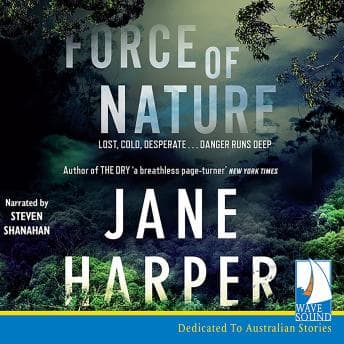

Look, I have a very specific complaint about Force of Nature, and it's this: Jane Harper writes isolation better than half the horror authors in my podcast queue, and she's not even trying to scare anyone. That's infuriating. I was on a trail in the coast range outside Tillamook - because apparently I thought listening to a book about women lost in the Australian bush while hiking alone through Oregon fog was a personality-appropriate decision - and there's this sequence where the women realize they're genuinely, profoundly lost, and the silence of it hit different when my own trail markers went fuzzy in the mist.
This isn't horror. I know that. But the dread mechanics are there. Harper understands something that a lot of thriller writers don't: the scariest thing isn't what's in the woods. It's what you brought with you.
Five Women, Zero Trust, One Body Count
The setup is deceptively simple. Corporate retreat, mandatory team-building hike, five women who range from "barely tolerating each other" to "actively concealing secrets." Alice Russell disappears. Federal Agent Aaron Falk - returning from The Dry, and yes, you should read that first - is investigating because Alice was his informant. I covered The Dry in depth a while back—same narrator, same simmering tension, and a desert that feels just as alive as these bushlands. The narrative toggles between the investigation aftermath and the women's deteriorating hike, and that dual timeline structure is where Harper does her best work.
The tension isn't in any single revelation. It's cumulative. Each woman's perspective peels back a layer of corporate paranoia, personal grudges, and survival-mode desperation that gets ugly fast once the phone reception dies. By hour five, you're not wondering who did it so much as you're wondering who didn't want to. That's a good trick when it works. When it doesn't - and there are stretches where the multiple perspectives slow things to a crawl as you try to keep track of which woman resents which other woman for what - you feel the nine-hour runtime.
And here's my honest grievance with the ending: it's too tidy. Harper builds this gorgeous, suffocating atmosphere of distrust and then resolves it in a way that felt... safe. Predictable, even. The journey earned a sharper landing than it got.
Shanahan's One-Voice Gamble
Stephen Shanahan made a choice with this narration that I respect even if I'm not entirely sold on it. He doesn't do voices for the women. No pitched-up attempts at femininity, no theatrical character switches. Instead, he shifts tone and inflection - the tightness in a sentence when one character speaks versus the clipped efficiency of another. It works because the story is filtered through Falk's perspective. You're hearing these women the way Falk processes them, not as they sound to themselves.
His Australian accent is warm and steady, the kind of voice that makes the bushland feel lived-in rather than exotic. There's an emotional current underneath the calm that keeps you anchored during the slower middle sections. I found the same calming presence in Lost Man, where Shanahan's voice wraps around Harper's outback like a well-worn jacket. But - and this bugged me - the first hour or so, he's moving fast. Too fast. Like he's trying to sprint through the corporate setup before you notice it's setup. He settles eventually, and once he does, the pacing between his delivery and Harper's prose clicks into place. But that early rush cost me some investment in the characters that I had to rebuild later.
The narration won an AudioFile Earphones Award, and I get why. The narrator commits. That's rare. Shanahan chose a consistent interpretation over a showy one, and consistency has its own quiet power. But "committed" and "electrifying" are different animals, and this leans hard toward the former. For a story about five women unraveling in the wilderness, I wanted more heat in the delivery. More volatility. The calm worked for Falk's investigation scenes. For the women losing it on the trail? It kept me at arm's length.
Who Should Lace Up and Who Should Stay at Camp
If you loved The Dry, this is a natural next step - same detective, same slow-burn Australian crime energy. If you're coming in cold, go back. Falk's backstory matters and Harper doesn't hold your hand.
This is a focused listen. Don't put it on while shelving returns or you'll lose the thread of who said what to whom on which day of the hike. The dual timelines reward attention. They punish multitasking.
If you want a locked-room mystery where the room is several hundred square kilometers of unforgiving Australian bush, and the locked door is the dysfunction these women carried into the wilderness? Force of Nature delivers that. Just don't expect it to stick the landing with the same precision it sets the table. If you scare easily - wrong genre, but the isolation will still get under your skin.
Shelving This in the "Almost" Section
Shanahan's voice followed me home from that hike and I finished the last two hours on the couch. Shirley (my cat) was unimpressed. I was... mostly satisfied? Harper's atmosphere is the real star - the way the bush becomes a presence, the way corporate politics curdle when you strip away office walls and cell service. Shanahan's narration supports it without ever quite elevating it. My podcast listeners who are into Australian crime fiction are going to dig this. Shanahan's narration of Peace taps the same vibe—another slow-simmering Australian mystery where the silences do the heavy lifting. Everyone else? Borrow it from your library. See if the trail calls to you. It probably will - just know the destination isn't as thrilling as the walk.