
"There is nothing like returning to a place that remains unchanged to find the ways in which you yourself have altered."
That line hit me somewhere around hour 18, stuck in traffic on the 405, and I had to just... sit with it for a minute. Which is not something I do. I'm the guy who listens at 2.0x and skips intros. But this book? This book broke me of that habit.
The ROI on 28 Hours of Your Life
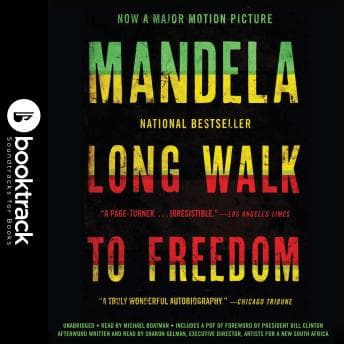
Look, I'm going to be straight with you: 28 hours is an insane commitment. That's roughly 14 round-trip commutes, or about 40 client calls worth of time. When I first saw the runtime, my immediate thought was "there's gotta be an abridged version." There is. Don't get it.
Here's why: Mandela's story isn't about efficiency. It's about endurance. The man spent 27 years in prison. The least I can do is spend 28 hours listening to him explain why he didn't give up. Every time I caught myself thinking "okay, we get it, move on," I'd remember - this guy broke rocks on Robben Island for 13 years. My impatience suddenly felt pretty pathetic.
The business case for this book is actually solid. Mandela's approach to negotiation, to playing the long game, to understanding your adversary - this is stuff they teach at Harvard Business School, except Mandela lived it. When he talks about learning Afrikaans to communicate with his guards, about studying the psychology of his captors, about maintaining relationships across decades of separation - that's strategic thinking at a level most CEOs never achieve. Disappearing Spoon explores that same idea—how understanding your subject deeply, even obsessively, changes everything about how you approach it.
Michael Boatman's Marathon Performance
Boatman is an Earphones Award winner, Audie Award winner twice over. The guy knows what he's doing. His voice is gentle but insistent - exactly right for a memoir that spans decades without feeling rushed. He brings a certain grace to Mandela's words that feels respectful without being reverent.
But - and this is a real but - he mispronounces a lot of the Xhosa, Zulu, Sotho, and Afrikaans names. I'm Korean-American, so I'm not the authority here, but several South African listeners have flagged this, and I believe them. Names matter. When you're telling the story of a liberation movement, getting the names right matters.
Does it ruin the experience? No. Did it pull me out occasionally? Yes. It's like watching a movie about Korean history where they butcher every name - you can still appreciate the story, but something's lost.
The Booktrack edition adds background music, which I was skeptical about. Turns out it's pretty unobtrusive. Never overpowered the narration. Actually kind of helped during some of the denser political sections - gave my brain something to hold onto when the ANC organizational history got deep.
What My Parents Would Say
My parents ran a dry cleaning business in Koreatown for 30 years. No vacations, no sick days, church on Sundays. When I listen to Mandela describe his father's cattle herding, his mother's influence, his sense of duty to community - I recognize it. Different continent, different century, different struggle. Same values.
Mandela's story is essentially about what happens when you decide something matters more than your own comfort. More than your own life, really. My parents made that calculation on a much smaller scale when they immigrated. Mandela made it on a scale that changed history.
The book doesn't shy away from the violence of apartheid, the brutality of the prison system, the personal costs - Mandela barely knew his children, his first marriage collapsed, he missed funerals and birthdays and decades of ordinary life. This isn't a sanitized hero's journey. It's a real accounting of what resistance costs.
The Speed Recommendation (Yes, I Have One)
I started at my usual 2.0x. By hour 3, I was down to 1.5x. By hour 10, I was at 1.0x for certain sections. The man's prose deserves to breathe. When he describes his release from prison, the walk down that final road - you want to hear every word at the pace he intended.
That said, the political organizing chapters (especially the early ANC stuff) can drag. 1.25x is probably your sweet spot for those sections. You'll know which ones.
Who This Is For (And Who Should Skip)
If you're in leadership, management, negotiation, or just trying to figure out how to play a long game in your career - this is required listening. Not because it's inspirational (though it is), but because it's instructional. Mandela was a strategist who happened to also be a moral giant.
Skip it if you need perfect pronunciation of South African languages, or if you want something quick. Some things shouldn't be quick.
The Long Game Pays Off
Jenny asked me last week if I'd finished "that long one." I told her I'd been savoring it. She looked at me like I'd grown a second head. Fair enough. But some books change how you think about time. This is one of them.