
Look, I have a complicated relationship with James Patterson. The man writes like he's being chased by a deadline—which, given his output, he probably is. But here's the thing about the Alex Cross series: it's basically a case study in how trauma bonds work, and I'm professionally obligated to find that interesting.
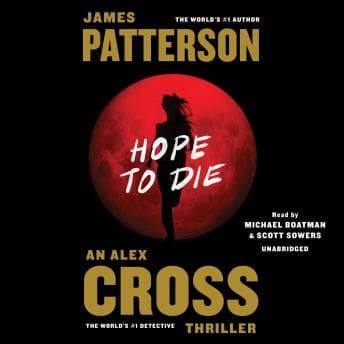
Hope to Die picks up right where Cross My Heart left off, and if you haven't listened to that one first, you're going to be lost. Genuinely confused. This is the second half of a two-part nightmare, and Patterson doesn't bother catching you up. The premise is simple but effective: a psychotic genius has taken Cross's entire family—Bree, Nana Mama, the kids—and is forcing him to play along with increasingly sadistic demands. It's the "how far would you go for your family" question, stretched across nearly ten hours of audio.
Watching a Psychologist Lose His Clinical Detachment
What makes this work—and I'll admit, it does work—is watching Alex Cross, a trained forensic psychologist, completely abandon everything he knows about staying objective. The man exhibits classic trauma response patterns: hypervigilance, tunnel vision, the willingness to throw out his moral framework when attachment figures are threatened. Patterson might write at breakneck speed, but he understands something fundamental about human behavior. When the people we love are in danger, we don't think. We react. And Cross's reactions here are messy and desperate and—honestly?—psychologically accurate.
The antagonist, Thierry Mulch, is basically a textbook case of antisocial personality disorder with narcissistic features. He's not subtle. Patterson doesn't do subtle. But there's something genuinely unsettling about a villain who treats torture like performance art. My therapist would have thoughts about this character. Many thoughts.
Two Narrators, One Escalating Nightmare
Michael Boatman and Scott Sowers split narration duties here, and it's... fine? Boatman brings this gravitas to Cross's sections that really sells the desperation. When he's voicing Cross in full panic mode, you believe it. There's an emotional depth to his performance that elevates Patterson's sometimes sparse prose.
Sowers handles the antagonist's perspective, and I found myself going back and forth on whether this works. Having a different voice for the villain creates clear delineation—you always know whose head you're in. But the transition between narrators can feel jarring. Like switching radio stations mid-song. Some reviewers have noted Sowers can sound a bit flat in places, and I get that. For a character as cold as Mulch, though? Maybe flat is the point.
The pacing is relentless—Patterson's chapters are famously short, some only a page or two, and in audio format this creates this breathless quality. I listened to most of this during my morning jogs through Cambridge, and there were moments I literally forgot I was running because I was so locked into what was happening. (Don't tell my therapist I'm using thrillers as dissociation tools. She'll have opinions.)
Where the Psychology Gets Sacrificed for Action
Okay, so. Here's my issue. Patterson sets up this elaborate psychological game, this cat-and-mouse dynamic that should be fascinating—and then resolves it with pure action-movie logic. Man Who Knew Too Much does something similar with its thriller mechanics, though I found the psychological payoff equally frustrating there. The research actually shows that people in extreme stress don't suddenly become action heroes. They freeze, they make mistakes, they fall apart. Cross does some of that, but then he also does some things that are... let's say, cinematically convenient.
Also—and this is a personal pet peeve—the female characters exist primarily to be in danger. Bree is a cop. She's competent. But in this book, she's mostly a motivation for Cross rather than an agent in her own story. Nana Mama, who I genuinely love as a character, is reduced to a hostage. It's a choice. Not one I love.
The audio production itself is solid—clean, well-paced, no weird technical issues. I couldn't find much about bonus content, but honestly, with Patterson, the book is the product. You're not getting author interviews or behind-the-scenes material.
Who This Is (and Isn't) For
If you're already invested in the Cross series, this is essential—you can't skip the second half of a cliffhanger. If you're new to Patterson, start with one of the earlier books where you can actually meet these characters before they're being tortured. And if you need your female characters to have agency? Maybe sit this one out.
For fans of Jeffery Deaver's Lincoln Rhyme series—and yes, I see you, fellow thriller psychology nerds—this scratches a similar itch. Less procedural detail, more emotional stakes. Patterson's 20th Victim has that same efficient, no-frills approach to delivering exactly what the cover promises.
The Attachment System Exploit
I found myself asking: why does Patterson keep returning to this particular well? The "family in danger" plot? And I think the answer is simple. It works. Because at the end of the day, we're all just primates with attachment systems, and threatening those attachments is the fastest way to make us pay attention. Patterson knows this. He exploits it. And I respect the hustle, even when I see exactly what he's doing.