
I almost turned this off after twenty minutes.
The dialect hit me like a wall. Henry Shackleford's 19th-century Kansas Territory voice felt thick, unfamiliar, and I was grading sophomore essays on The Scarlet Letter at the time—my patience was already threadbare. But I stuck with it. And by hour three, walking the lakefront with Denise while John Brown was ranting about the Lord's vengeance, I realized I was completely, hopelessly hooked.
This is why we still read the classics. Or in this case, why we listen to novels that'll probably become classics.
When History Gets a Sense of Humor
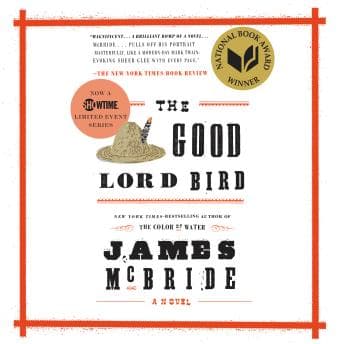
James McBride does something here that most historical fiction writers are too scared to attempt. He takes one of the most brutal periods in American history—the bleeding Kansas Territory, the horrors of slavery, the raid on Harpers Ferry—and tells it through the eyes of a child who's too busy trying to survive to be reverent about any of it.
Henry, nicknamed "Little Onion" by the wild-eyed John Brown, is forced to pose as a girl after Brown mistakes him for one. And the thing is, Henry just... goes with it. Because what else are you gonna do when a famous abolitionist with a rifle decides you're his good luck charm? You survive. You adapt. You keep your head down and your dress on.
The humor isn't there to make light of slavery. It's there because that's how people cope. My students would probably call it "dark comedy" and they wouldn't be wrong, but it's more than that. It's the absurdist lens that lets McBride show us the genuine horror without making it unreadable. The prose deserves to be savored—McBride's ear for language is extraordinary, and every sentence feels deliberate.
Michael Boatman Doesn't Narrate. He Inhabits.
This man gives a performance. His John Brown is genuinely unhinged in the best possible way—you can hear the fire and brimstone dripping off every word, but there's also this strange tenderness underneath. When he voices Frederick Douglass (yes, that Frederick Douglass), there's this subtle pomposity that's hilarious without being disrespectful. And Harriet Tubman? Boatman gives her this quiet steel that made me pause my walk and just stand there on the lakefront like an idiot.
He understands that pause is punctuation. He knows when to let a moment breathe, when to speed up during the action, when to drop his voice so you lean in closer. I listened at 1.0x because—and I'll die on this hill—the rhythm of Henry's voice is part of the experience. Speeding it up would be like fast-forwarding through a jazz solo.
Here's the thing about the dialect that almost made me quit: once you settle into it, it becomes the whole point. Henry's voice is his identity. The way he talks, the way he sees the world, the way he describes these larger-than-life historical figures as just... people with weird habits and bad breath and contradictions. That authenticity is what makes the book work, and Boatman delivers it perfectly.
The Iceberg Under the Jokes
This reminds me of what Hemingway said about writing—that the dignity of movement of an iceberg is due to only one-eighth of it being above water. McBride's book is funny on the surface, but underneath there's this devastating meditation on identity and survival.
Henry spends years pretending to be someone he's not. A girl. A believer. A member of Brown's ragtag army of abolitionists. And somewhere along the way, the pretending becomes real in ways that are genuinely moving. The question of who Henry actually is by the end—that's the gut-punch the humor has been setting up all along. That same tension between survival and identity runs through My Confession, though it takes a completely different historical angle.
If you loved The Underground Railroad or Beloved, this is their wild, irreverent cousin who shows up to Thanksgiving dinner and tells inappropriate jokes that somehow make everyone cry by dessert. It's not trying to be those books. It's doing something entirely its own.
Worth Hiding Earbuds in a Faculty Meeting
I finished this during Principal Martinez's budget presentation. (Sorry, Principal Martinez. But also, not sorry.) The final hours—the raid on Harpers Ferry, the chaos, the way everything comes apart—I was sitting in that conference room with my earbuds hidden under my collar, genuinely emotional about a character I'd spent fourteen hours with.
Who should listen: Anyone who wants something genuinely original, who can hold humor and horror in the same hand, who's ready for one of the best audiobook performances I've heard in years. Who should skip: If you're impatient with dialect, if you need your historical fiction solemn and respectful, or if you can't handle violence told through a child's eyes—this isn't your book.
My students would hate it. I love it.