
What makes a thriller feel authentic? Is it the technical jargon? The tactical accuracy? Or is it something harder to pin down—a grit in the voice, a rhythm that says this person has actually been there?
I was sorting through a box of donated horror paperbacks at the library—someone's estate sale, judging by the musty smell and the handwritten notes in the margins—when I decided to throw on something completely outside my usual wheelhouse. Military thriller. Not my genre. But sometimes you need to cleanse the palate between atmospheric dread sessions, you know?
The Insider Problem
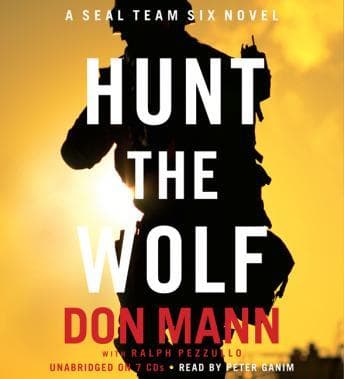
Here's the thing about books written by actual operators: they can go one of two ways. Either the authenticity elevates everything, or the author gets so caught up in proving their credentials that the story becomes a Wikipedia article with gunfire. Hunt the Wolf lands somewhere in the middle, and I'm genuinely torn about how I feel about it.
Don Mann was SEAL Team Six. That's not marketing fluff—the man lived this. And you can tell. The training sequences, the team dynamics, the way Crocker's mind works through tactical problems—there's a texture there that fiction-only writers can't quite replicate. When Mann describes the physical toll of operating at altitude on K2, your lungs feel it. When the team moves through a hostile environment, there's a procedural logic that reads like muscle memory committed to paper.
But—and this is a significant but—that authenticity doesn't always translate to compelling fiction. The pacing drags through the first half like a briefing that should've been an email. I kept waiting for the tension to ratchet up, and it just... didn't. Not until the final third, when suddenly everything accelerates and you're white-knuckling through kidnapping rescues and terrorist cell takedowns.
Peter Ganim's Tightrope Walk
The narration is where things get complicated. Ganim has this military thriller voice down cold—authoritative, clipped where it needs to be, capable of selling the action sequences with genuine intensity. When SEALs are breaching doors and neutralizing threats, he commits. That's rare in this genre, where narrators often either phone it in or go so over-the-top that every firefight sounds like a wrestling announcer on espresso.
But there's a problem. The accents. Look, I get that a book spanning K2 to Europe to the Middle East requires vocal differentiation for international characters. I do. But some of these choices veer into territory that made me wince. The stereotypical voice work for certain characters feels dated at best, offensive at worst. It's the kind of thing that might've passed without comment fifteen years ago but lands differently now.
Ganim clearly has skill—he's won AudioFile Earphones Awards for good reason—but this particular performance shows both his strengths and his blind spots. The American military characters? Solid. Distinct enough that you can track who's speaking without constant attribution. The international cast? Hit or miss, heavy on the miss.
Content That Doesn't Flinch
I need to be direct about something: this book contains human trafficking, forced drug abuse, rape, and torture. It's not gratuitous in the way horror can be gratuitous—it's presented as the ugly reality of what these operators encounter. But if you're picking this up expecting a sanitized action romp, you're going to be blindsided.
For a horror person like me, the darkness didn't register as shocking. (My baseline is pretty calibrated at this point. Shirley—my cat—has watched me consume far worse without blinking.) But thriller readers coming from the cleaner end of the genre should know what they're walking into. Burning Bright operates in similar morally murky territory, though it handles the darkness with a bit more narrative grace.
Who's Going to Love This (And Who Should Run)
If you're already deep into the Vince Flynn / Brad Thor military thriller ecosystem, this delivers exactly what you're looking for. The operational detail is genuine, the action sequences satisfy, and Crocker makes for a compelling enough protagonist to anchor a series.
If you're looking for tight pacing throughout? Skip it. If stereotypical accent work is a dealbreaker? Skip it. If you need character development beyond "competent operator with a complicated personal life"? This isn't your book.
The eight-and-a-half-hour runtime feels longer than it should, mostly because of that sluggish first half. Silent Woman had similar pacing issues that made me reach for the speed controls more than once. I'd genuinely recommend 1.25x speed to tighten things up—it doesn't hurt the action sequences and it saves you from the pacing valleys.
Back to the Horror Stack
This is so far outside my usual territory that I almost feel like I'm reviewing someone else's audiobook. But here's what I took away: authenticity matters, but it's not everything. Mann knows his world inside and out. That knowledge enriches the book in ways a civilian author couldn't replicate. But knowing your world and knowing how to pace a thriller are different skills, and this debut shows the learning curve.
Will I continue the series? Probably not—I've got a stack of horror waiting and Shirley Jackson isn't going to reread herself. But for the right listener, in the right mood, with the right expectations? There's genuine value here. Just maybe wait for a sale.