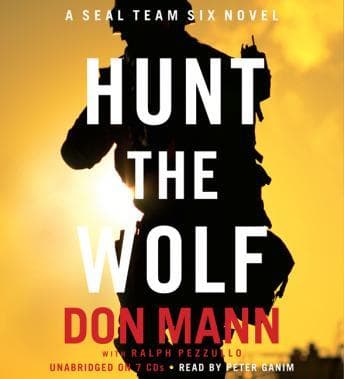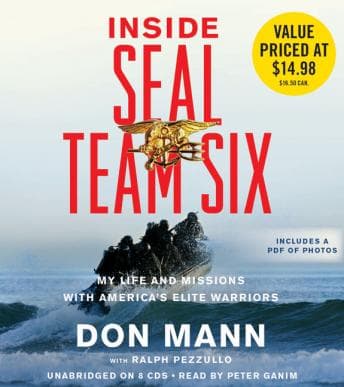

What does it actually take to become one of the most lethal humans on the planet?
I don't mean that rhetorically. I genuinely wanted to know. And look, I'm an English teacher who gets winded walking up three flights of stairs to the faculty lounge. The closest I've come to combat is breaking up a fight over a stolen calculator in third period. But memoirs like Don Mann's scratch an itch I didn't know I had—this need to understand what drives someone to push their body and mind so far past breaking that they come out the other side as something... different.
I finished this one during a particularly brutal week of grading sophomore essays on The Great Gatsby. (Spoiler: Fitzgerald would weep at some of these thesis statements.) And honestly? Mann's descriptions of Hell Week made my red-pen marathon feel embarrassingly trivial.
The Troubled Kid Who Became a Warrior
What surprised me most about this memoir wasn't the combat operations—though those are gripping. It's that Mann starts with his childhood. A rough one. The kind of backstory that, in fiction, we'd call heavy-handed foreshadowing. That same raw honesty about a chaotic upbringing shows up in Tweak: Growing Up on Methamphetamines, though Sheff's path takes him somewhere very different. But this is real life, and there's something almost literary about watching a kid from a broken home channel all that chaos into becoming one of America's most elite soldiers.
This reminds me of what Hemingway said about writing—that the iceberg's power comes from what's below the surface. Mann doesn't psychoanalyze himself to death, but the subtext is there. The drive. The need to prove something. My students would probably miss it entirely. I loved it.
The training sections are where the book really shines. BUD/S, the selection process, the physical and psychological torture that weeds out everyone except the truly obsessed—Mann describes it with the kind of matter-of-fact honesty that makes you wince. There's a reason so few make it through. And there's a reason the ones who do are capable of things the rest of us can only imagine.
Peter Ganim Behind the Mic
So here's the thing about military memoirs in audio form: the narrator has to walk a tightrope. Go too dramatic and it feels like a bad action movie trailer. Too flat and you lose the intensity entirely. Peter Ganim mostly nails it.
His pacing is solid—he knows when to let the tension build and when to punch through a scene. The production quality is clean, no weird audio issues or distracting background noise. (You'd be surprised how often that's a problem.) But I'll be honest: there were moments where his delivery felt slightly... off? Not bad, just occasionally inconsistent with the voice I'd imagined for Mann. It's subtle. Most listeners probably won't notice.
What Ganim does really well is convey the emotional weight of the quieter moments. The camaraderie between team members. The cost of the missions that went wrong. He understands that pause is punctuation, and he uses silence effectively.
Where It Drags (Because It Does)
I won't pretend this book is perfect. At nearly nine hours, there are stretches where Mann's storytelling gets repetitive. Another training exercise. Another mission briefing. Another close call. The structure can feel episodic rather than building toward something—which, to be fair, is kind of how a career works. Life doesn't have a three-act structure.
But if you're coming to this expecting the tight narrative arc of, say, Lone Survivor or American Sniper, you might find yourself checking how much time is left. (I did, around hour six. During a particularly tedious faculty meeting. Worth pausing the faculty meeting for? Mostly.)
The other criticism I've seen—and I think it's valid—is that Mann stays pretty focused on his own experiences without giving much broader context about SEAL Team Six's role in the larger military apparatus. If you want geopolitical analysis, look elsewhere. This is personal history, not comprehensive history.
Who Should Listen (And Who Should Skip)
If you loved Lone Survivor or American Sniper, this is absolutely in your wheelhouse. It's a spiritual successor to that whole wave of post-9/11 special ops memoirs, and Mann's perspective as a training officer adds a dimension those other books don't have. He literally shaped the men who killed bin Laden. That's not nothing.
Skip it if you need tight narrative pacing or want geopolitical context—this is personal history, episodic by nature. My students would hate it. Too long, too much detail about physical training, not enough explosions per chapter. But for anyone genuinely curious about what it takes—what it really takes—to become this kind of warrior, it's worth your time.
Just maybe not in one sitting. I spread it across two weeks of lakefront walks with Denise, and that felt about right. Worth savoring, but in smaller doses.








![Steve Jobs [unabridged audiobook] audiobook cover](/_next/image?url=https%3A%2F%2Fcovers.audiobooks.com%2Fimages%2Fcovers%2Ffull%2F9788499923406.jpg&w=1920&q=75)